
Zeal is a well-built self-custody card at a fair price, but the company running the card programme is closing it on 20 December 2026
 Available in US
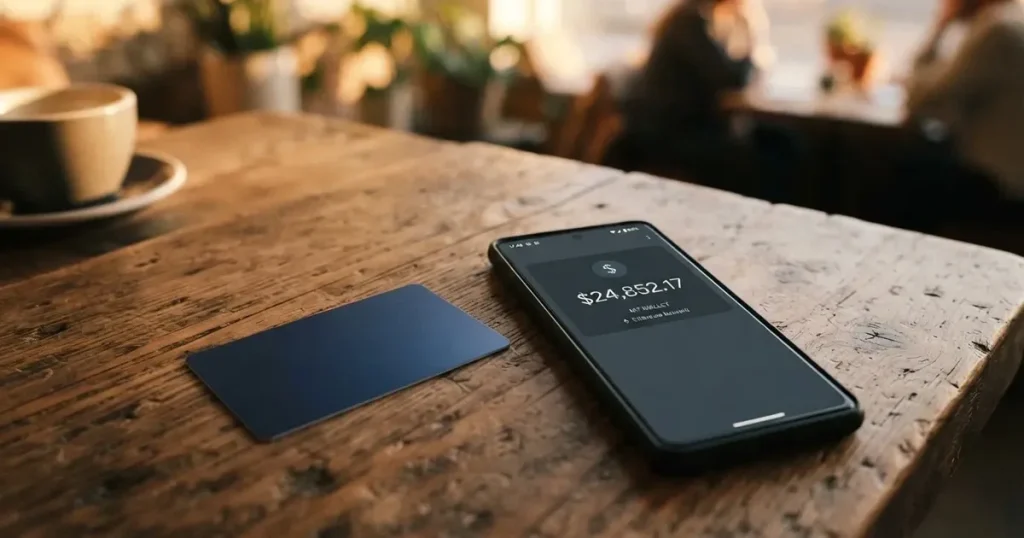
Zeal is a crypto payment card that spends straight from a wallet you control. The mechanics are good: no foreign-exchange markup on top of the network rate, a virtual Visa you can push to Apple Pay in seconds, and no monthly charge. The reason I cannot recommend it to most people has almost nothing to do with the card itself. Gnosis Pay, the company that runs the card programme underneath Zeal, has announced it is closing its consumer card and web app at 23:59 UTC on 20 December 2026 and moving to business customers. Cardholders are being told to move to partner apps; the GNO cashback eligibility ended on 30 September 2026. A card with two months of life left is not a home for your everyday spending, whatever its fee schedule looks like.
The conditions described below are current as of October 28, 2026.
The card is still worth understanding, because a lot of people are holding one right now and have to decide what to do with it. And if the underlying idea appeals to you — your own keys, network-rate conversion, no monthly fee — there are other cards that do the same thing without a shutdown notice attached.
Verdict: 6.1 out of 10, and the date matters more than the number
My score for Zeal is 6.1 / 10. Here is how that breaks down, criterion by criterion.
| Criterion | Mark | Why |
|---|---|---|
| Who can get it | 7 / 10 | Spending in 150+ countries; issuance depends on eligibility and regional availability, and the programme is live in the EU, UK, Brazil, Colombia, Mexico, Japan, Singapore, the Philippines, Indonesia and Thailand |
| Cost | 8 / 10 | No official fee schedule is published; Zeal itself adds no foreign-exchange fee. Unofficial sources say ordering and delivery are free, replacement is 4.99, the monthly fee is 0, and the first 5 ATM withdrawals are free, then 2% |
| Top-up options | 5 / 10 | It spends Safe balances in stablecoin accounts in EUR, USD and GBP over the Gnosis Chain and Celo, but Zeal never names the specific coins |
| Reliability and complaints | 2 / 10 | Gnosis Pay closes the consumer card at 23:59 UTC on 2026-12-20 and GNO cashback ends 2026-09-30; there was an ERC-1271 module exploit on 2026-06-01; Trustpilot shows 3.5 out of 5 from 17 reviews, and the issuer Gnosis Pay sits at 2.3 |
| Everyday use | 8 / 10 | Virtual and physical Visa, Apple Pay, and ATM withdrawals possible on Gnosis Pay terms; unofficial sources report Google Pay support |
Total: 6.1 / 10.
The shape of that table tells the story. On the two axes you actually control — what it costs and how easily you pay with it — Zeal scores well. On availability it scores middling-to-good. The two weak spots are top-up flexibility and reliability, and reliability is where the programme shutdown lands.
Who does the card suit? Someone who already holds a self-custody wallet, thinks in EUR, USD or GBP stablecoins, and spends on the card network constantly. Under normal circumstances that is a good fit and the card would score better than it does.
Who does it not suit? Almost everyone else in 2026. If you need a card that will still work next year, if you are in a country where issuance is not confirmed, if you want a long list of supported coins rather than three stablecoin accounts, or if you simply cannot absorb the risk of a card being switched off, this is not the card. The 2 out of 10 on reliability is not me being harsh about customer service; it is the shutdown, plus an exploit, plus the issuer’s own complaint score.
Will They Give You the Card?
Spending is the easy half. Zeal says you can spend in 150+ countries, but issuance “depends on eligibility and regional availability”. Those are two different numbers, and the gap between them is where applicants get disappointed.
The card programme is live in the EU, the UK, Brazil, Colombia, Mexico, Japan, Singapore, the Philippines, Indonesia and Thailand, according to the Gnosis Pay documentation. Zeal’s own update notes have added card support for Mexico, Colombia and Bolivia.
What the card’s public pages do not say is a definitive country list of their own. That matters, so let me be plain about it: zeal.app does not publish a clean eligibility table. Third-party sites tried to assemble one and disagree with each other. Unofficial reports from September 2026: the EEA and UK are listed as requirements, the order screen shows EU, Switzerland, Iceland and Norway, and the card is unavailable in the US and much of APAC. Unofficial reports from August 2026: 36 countries available, 21 restricted, with Latin America covering Argentina, Brazil, Colombia and Mexico — and Bolivia listed as both supported and coming soon at the same time.
That contradiction is the tell. If you are outside Europe, do not trust a list, including mine. The only reliable test is the order screen in the app.
There is a second eligibility question people forget: citizenship. Zeal says nothing about it. Identity and address verification is carried out by a third party named Sumsub, and since nationality is recorded separately from residence and screened on its own, holding a passport from a restricted region can block an application even from a supported country. That is a general rule of this industry rather than a Zeal-specific statement — but it is exactly the rule that catches people who assume residence is the only thing that counts.
How to Get It
Start with the app, not the website. Zeal’s onboarding runs through Gnosis Pay: you sign in with Ethereum, and identity verification follows through Sumsub. That is what the card’s own material and the issuer’s process indicate.
What zeal.app does not say: nothing about which documents you need, nothing about an age requirement, nothing about verification tiers, nothing about how long it takes, and nothing about why an application might be refused. Those gaps are worth knowing before you start, because a refusal with no stated reason is the situation nobody enjoys.
Unofficial reports from August 2026: full identity and address verification, age 18+, a government ID or passport plus proof of address issued within the previous three months, processed by Sumsub — and an upload does not guarantee approval. Unofficial reports from September 2026 also could not confirm KYC levels or timing.
On the card itself, the picture is mostly clear. It is a Visa. You get a virtual card for online use that you can add to Apple Pay, and accounts in EUR, USD and GBP under Gnosis Pay. zeal.app also describes the card as offered in both virtual and physical form, issued by Monavate Limited with Gnosis Pay Co Ltd, as a Visa debit card.
Where it goes quiet is the part you probably care about most: delivery. The card’s public pages do not state which countries get physical cards, how long delivery takes, or what it costs. Unofficial reports from September 2026: physical shipping is free, delivery time not stated. An older fee page in the wild — of unclear date — lists delivery within 10 days after shipping verification. I would not plan around any of that.
Fees and Limits: What It Really Costs
Zeal publishes no fee schedule. Not on zeal.app, not in the App Store listing. That is the single most annoying fact in this review, and it is the reason this section has to lean on unofficial figures.

What Zeal does state positively: it charges no additional FX fee, and conversion happens at the Visa wholesale rate. Gnosis Pay fees may still apply on top, ATM being the obvious one.
So the numbers below come from third-party sites, not from the card. Treat them as a good indication, not a contract.
| Fee or limit | What unofficial sources report |
|---|---|
| Card order | Free |
| Physical shipping | Free |
| Replacement card | 4.99 (EURe, GBPe or USDCe) |
| Monthly or annual fee | 0 |
| FX markup | No additional FX fee from Zeal; spending at the Visa mid-market rate |
| ATM withdrawals | First 5 withdrawals or 200 units per month free, whichever comes first; then 2% per withdrawal |
| ATM per withdrawal | 250 |
| ATM per day | 500 |
| Per transaction | 5,000 |
| Rolling 24 hours | 8,000 (EURe, GBPe or USDCe) |
| Conversion and off-ramp on top-up | 0% reported; Ethereum bridging still needs gas |
Unofficial reports from August 2026; Unofficial reports from September 2026. One archived Gnosis Pay fee page of unclear date unofficially lists a card purchase fee of EUR 30.23 including shipping; Zeal does not confirm this fee, which is from an old document, not the current schedule.
Now the part most reviews skip: what a normal purchase actually costs.
Buying coffee abroad. You tap, and the merchant’s local currency is converted at the Visa mid-market rate. Zeal adds nothing. What you may still meet is a fee on the Gnosis Pay side, or a decline from the merchant — see the section on why a foreign-issued card sometimes gets refused.
Withdrawing cash at an ATM. This is where money actually leaves you. The first 5 withdrawals in a month, or 200 units of them, are free; after that it is 2% per withdrawal, with a 250 ceiling per withdrawal and 500 per day. Unofficial, so confirm in the app before you rely on it.
Spending your whole balance away. Nothing stops you overdrawing, because a pre-loaded balance card cannot go negative — but it can hit zero in the middle of a checkout. Top it up before you travel.
Paying for something that declines. A declined authorisation can leave a hold on your balance for several days, typically up to 7. That is not a fee, but it is money you cannot use, and on a card spending directly from your own wallet it is your money being frozen in practice.
Two other things that are not fees but feel like them. Zeal’s cashback is up to 4% paid in GNO on the Gnosis Chain, and it only applies if you hold GNO in the card Safe — the rate can change, and the App Store also advertises up to a 5% variable APY on EUR/USD balances. And the card is a single product with no paid tiers, which is refreshing; there is no upsell to resist.
Top Up: How the Money Gets In
Zeal spends from balances held in the card Safe: stablecoin accounts in EUR, USD and GBP, over the Gnosis Chain and Celo according to the docs. The exact coins Zeal accepts are not stated. That is a genuine gap, and given the chain’s lineup the practical answer is almost certainly the bridged forms of EUR, GBP and USD stablecoins that live there — but “almost certainly” is not something to send money on.
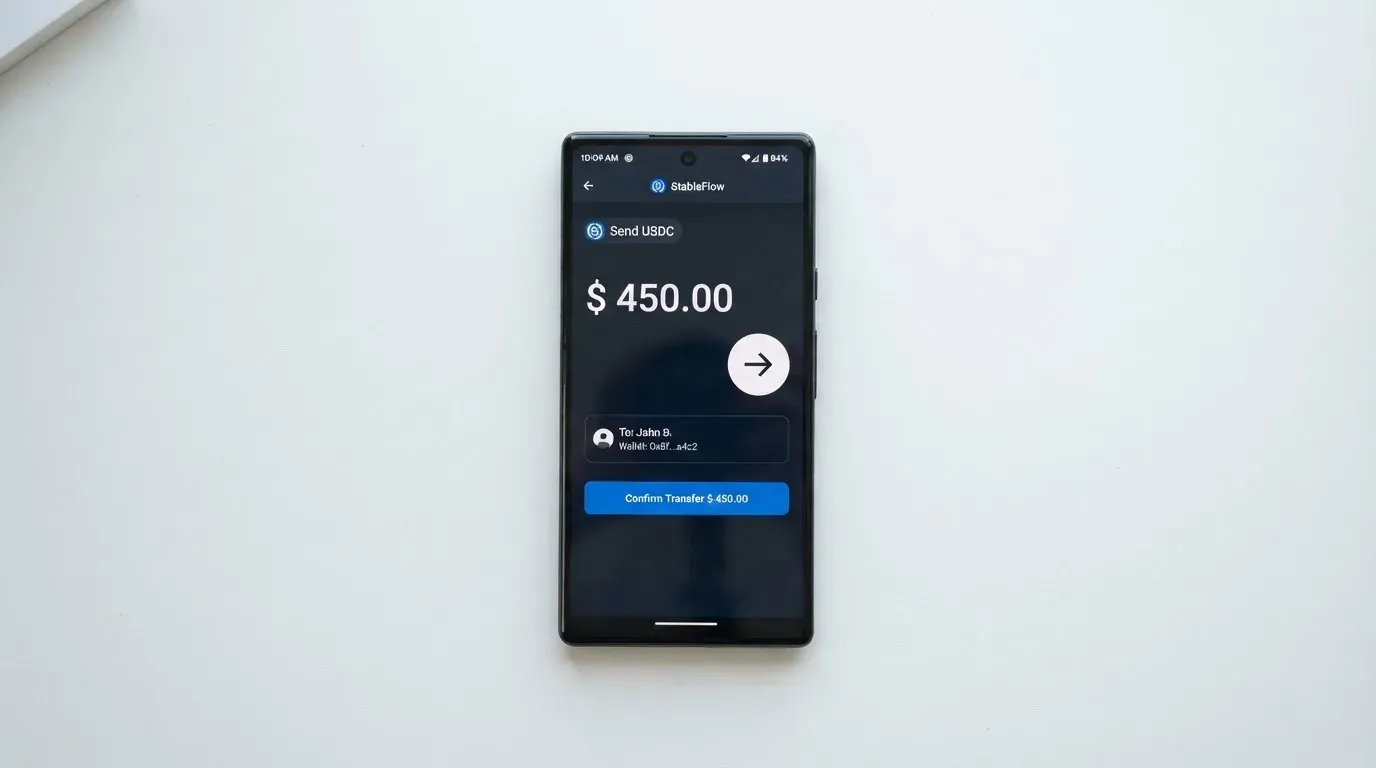
What the card does not state: the card top-up fee, the top-up minimum, the network fee for a crypto top-up, the withdrawal steps and fees for the card balance, and what happens to a balance left on the card when it closes. That last one deserves attention given the December shutdown.
Bank transfers work, and the routing is spelled out: EUR transfers are processed by Monerium ehf, other transfers by Unblock LT UAB. Fees not stated. Unofficial reports from September 2026: SEPA top-up arrives in 1–2 business days, conversion and off-ramp fees are 0%, and bridging on Ethereum still costs gas.
Two structural points about self-custody decide how you experience all of this. First, your money stays in your own wallet or Safe — the card draws from it, nobody holds it for you. Second, the Earn balances in USD and EUR are withdrawable 24/7 with no lockups, which is genuinely better than most custodial platforms that freeze withdrawals during market stress.
The rule that catches people: send on the network the provider supports, to an address of that same network. Blockchain transfers are irreversible. A deposit on the wrong network can be lost outright, or need manual support recovery with no guarantee of success. There is no help-desk button that can undo a chain transaction.
Paying With It Every Day
This is where Zeal is genuinely pleasant, and I want to be fair to it before I get to the problems.
You get a virtual Visa instantly for online use, addable to Apple Pay. Zeal is an iPhone app — iOS 16.2 or later, Mac with M1 or later, Vision Pro — and the App Store rating was 4.5 out of 5 from 17 ratings when I read it, with version 0.33.3 dated 1 September. Google Pay is not stated by the card; unofficial sources report it works, and that it is not subject to the physical-card contactless limit.
Then there is the physical card. Where you get one, in which countries, and how long it takes to arrive, is not stated — the card’s pages say physical cards are offered without giving the practical details. That is a real gap for anyone outside the core European markets.
Cash at ATMs is possible, subject to Gnosis Pay fees. The allowance is not stated by the card.
The category mechanics are worth understanding once, because they explain the odd decline. A card number starts with six or eight digits identifying the issuing institution, and the rest is your account plus a check digit. Merchants can look that up. If the issuer country differs from your billing address, the shop may apply extra scrutiny, and some merchants decline prepaid or foreign-issued cards outright. That is why a card issued in one country can look “foreign” in another, and it is not a fault in your card. Address verification — comparing the street number and postal code you typed against issuer records — is mostly a US, Canadian and UK service and is generally unavailable for foreign-issued cards, which causes more declines still.
Online payments may also trigger 3-D Secure, Visa’s version of an extra identity check, where the issuer either approves the payment or challenges you with a one-time code or a biometric prompt.
What Can Go Wrong
I want to walk through this honestly, because there is a real problem here that no fee table will show you.
The programme is closing. Gnosis Pay announced it will close its consumer card and web app at 23:59 UTC on 20 December 2026 and move to a business-to-business model. The notice to cardholders is dated 2026-09-21; other outlets reported it on 2026-09-25. Cardholders are being directed to partner apps for replacement cards, with MiniPay named. Safe funds stay accessible and the web app remains in a limited form for withdrawals. GNO cashback eligibility ended on 2026-09-30. One secondary report says Zeal has not confirmed its own future plans; I could not find a Zeal statement. So the practical question for you in 2026 is not “is this card good” but “what do I do with the balance I already have”.
An exploit in June. An ERC-1271 module exploit on 2026-06-01 affected card Safes. Self-custody removes a counterparty, but it also removes a safety net: nobody can freeze or seize your funds, and lost funds are almost certainly unrecoverable.
Support is thin. The listed channels are Discord and X. No email address, no live chat, no published hours. The site is in English, French, German, Spanish and Italian — not Russian, which matters if that is your first language. Users report unanswered support requests lasting two weeks, slow balance-to-card transfers in App Store reviews, and slow dispute handling on a scam transaction; Zeal replied publicly on the support delay and said on Trustpilot that card disputes take time. Trustpilot for zeal.app reads 3.5 out of 5 from 17 reviews. The issuer Gnosis Pay itself sits at 2.3 out of 5 from 38 reviews, with 58% one-star, mostly slow or unanswered tickets.
Self-custody cuts both ways. No bank or company can freeze your funds, which is the point. But you own the risk entirely: a seed phrase is typically 12 to 24 words, and anyone who obtains it can restore your wallet and spend everything. Crypto transfers are irreversible, so a stolen key has no recovery path. And the card’s own security page says deposits are not insured and “your principal is at risk”. Biometric passkey login, real-time transaction alerts, an in-app card freeze, Safety Checks, transaction previews and a published wallet audit on GitHub are all sensible safeguards — none of them protects you from your own compromised device.
Disputes are undefined. Neither zeal.app nor the App Store explains how a fraudulent transaction is contested. That matters more than usual for a self-custody card, because the “bank” in a chargeback sense is an e-money institution, not an employer.
The regulatory picture. A card is a payment service regulated separately from crypto; in the EU, e-money tokens may only be issued by a credit institution or an e-money institution, and e-money institutions must safeguard customer funds in segregated accounts or with insurance — which is not the same as bank deposits and may not sit under a deposit guarantee scheme. Zeal is self-custodial software and not regulated; the cards are managed by Gnosis Pay Co Ltd and issued by Monavate Limited, an FCA-authorised e-money institution. Card networks do not issue crypto cards themselves; they license issuers and can suspend a programme, and they have: Visa terminated its global agreements with FTX on 13 November 2022, and WaveCrest’s European Visa programmes were suspended in 2018.
One thing to check with an accountant. If you fund the card from crypto, spending it is generally treated as a disposal of a digital asset in most tax frameworks, measured at fair market value on the date of the transaction — so each card payment may be its own taxable event. I am not giving tax advice; I am telling you it is not cost-free and is worth one conversation with someone who knows your jurisdiction.
What to Take Instead
Three alternatives came up in my comparison, and each trades something away from Zeal.
MetaMask Card — 7.1 / 10. Sign-up open in 45 listed countries and territories, with other regions on a waitlist, proof of residency required; US and UK sign-ups temporarily closed per FAQ. Mastercard, virtual card issued instantly, metal pre-orderable in app at $199/year, one card per user. Fees: “minimal fee for each transaction” with the amount not published on the pages I read, no additional MetaMask fees, no foreign transaction fee. Spends directly from the connected wallet on Linea, Base, Monad and Solana, with mUSD, wETH, EURe, GBPe, USDC and USDT named. Cashback in mUSD: 1% on Virtual, up to 3% on Metal capped at the first $10,000 spent, plus a $FLY dining bonus. Compared with Zeal, it has a bigger fee you can see and no shutdown notice.
KAST — 6.1 / 10. Residence-based availability shown at KYC, with a citizenship rule on top: living in a supported country with an ID from a restricted region may still fail KYC. Visa, virtual and physical, up to 10 cards, in four tiers. Pricing is aggressive: Standard 0 USD/year, Premium 1,000 USD/year, Private 10,000 USD/year, plus a 1 USD/month inactivity fee after 12 months. Fees are unusually transparent — stablecoin top-up 0%, USD card spend 0%, Apple/Google Pay 0%, non-USD FX 0.5%–1.75% depending on where you live and which programme, declined transaction 0.50 USD. USD cashback from 1.5% to 3% by tier. Compared with Zeal, the fee list is published in full — which alone is worth something.
TokenPocket — 5.8 / 10. Visa debit across a list of European countries, Mastercard debit for Australia, Canada, Hong Kong, Japan, Taiwan, New Zealand, Singapore, South Korea and the UK. Runs on Arbitrum, balances in EUR24 and USD24, cards virtual with no physical card mentioned. An NFT creation fee is partly covered by TokenPocket with the user paying “a small portion” of an unstated amount, and a 1% fee on crypto deposits, to be refunded later via rewards or reduced transaction fees. No cashback stated. Compared with Zeal, it is the weakest of the four and I would not lead you here.
| Zeal | MetaMask | KAST | TokenPocket | |
|---|---|---|---|---|
| Score | 6.1 | 7.1 | 6.1 | 5.8 |
| Network | Visa | Mastercard | Visa | Visa / Mastercard |
| Ownership of funds | Self-custody | Self-custody | Self-custody | Self-custody |
| Published fee schedule | No | Partial | Yes | Partial |
| Ongoing cost | 0 monthly | $199/year for metal | 0 / 1,000 / 10,000 USD by tier | Unstated deposit fee |
| Stated end date | 20 December 2026 | None stated | None stated | None stated |
The honest summary: every one of these is self-custody, so every one of them makes you responsible for your own keys. Zeal’s specific problem is the dated one.
Who I Would Recommend It To
I would recommend Zeal to exactly one person: someone already running a self-custody wallet who thinks in EUR, USD or GBP stablecoins, who is comfortable with Discord as their support channel, and who treats the card as a stopgap — spending from it while moving to whichever partner app Gnosis Pay points them at, and moving balances out before 20 December 2026. For that person, the card has been good value: no monthly fee, no FX markup, an instant virtual card in Apple Pay, cashback that pays in GNO.
I would not recommend it to anyone starting out. If your question is how to get a card that works, this is the wrong moment for this card — not because it is a bad card, but because it is a card on its way out.
And if the reason you are reading this is that an ordinary bank card is hard to get where you live, I want to be straight with you about what will and will not solve that. Country rules and sanctions screening are not obstacles to route around, and I am not going to explain how to get around them. What I can tell you is that eligibility is genuinely country-specific and ID-specific, that the card’s own country list is not published, and that the honest test is the order screen in the app. If it says no, that is the answer, and the alternatives above have their own country lists that are at least published.
Frequently asked questions
What is the Zeal card?
The Zeal card is a Visa debit card, virtual and physical, that spends directly from a self-custodial crypto wallet rather than from a bank account. It is offered by Zeal, self-custodial software built by the app developer grwth lbs ltd, with the card programme managed by Gnosis Pay Co Ltd and the card issued by Monavate Limited. You hold the keys; the card is just the thing that spends what your Safe holds.
How does the Zeal card work?
You sign in with Ethereum, verify your identity through Sumsub, receive a virtual Visa you can add to Apple Pay, and top up a balance in EUR, USD or GBP stablecoin accounts over the Gnosis Chain or Celo. Payments convert at the Visa mid-market rate with no additional FX fee from Zeal, and the balance is spent like a pre-loaded card, so it cannot overdraw. The exact coins accepted are not stated by the card.
Is Zeal a bank?
No. Zeal is self-custodial software and is not regulated. The banking-adjacent roles sit elsewhere: Gnosis Pay Co Ltd manages the card programme, and Monavate Limited is the issuer, an FCA-authorised e-money institution under a Visa Europe licence. Your funds stay in your own wallet, so no bank is holding your deposit and none can freeze it.
Who owns Zeal?
The app developer is grwth lbs ltd, per the App Store listing. The card programme underneath belongs to Gnosis Pay, and the issuing bank is Monavate Limited. Ownership of the card programme is separate from ownership of the software — which matters right now, because Gnosis Pay is the one announcing the closure, not Zeal.
Does the Zeal card require KYC?
Identity verification runs through Sumsub, but zeal.app does not state which documents are needed, any age requirement, verification tiers, timing, or refusal reasons. Unofficial sources describe full identity and address verification, age 18+, and a passport or government ID plus proof of address issued within the previous three months — and warn that an upload does not guarantee approval.
Where can I use the Zeal card?
Spending works in 150+ countries, because it is a Visa. Issuing one is a different question: the programme is live in the EU, UK, Brazil, Colombia, Mexico, Japan, Singapore, the Philippines, Indonesia and Thailand, with Zeal’s notes adding Mexico, Colombia and Bolivia. Zeal publishes no definitive country list, so the app’s order screen is the only reliable test for where you are.
Is the Zeal card safe?
In the narrow sense that no one can freeze or seize your funds, yes — that is what self-custody means. But the flip side is that lost funds are almost certainly unrecoverable, crypto transfers are irreversible, and a compromised device can drain a wallet. Zeal adds passkey authentication, real-time alerts, an in-app card freeze and a published wallet audit. Its own security page states deposits are not insured and your principal is at risk.
How much does the Zeal card cost?
Zeal publishes no fee schedule. Unofficial reports say the card order and physical shipping are free, the monthly and annual fee is 0, a replacement card costs 4.99, ATM withdrawals are free for the first 5 or 200 units a month then 2% with a 250 per-withdrawal and 500 per-day cap, and there is no additional FX fee. Check the app before relying on any of these.
Is the Zeal card still worth getting?
Given the programme closes at 23:59 UTC on 20 December 2026 and GNO cashback eligibility ended on 30 September 2026, I would not start with it now. If you already have one, move your balance out before that date and follow the migration to whichever partner app Gnosis Pay names. The card design was good; the timetable is the problem.
How do I withdraw money or close my Zeal account?
Funds stay in your own wallet, and Earn balances in USD and EUR are withdrawable 24/7 with no lockups. The card’s public pages do not state the withdrawal steps or fees for the card balance, do not say what happens to a balance left on the card when it closes, and do not publish a delete-account process — Zeal’s support is Discord and X only, with no email or hours given.
Wallet card reviews – cryptocardcheck
Content created by the «cryptocardcheck» team