
The crypto card that promises no fees but won't tell you who issued it
 Available in US
Zebec promises a crypto-backed payment card with no sign-up fee, no transaction fee, funding from more than 180 tokens across more than 21 blockchains, and Apple Pay and Google Pay on every tier. On paper it is one of the more generous offers in a category where fees normally stack up. Then you look for the things a careful person looks for — who issues the card, where the money sits, what happens when a payment is disputed — and the pages come back mostly blank. That tension is the whole story of this card, and it is why my score sits in the middle rather than near either end: 7.1 out of 10.
The conditions described here are current as of October 28, 2026.
I have written this for someone who has been turned away from an ordinary bank card, or who lives somewhere a normal debit card is awkward to get, or who simply wants to spend crypto without converting it first on a trading screen. If none of that is you, there is a section near the end that will save you the reading.
Verdict: 7.1 out of 10, generous on paper, silent on the things that matter most
The score is not a complaint about the fees. On fees, Zebec is genuinely among the better offers I have read: the Silver tier carries no sign-up fee and no transaction fee, and the same is said of Carbon, described in the documentation as a no-fee promotion that is subject to change. On funding, the breadth is the strongest single feature here — “180+ tokens across 21+ blockchains” is far wider than most competitors manage, though the card’s own pages never name the coins.
What holds the score down is disclosure, not pricing. The card’s issuer and BIN sponsor are not named, and the legal entity behind the product is not published on the pages I read. Mastercard appears as a partner logo, but a logo is not an issuer. There is no complaint record to read in either direction — no Trustpilot page, no Reddit threads, no user reports — which sounds reassuring until you remember it also means nobody outside the company has publicly tested it. The Black tier’s page currently shows the site “temporarily offline for upgrades” with a resumption expected in Spring 2026, and that status has not been confirmed since.
Here is the score broken down criterion by criterion, with the reasoning behind each mark.
| Criterion | Mark | Why |
|---|---|---|
| Who can get it | 8 / 10 | Broad eligibility by country of residence: Silver covers the US, Canada, the UK and EU states except Malta; Carbon USD International reaches 90+ countries outside the US and Canada; Black is worldwide subject to sanctions |
| Cost | 8 / 10 | Silver and Carbon carry no sign-up or transaction fees; variable FX fees may apply, and Black charges activation, top-up and monthly fees with amounts not stated |
| Top-up options | 9 / 10 | Funding from the Zebec wallet with “180+ tokens across 21+ blockchains”; specific coins are not listed anywhere |
| Reliability and complaints | 5 / 10 | Issuer and BIN sponsor unnamed, legal entity undisclosed, no complaint history found; a third-party directory rates the card 3.3, and the Black page shows “offline for upgrades” |
| Everyday use | 5 / 10 | All tiers are Mastercard prepaid with Apple Pay and Google Pay, but physical card form, ATM access and blocked merchant categories are not stated |
| Total | 7.1 / 10 | Strong on breadth and price, unproven on the operational details |
The user group this fits best is someone funding a card from a long list of tokens who does not want to think about which network, who lives outside the traditional card markets, and who treats a spending card as a convenience rather than as the main home for their money. The user group it fits worst is anyone who needs to know who holds their funds, or who plans to lean on chargebacks, or who expects a metal card in the post.
Will they give you the card?
Eligibility runs on country of residence, not citizenship. The card’s own term is “issue location”: the country where you declare your home address and apply. Citizenship is not mentioned in the card’s terms. That distinction matters more than it sounds — a resident of one country holding a passport from another is treated under the residence rule, but the compliance checks behind the scenes screen identity documents separately, so a mismatch between the two is exactly the kind of thing that stops an application.
The regions break down by tier and currency:
- Silver USD: the United States, Canada, Puerto Rico, US Virgin Islands, Guam, American Samoa and the Northern Mariana Islands.
- Silver and Carbon GBP: the United Kingdom, Gibraltar, Guernsey, the Isle of Man and Jersey.
- Silver and Carbon EUR: EU member states except Malta.
- Carbon USD International: 90+ approved countries outside the US and Canada, with Japan, Singapore, Brazil, Kenya and Uruguay given as examples.
- Black: worldwide, subject to sanctions.
One wrinkle worth knowing before you plan around it: the official pages disagree with each other. The Carbon page describes USD International as available in “over 70 countries”, while the availability page says “90+”. Neither is a small-print detail — it tells you the coverage list is not centrally maintained.
Then there is the use restriction, which is separate from eligibility. Cards “cannot be used” in a compliance list that includes the Russian Federation and Belarus, alongside Iran, Cuba, Syria and North Korea. The restriction is on where you use the card, not where you signed up from. So a resident of a supported country could be refused by a merchant or by the programme while travelling in one of those places. I am not going to explain how to work around that, and you should be sceptical of anyone who offers to.
How to get it
The card is ordered inside Zebec’s own apps — a Mobile SuperApp on iOS and Android, plus a Web SuperApp — and it is funded from the Zebec wallet rather than from a bank account. There is no separate application portal, and no application fee at the Silver and Carbon tiers.
What documents you will need is not stated. The pages do not spell out the required identity documents, proof of address, or an age threshold, beyond the general category expectation that prepaid and debit cards go to adults. The Silver blog describes “limited KYC based on address” with activation in seconds after an email confirmation; the Black tier requires KYC information to be submitted before activation. The tier structure of KYC, the reasons applications get rejected, and the official processing time for Silver and Carbon are all not stated. That is a genuine gap, not a formatting quirk: if you are somewhere the card matters most, you should expect to learn the rules by hitting them.
Two verification details do come through. Zebec and its card partners check both your device IP and your declared address to enforce the regional restrictions, which is why a VPN is not a shortcut to eligibility. And the two-factor token for sign-ins and confirmations arrives by SMS with a local regional number for Silver and by email for Carbon USD International.
There is a concrete hint about the card’s physical form. The delivery arrangements are not stated — but the documentation and the Black page both describe digital activation only, and the Black page says activation completes in under a minute after KYC, citing 30 seconds. Separately, and unofficially: a third-party directory describes the cards as virtual with a physical card planned rather than widely distributed. That directory entry is undated and not something the card’s own pages confirm, so treat it as a rumour with a source.
One more thing about the Silver tier’s history: it is a relaunch of an earlier Zebec Instant Card, per an undated blog post. The current product is not the first version, which is mildly reassuring, though it does mean the “new” tier carries baggage from a product you may have heard complaints or confusion about.
Fees: what you pay, and what the pages won’t quantify
Start with the good news, because it is real. Silver has no sign-up fee and no transaction fee. Carbon has no sign-up fee and no transaction fee either — the documentation calls this a no-fee promotion and says it is subject to change, which is the kind of phrasing that means it can be withdrawn. Black is different in kind: activation, top-up and monthly fees apply, and the amounts are not stated.

Beyond that, the picture becomes vague. Variable FX fees may apply. Crypto conversion rates vary by token. The exact percentages are not stated for any of these. So the honest summary is: the card is free to open and free to spend with, and the cost of using it in a currency other than its own, or funding it with something other than a major stablecoin, is a number you will have to work out yourself at the point of transaction.
| Fee or limit | Silver | Carbon | Black |
|---|---|---|---|
| Sign-up fee | None | None (promo, subject to change) | Not stated |
| Transaction fee | None | None (promo, subject to change) | Not stated |
| Conversion fee | Varies by token, rate not stated | Varies by token, rate not stated | Not stated |
| FX fee | Variable, may apply | Variable, may apply | Variable, may apply |
| ATM fee | Not stated | Not stated | Not stated |
| Activation fee | — | — | $1 |
| Monthly fee | — | — | $1 |
| Top-up fee | Not stated | Not stated | Approximately 2% plus $0.30 per transaction |
| Daily spend limit | Not stated | $10,000 (USD) | Not stated |
| Load limits | $10–$1,000 per load | $1,000 / £1,000 / €1,000 per load; Carbon page says $10,000 USD per load | Up to $10,000 per load |
| Maximum balance | $1,000 | $10,000 / £5,000 / €5,000 | $50,000 |
That ATM row is the one I would read twice. Whether you can withdraw cash at all, and at what cost, is simply not stated on any of the three tiers’ pages.
Three everyday payments, and which fees bite
A £12 coffee in London, on a GBP Silver card. This is the clean case. The card denomination matches the transaction currency, so no conversion and no FX fee is involved, and the Silver tier has no transaction fee. You pay £12 and see £12 leave the balance. The Silver blog does make the point that matching the card’s denomination to your funding currency is how you avoid FX fees — that advice is free, and it is the most useful sentence on the costs pages.
A €40 dinner in Rome, on a USD card. This is where it starts costing you. The card has to convert dollars into euros, and both the crypto conversion rate and the FX fee come into play. The card’s pages confirm these charges exist and confirm that variable FX fees may apply. They do not confirm the percentages. My advice is not to guess — read the rate in the app at the moment of payment and judge whether it is acceptable to you.
A $200 online subscription, on a Carbon card. Carbon’s daily spend limit is $10,000 in USD, so a $200 purchase is nowhere near the ceiling. But note what a subscription is: a recurring charge against a stored balance, which is the prepaid model rather than a credit model. If the balance is empty when the renewal fires, the payment simply fails — there is no line of credit to fall back on, and I have found no evidence that Zebec offers any spending insurance. Worth knowing before you commit to anything monthly.
Also worth noting: the currencies available depend on your region of residence — USD, EUR or GBP for Silver and Carbon. Black is documented as USD, though its page mentions EUR and USD cards with other fiat planned. Whether you can hold several currency balances at once is not stated.
Top up: the wallet is the funding source
Funding comes from the Zebec wallet. That single sentence explains the card’s strongest feature and its main trap.
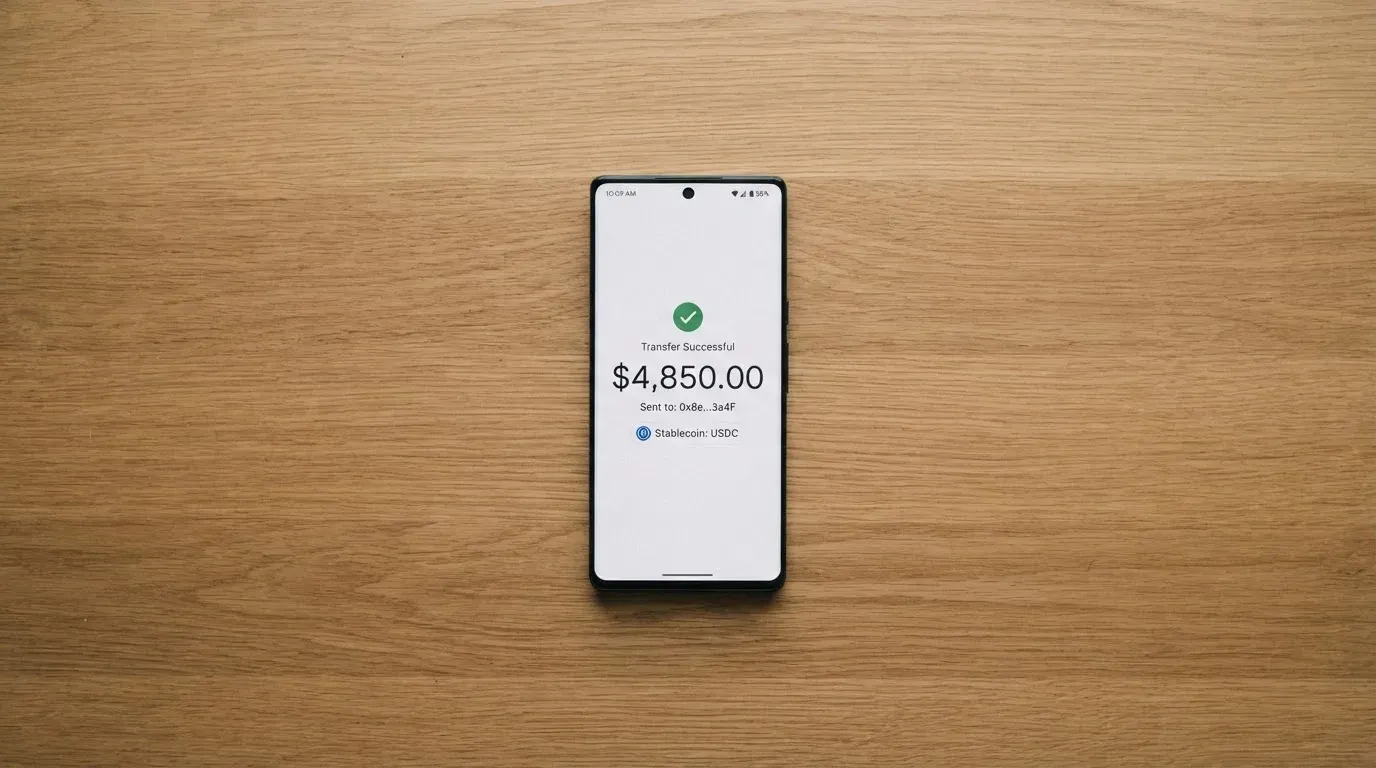
The strength is breadth: “180+ tokens across 21+ blockchains”, with the specific coins not listed. Almost no competitor matches that range, and for someone holding an unusual token on an unusual network, it can be the difference between spending what you have and converting it first at a worse rate.
The trap is that blockchain transfers are irreversible. If you send on a network the card does not support, or to an address belonging to a different network, the funds can be lost outright or need manual support recovery with no guarantee of return. This is not a Zebec peculiarity — it is how blockchains work — but with 21+ networks on offer the odds of picking wrong rise accordingly. Check the network against what the app says before you confirm anything.
Practical limits on funding, which I covered in the costs table: the minimum load is $10 on Carbon, Silver takes $10–$1,000 per load, and Black takes up to $10,000. Whether you can top up with fiat directly is not stated — the funding path described is from crypto in the wallet.
Two questions people ask that I cannot answer from the card’s pages. Whether you can withdraw money from Zebec back out is not stated. And whether the balances can be held in more than one currency is not stated. On a card aimed at people in ninety-plus countries, both of those are things I would want answered before I relied on it.
Paying with it every day
All three tiers are Mastercard prepaid cards, and all three work with Apple Pay and Google Pay. That mobile-wallet support is the most practically useful everyday feature here, because it means you can add the card to a phone wallet and not handle the number again.
What I cannot tell you is what the card looks like, whether a physical card exists, or whether you can use an ATM. The documentation describes digital activation, and the form of the card — physical or virtual — is not stated. A third-party directory says virtual with physical planned, unofficially and undated.
Blocked merchant categories are not stated either. In this category that is not a minor omission: many issuers block gambling-related merchant codes on crypto cards by policy rather than by law, and the blocked list varies by issuer. If gambling or similar is part of why you want the card, you will not find the answer on Zebec’s pages.
Rewards are thin. No cashback is stated. Staking $ZBCN is said to earn “extra rewards” with the rate not stated — which is a token of the company’s own, so treat the figure as promotional framing rather than a return.
The app situation is worth one line. The App Store listing for the AE version shows 5.0/5 from two ratings, in English, read on 2026-10-20. Two ratings is not a signal in either direction. The Google Play rating for com.zebecrn is not stated. Support is described as 24/7 by email at [email protected] for Silver, with channels on X and Telegram; for Black, [email protected] and [email protected]. Mobilum appears as the backend processing partner for Black, and Black cardholders are told they can freeze the card immediately in the Mobilum app.
What can go wrong
I want to be straight with you about the evidence here, because the absence of evidence has been read as good news too often in this category.
Nobody has written about this card. No official incidents are stated, and no user reports were found. There is no Trustpilot page for Zebec cards and no Reddit threads. A third-party directory, CryptoCardHub, rates the Zebec Card 3.3 and ranks it 23rd of 86. A brand-new card with no complaints has not been proven; it has not been tested in public.
You do not know who holds your money. The legal entity, the card issuer, the BIN sponsor and the licences are not stated. Mastercard appears only as a partner logo, and in this category that distinction is load-bearing: the network routes messages and sets rules, the issuer holds the card programme, and the crypto brand is often only a programme manager and front end. Zebec describes itself as building decentralised infrastructure since 2021, with 250+ enterprise clients and 50K+ monthly users. Those are the company’s own numbers.
Your funds and your crypto are handled differently. Zebec says the wallet is separate from the app — a non-custodial connection — while the card balance is held with the card programme. Whether that holding is safeguarded, segregated or insured is not stated. For contrast: in the EU, e-money institutions must safeguard customer funds in dedicated accounts or insure them, and those funds are not bank deposits and may not carry deposit-guarantee cover. I am not saying Zebec’s arrangement is worse — I am saying you cannot tell from what is published.
If a payment goes wrong, there is no stated route. No dispute, refund or chargeback process appears on the cards, Black or payees pages — the only contact offered is an email address. US prepaid-card coverage varies and should not be assumed; the reversal rights that apply to US debit cards come from Regulation E and those for credit cards from Regulation Z, and prepaid sits somewhere else again. If a shop takes your money and delivers nothing, the strength of your position depends on rules the card’s pages never mention.
The product is moving. Silver is a relaunch of an earlier card. Carbon launched with Mastercard on March 27. The Black page shows the site “temporarily offline for upgrades” with a resumption expected in Spring 2026, and that status is not confirmed since; the same page flags the UK as restricted pending regulatory review. I found no 2026 issuer change — which is reassuring, but it is the absence of a finding rather than a finding.
Practical failure modes worth guarding against. Declined authorisations can leave a hold on funds for several days, typically up to seven. Merchants may decline prepaid or foreign-issued card numbers because the BIN lookup reveals the card type and issuer country. Address verification is mainly offered in the US, Canada and the UK and is generally unavailable for foreign-issued cards, which causes declines on its own. And because prepaid balances are capped, the card cannot overdraw — which is a genuine safety feature, but also means a large purchase simply fails rather than being covered.
Two-factor authentication is SMS or email. That is a weaker footing than an authenticator app, and I would not describe it as strong protection for an account that can move money.
What to take instead
If the Zebec card’s gap is disclosure, then the alternatives are worth reading on that axis. All four below were scored on the same basis as Zebec.
| Card | Score | Issuer named | Who it fits | Main catch |
|---|---|---|---|---|
| Zebec | 7.1 / 10 | Not stated | Anyone funding from a long tail of tokens | Issuer, entity and fee percentages undisclosed |
| MetaMask | 7.1 / 10 | Yes — Monovate, with Crypto Life as card provider | EU and listed-country users wanting cashback | Metal card at $199/year; sign-ups closed in the US and UK |
| KAST | 6.1 / 10 | Programme structures published by tier | Higher spenders wanting strong cashback rates | Premium and Private tiers cost $1,000 and $10,000 a year |
| TokenPocket | 5.8 / 10 | Not stated | Users already inside the TokenPocket wallet | 1% fee on every crypto deposit |
MetaMask matches Zebec’s score and fills Zebec’s worst gap: it names its issuer. Monovate issues the card, with Crypto Life as card provider. The virtual card is free with no annual or maintenance fee, and the Metal card is $199/year. The virtual card is instant, one card per user, and you pre-order Metal in the app after approval. It spends directly from your connected wallet on Linea, Base, Monad or Solana, and the page names mUSD, wETH, EURe, GBPe, USDC and USDT; Solana-only wallets cannot withdraw credit. Fees are described as minimal per transaction with no additional MetaMask fees and no foreign transaction fee, using the Mastercard rate. Sign-up is open in 45 listed countries and territories with proof of residency required, and ineligible regions limit sign-ups rather than spending — a meaningfully better answer to your question than “not available”. Other regions join a waitlist, and US and UK sign-ups are temporarily closed per the FAQ. Cashback is 1% on Virtual in mUSD; the Metal headline is 3%, with a footnote limiting 3% to the first $10,000 spent and 1% after, plus $FLY bonuses of 5X and 7X through the Blackbird dining app.
KAST is the transparency play on money. Its fee schedule is published to two decimal places: stablecoin top-up 0%, USD card spend 0%, Apple and Google Pay 0%, non-USD FX between 0.5% and 1.75% depending on your residence country, transaction country and card programme, non-USD transactions under $25 at $0.10, and a declined transaction for insufficient balance at $0.50. The catch is the membership: Standard is free, Premium is $1,000 a year and Private is $10,000 a year, billed annually upfront with no monthly option. There is also a $2 charge for an extra virtual card in some regions, $40 delivery on a Standard physical card, and a $1 monthly inactivity fee after 12 months. Cashback is USD, tiered by monthly spend: 1.5% on the first $2,000 a month for Standard, 2% on the first $10,000 for Premium, 3% on the first $40,000 for Private, with KAST Points adding +1% and +2% for Premium and Private. It accepts USDT, USDC, PYUSD and RLUSD, though its own terms say the acceptable tokens are currently USDT and USDC — another internal contradiction, this one in the alternative’s documentation. Its eligibility logic is the most careful of the four: residence-based, with a rule that living in a supported country but holding ID from a restricted region may still fail KYC, and that a VPN does not bypass it.
TokenPocket is the weakest of the group at 5.8. It runs on Arbitrum with balances in EUR24 and USD24, and Fiat24 cards are virtual with no physical card mentioned. It covers a list of European countries and territories on Visa debit — Germany, France, Spain, Switzerland among them — and a longer list on Mastercard debit including Australia, Canada, Hong Kong, Japan, Taiwan, New Zealand, Singapore, South Korea and the UK, with the Americas “planned for Q2 2025”. The economics are the problem: a 1% fee on every cryptocurrency deposit, which the company says is refunded later through rewards and reduced transaction fees, plus possible extra fees from inter-institution settlement. Beyond the NFT creation fee, partly covered by TokenPocket, it says it charges nothing else.
Who I would recommend it to
I would recommend the Zebec card to someone who has already decided that a prepaid balance is the right model, who funds from tokens that few other cards will accept, and who is not planning to rely on chargebacks. If your crypto sits across many networks and you want to spend it without hunting for an exchange that lists your coin, the 180+ tokens across 21+ blockchains figure is a real advantage and I have not seen another card match it.
I would not be the first person to recommend it to someone whose concern is where the money is held while it sits on the card, or to someone whose income depends on being able to dispute a transaction. In both cases, you are being asked for trust in a company that does not publish the name of the entity you are trusting, and I would rather you spend your trust somewhere that prints it.
My honest position is this. The fees are the strongest part of the offer and the transparency is the weakest, and only one of those two things is likely to change. Before you commit, I would do three things: find the numbers you actually care about — the conversion rate and the FX percentage in your own currencies — in the app rather than on a marketing page; test a small load first and see how long it takes to appear; and check the app store listing for the country you are actually in, since availability is by residence and the two tiers split the world differently. If the answers to the first two come back clean, the card does what it says. If the third comes back wrong, nothing else matters.
Frequently asked questions
What is the Zebec card?
Zebec is a crypto-funded payment card issued in three Mastercard prepaid tiers — Silver, Carbon and Black. You load it from your Zebec wallet, where crypto is converted into a fiat balance, and the card spends that stored balance. Silver and Carbon cover the US, Canada, the UK and most of the EU; Carbon USD International reaches 90+ other countries, and Black is worldwide subject to sanctions.
How does the Zebec card work?
You convert or transfer crypto into your Zebec wallet balance and load the card from it. At payment the card draws on that prepaid balance, which is why it cannot overdraw — if the balance is short, the payment simply fails. Apple Pay and Google Pay work on all three tiers. Because the balance is prepaid rather than credit-linked, a declined subscription renewal has nothing to fall back on.
Is Zebec a bank?
The card’s public pages do not say, and that is the honest answer. The legal entity, the card issuer, the BIN sponsor and any licences are not stated; Mastercard appears only as a partner logo. Zebec describes itself as having built decentralised infrastructure since 2021, citing 250+ enterprise clients and 50K+ monthly users. Mobilum is named as the backend processing partner for the Black tier.
Does the Zebec card require KYC?
Yes — Zebec and its card partners check device IP and declared address to enforce regional restrictions, and KYC information must be submitted before activation on Black. Silver uses limited KYC based on address. What documents are required, the KYC tiers, the rejection reasons and official processing times are not stated on the pages. Two-factor tokens arrive by SMS for Silver and by email for Carbon USD International.
What does the Zebec card cost?
Silver and Carbon have no sign-up fee and no transaction fee, with Carbon’s described in the documentation as a promotion subject to change. Black charges activation, top-up and monthly fees — $1 activation, $1 monthly, and approximately 2% plus $0.30 per transaction on top-ups. Variable FX fees may apply on every tier, and crypto conversion rates vary by token, but exact percentages are not published.
How do I top up the Zebec card?
You fund it from the Zebec wallet, which supports “180+ tokens across 21+ blockchains” though specific coins are not listed. Minimum load is $10 on Carbon; Silver takes $10–$1,000 per load and Black up to $10,000. Check the network carefully before sending — transfers are irreversible, so funds sent on an unsupported network or to a wrong-chain address can be lost.
Can I add the Zebec card to Apple Wallet?
Apple Pay is supported on all three tiers, as is Google Pay. When you add the card, Apple replaces the number with a device-specific token stored in the Secure Element rather than on Apple’s servers, and each payment uses a one-time security code. The card’s pages do not describe any restrictions on tokenised use, such as blocking the card on websites.
Is the Zebec card safe?
I would not answer that with a yes. Zebec says the wallet is separate from the app through a non-custodial connection, while the card balance is held with the card programme — and whether those funds are safeguarded, segregated or insured is not stated. There is no dispute or chargeback process published on any tier, only an email address. Authentication is by SMS or email rather than an authenticator app.
Is the Zebec card available in my country?
Eligibility follows your country of residence, not citizenship — the “issue location” is where you declare your home address. Silver USD covers the US, Canada and US territories; Silver and Carbon GBP cover the UK, Gibraltar, Guernsey, the Isle of Man and Jersey; Silver and Carbon EUR cover EU states except Malta; Carbon USD International covers 90+ countries outside the US and Canada; Black is global subject to sanctions.
Can I use the Zebec card while travelling?
Cards cannot be used in a compliance list that includes the Russian Federation and Belarus, along with Iran, Cuba, Syria and North Korea. This restriction is on the place of use, separate from where you signed up. Separately, merchants can decline foreign-issued or prepaid card numbers after a BIN lookup, and address verification is largely unavailable for foreign-issued cards, so declines abroad are common regardless of policy.
Is the Zebec card worth it?
Worth it if you need to spend an unusual token without converting it elsewhere first, and you are comfortable treating the balance as prepaid rather than as an account with dispute rights. Worth thinking twice about if you rely on chargebacks, if you need to know which legal entity holds your funds, or if you expect a physical card or ATM access — none of those are stated on any tier.
Wallet card reviews – cryptocardcheck
Content created by the «cryptocardcheck» team