
A prepaid Visa for people who can't easily get a bank card — but the costs and the feedback stack up
 Available in US
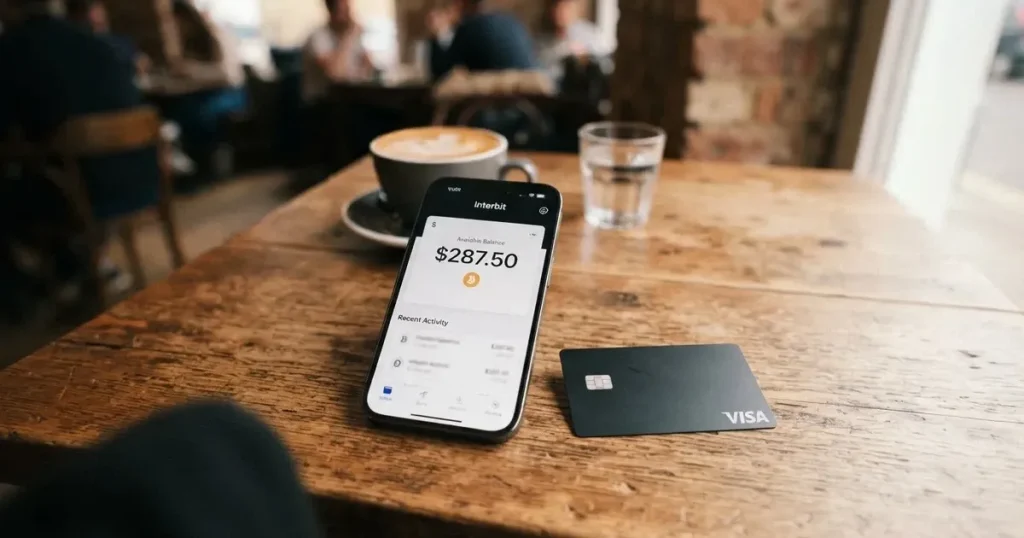
Bitsa is one of those names that comes up when someone tells me they cannot get a regular bank card. It is a prepaid Visa, available in physical and virtual form, attached to a euro balance, and managed from a phone app. The company’s own marketing leans on a simple promise: a European IBAN, a Visa card you can spend with, and a way to load that card from crypto or from a bank transfer. I went through the public pages and the supporting material to see how well that promise holds up in practice, where the fees bite, and what the people who actually use the card say about it.
Conditions are current as of October 28, 2026.
In the end, the card sits at a middling score for me. The basics are there — the IBAN, the Visa acceptance, the everyday usability — but the cost structure is layered, the official eligibility list is not stated, the customer feedback is poor, and a few questions about the issuing arrangement have to be answered with unofficial sources. I’ll walk through each of those points in turn. The conditions in this review are current as of 2026-10-20.
Verdict
Bitsa earns a 5.0 / 10 from me. The breakdown is below. I think of it as a card that works, but only if you fit its narrow lane: an EU resident who wants a prepaid euro Visa with an IBAN, and who is comfortable with a plan-based fee structure and a relatively thin public information footprint. If you fall outside that lane — for example, if you are in the United States or the United Kingdom, or if you want a card backed by a clearer regulatory disclosure — Bitsa is not the strongest fit.
| Criterion | Mark | Why I scored it that way |
|---|---|---|
| Who can get it | 5 / 10 | The official list of supported countries is not stated; unofficial sources point to 27 EEA countries, with Bulgaria, Croatia, Latvia, the UK, the US and Canada closed off. |
| Cost | 4 / 10 | Physical card EUR 20, virtual EUR 2.50, plus three plans (Free, Move at EUR 0.99/month, Pro at EUR 9.99/month). Card top-ups 1.5%, payments outside the euro zone 1.75%, elsewhere 2%, plus ATM fees abroad. |
| Top-up options | 5 / 10 | Bitcoin, Ethereum, USD Coin, plus card, SEPA, wallet and voucher, but the networks are not named on the official pages. |
| Reliability and complaints | 3 / 10 | The issuer is not named on the fetched pages (unofficial sources say Pecunia Cards EDE), Trustpilot reads 1.3/5 from 363 reviews with 68% one-star, and account freezes are the recurring theme. |
| Everyday use | 9 / 10 | Both physical and virtual Visa with a European IBAN, Apple Pay and Google Pay work in practice (unofficial), and there is an ATM allowance. |
If you are an EU resident who wants a prepaid Visa with an IBAN and you are happy on a paid plan, Bitsa will function. If you are outside the EEA, you should probably stop here and look at one of the alternatives in the section further down.
Who will they give you the card
The official Bitsa pages I read do not state the full eligibility list — which countries you need to live in, which documents they want, or which age groups they accept. That is unusual for a card with an IBAN, and it is the first thing I would want to see spelled out before I signed up. What I can tell you comes from unofficial reporting: a third-party page suggests Bitsa accepts residents of 27 EEA countries and excludes a handful of others.
The unofficial list of supported countries, if I take it at face value, is Austria, Belgium, Cyprus, Czech Republic, Denmark, Estonia, Finland, France, Germany, Greece, Hungary, Iceland, Ireland, Italy, Liechtenstein, Lithuania, Luxembourg, Malta, Netherlands, Norway, Poland, Portugal, Romania, Slovakia, Slovenia, Spain and Sweden. The same source flags Bulgaria, Croatia, Latvia, the United Kingdom, the United States and Canada as restricted. If your country is not on the unofficial supported list, do not assume Bitsa is open to you — and if you are in one of the restricted countries, take that as a hard “no” rather than something you can route around. Rule-of-thumb: a card that is not officially transparent about eligibility is one where you should expect the application to fail rather than succeed.
If you are aged 16 or 17, the same unofficial source mentions a “Bitsa Young” path with guardian authorisation in the app. The official pages do not confirm this to me, so I would treat it as worth checking directly with Bitsa before relying on it.
The broader question — is Bitsa a bank? — is worth answering here. Bitsa is a simplified joint stock company (SAS) registered in the Nice Trade and Companies Register in France. That is a company structure, not a banking licence. The card product itself is a prepaid Visa, and the underlying funds are held as e-money. Unofficial sources name Pecunia Cards EDE S.L.U. (PecunPay) as the issuer, registered with the Banco de Espana under number 6707, with Bitsa SAS as the programme operator. None of that is confirmed by the card’s public pages, which is a second transparency issue.
How to get it
The official material is light here too, and most of what follows is unofficial, so take it as a sketch rather than a guarantee. The implied flow is: download the iOS or Android app, create an account, complete identity verification (the unofficial page says proof of residence in an eligible country plus a government ID), wait for approval, and then either order a physical card for EUR 20 or generate a virtual one for EUR 2.50. For ages 16 to 17, the unofficial source describes a “Bitsa Young” route with a guardian authorising in the app.
The physical card costs EUR 20 and the virtual card EUR 2.50. Delivery times and shipping details are not stated on the official pages I read — so if you need the card by a specific date, treat that as something to confirm in-app, not as a published promise. The issuer may suspend an account if KYC documents fail, if the source-of-funds checks are not satisfied, or if the AML/fraud review flags something, according to the unofficial report.
If you are outside the EEA, the practical answer is that the application is unlikely to succeed. Even inside the EEA, the gap between “the country list exists somewhere on the web” and “Bitsa has actually published who it serves” is one I would not paper over with optimism.
What it really costs: Fees
Bitsa’s pricing is layered, and you need to read it twice. There is a one-time card cost, a monthly plan fee, and a set of usage fees that depend on what you do. The headline numbers below are the official ones.
| Fee or limit | Free plan | Move plan | Pro plan |
|---|---|---|---|
| Monthly fee | EUR 0 | EUR 0.99/month (or EUR 8.99/year) | EUR 9.99/month (or EUR 69.99/year) |
| Physical card (one-time) | EUR 20 | EUR 20 | EUR 20 |
| Virtual card (one-time) | EUR 2.50 | EUR 2.50 | EUR 2.50 |
| Non-free external-card reload | 1.5% | 1.5% | 1.5% |
| International payment, outside euro zone | 1.75% | 1.75% | 1.75% |
| International payment, elsewhere | 2% | 2% | 2% |
| ATM abroad | EUR 0.55 + 1%, min EUR 0.75 | EUR 0.55 + 1%, min EUR 0.75 | EUR 0.55 + 1%, min EUR 0.75 |
| SEPA Instant transfers | none free | first 1 free, then EUR 1 | first 2 free, then EUR 1 |
| Purchase limit | EUR 1,500 | EUR 5,000 | EUR 15,000 |
| Max balance | EUR 2,500 | EUR 15,000 | unlimited |
| Top-up (Free/Move) / Pro top-up | EUR 500/day, 1,000/month, 2,500/year | EUR 1,200/day, 5,000/month, 15,000/year | unlimited |
| Crypto reloads (all plans) | up to EUR 20,000/day | up to EUR 20,000/day | up to EUR 20,000/day |
| Crypto sell fee (unofficial) | 2.39% | 2.14% | 1.89% |
| ATM allowance (unofficial) | 1/day up to EUR 350 | 2/day up to EUR 350 | 4/day up to EUR 900 |
The figures in the last two rows are unofficial, so I would not commit to them without checking the in-app quote.
A few everyday scenarios to make these numbers concrete. First, imagine a EUR 40 lunch paid in Spain with the physical card, on the Free plan. The card is in euros, the merchant is in Spain, so the international payment fee does not apply. You are paying from your euro balance, not topping up at the table, so the 1.5% card reload fee does not apply. Net fee: EUR 0. You are, however, paying EUR 0/month for the plan, so the cost is hidden in the limits you accept.
Second, the same EUR 40 lunch paid at a café in Prague. The merchant is outside the euro zone, so the 1.75% international payment fee applies. That is 70 cents on a EUR 40 payment. If you then top up the card with your debit card to get the balance back to where it was, and you are on the Free or Move plan, the 1.5% reload fee also applies — so on a EUR 40 top-up, another 60 cents. Total around EUR 1.30 for one lunch and a reload. The official pages do not state a separate crypto conversion spread, so the 1.75%/2% line is the closest published proxy for what you pay when Bitsa has to convert your euro balance to another currency at the merchant.
Third, a EUR 200 ATM withdrawal in Thailand. ATM fee abroad is EUR 0.55 + 1% (minimum EUR 0.75), so on EUR 200 that is EUR 0.55 + EUR 2 = EUR 2.55. On top of that, you may be charged by the local ATM operator, and on the Free plan your daily cap is EUR 350. If you do that withdrawal twice in one day, the second one will be declined on Free, and on Move you get two withdrawals per day up to the same EUR 350 cap. Pro lifts that to four withdrawals up to EUR 900 (unofficial figure, not confirmed by the card). Outside Spain, the maximum you can take out per day on the basic limits is EUR 450.
The honest summary: Bitsa is not expensive to hold on the Free plan if you live inside the euro zone and only spend in euros. The moment you travel, top up by card, or move money between currencies, the fees stack up, and the only meaningful offset is the Pro plan, which is EUR 9.99 a month. The crypto sell fee — only stated in unofficial sources — is the kind of number that deserves to be on the public fee page.
How to top it up: Top up
Bitsa lists six top-up methods officially: Bitcoin, Ethereum, USD Coin, plus card, SEPA transfer, wallet and voucher. The specific blockchain networks are not stated on the official pages I read, which is a real problem if you are topping up from your own self-custody wallet, because sending USDT on Tron to a Bitsa USDC address is a classic way to lose money. The unofficial source says external-wallet top-ups explicitly list BTC, ETH and USDC, and that the app generates a new address each time.
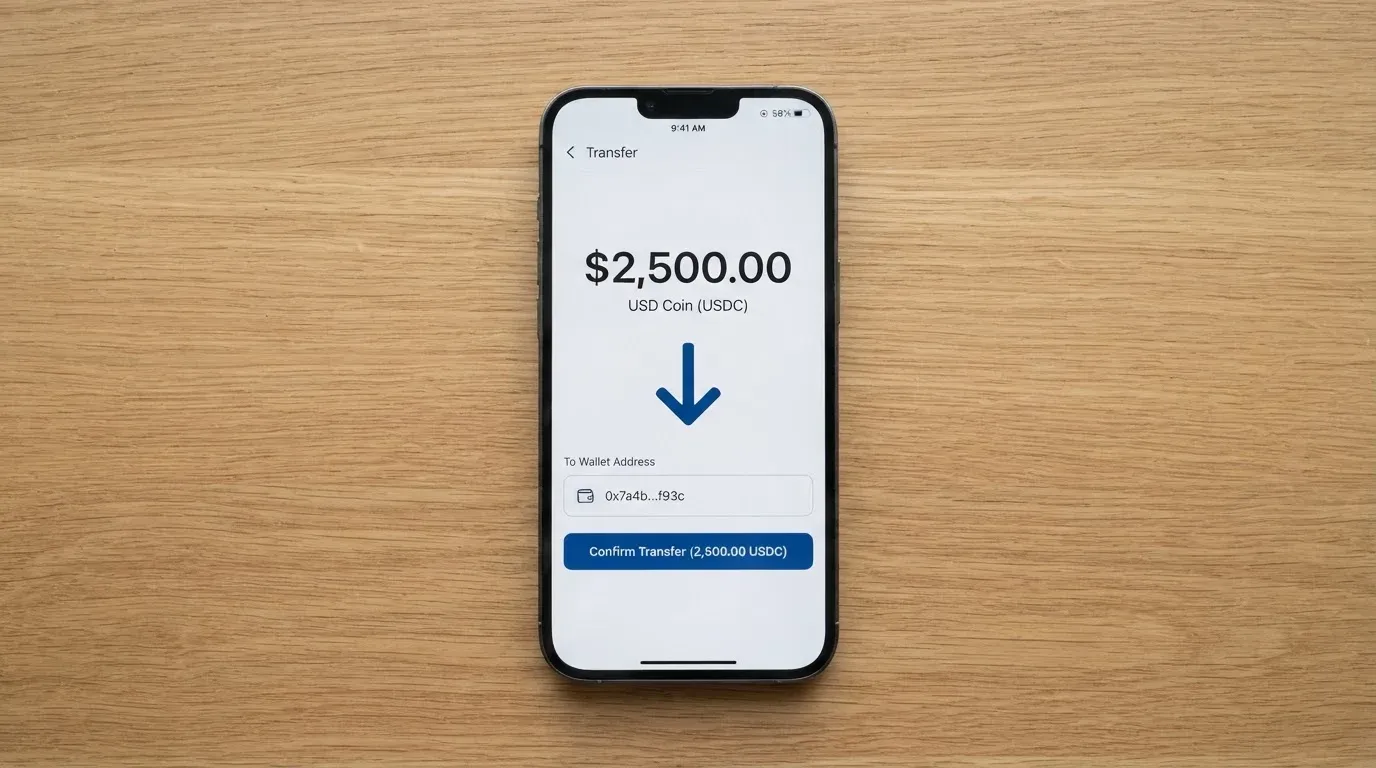
The published limits are: up to EUR 20,000/day in crypto on any plan, with the plan-based fiat top-up caps I gave in the table above. Unofficial sources say the crypto buy fee is 0% on all plans, the voucher reload fee ranges from 0% to 6% depending on the voucher, and external-card reloads after the plan allowance are 1.5%. In-app, you can buy and sell crypto but you cannot send or receive crypto to or from external wallets — the in-app balance is closed-loop.
A few practical warnings I would give anyone setting this up. First, only send on the network the app actually shows you, and copy the address from the app rather than typing it by hand. Second, if you are funding from an exchange, do a small test first; blockchain transfers are irreversible and the wrong network or the wrong token can mean manual support recovery with no guarantee. Third, if you want to keep your crypto in your own wallet rather than handing it to Bitsa, the in-app model is not for you — this is a custodial flow once the funds land.
Paying with it every day
This is the section where Bitsa is strongest. The card is a Visa — both physical and virtual — the balance is in euros, and the unofficial reporting confirms that Apple Pay and Google Pay work with the current help material. Samsung Pay was announced earlier but does not have a current setup guide, so I would not count on it. There is no official confirmation of Apple Pay or Google Pay on the fetched pages, but the help documentation reportedly covers them.
Cashback is listed in the plan benefits: “up to 15%” on the Move plan, with the wording mentioning favourite brands, but the payout asset and the conditions for earning it are not stated on the official pages. That is the second transparency gap.
For day-to-day spending, the card behaves like a prepaid euro Visa, which means it will be accepted wherever Visa is accepted — most online shops, supermarkets, transport, subscriptions. A few things to know about the underlying mechanics: 3-D Secure is the standard identity check for online card payments, and it tends to work with Bitsa through a one-time code or a biometric step in the app. Some merchants decline prepaid or foreign-issued cards outright because the BIN lookup tells them the card type and the issuer country, which is something you may run into. US merchants using Address Verification Service may not get a match, because AVS is generally unavailable for foreign-issued cards — that can produce a decline even when the balance and the card are fine.
A small point that matters in practice: declined authorisations can leave a hold on your balance for several days, typically up to about a week, even if no money actually moved. If you see money “missing” right after a failed online payment, that is usually why.
The app is the central nervous system of the card. The unofficial Google Play rating is around 2.8/5 to 2.9/5, with no number of ratings published — that is a low score, and it is consistent with the Trustpilot picture I will come to next. The official pages do not give app ratings.
What can go wrong
The reliability section is where the score drops. The fetched official pages do not name the card issuer or the BIN sponsor, and the licence picture is thin. The card issuer is Pecunia Cards EDE (PecunPay) and Bitsa SAS is the programme operator, according to unofficial reporting, but Bitsa’s own public material does not confirm that to me. For a card with a European IBAN, I would expect a clearer disclosure.
The user feedback is poor. Trustpilot reads 1.3 out of 5 from 363 reviews, with 68% of them one-star. The recurring themes, in date order, are: accounts frozen or blocked with funds held back (reviews from 2020 through 2026, including May, July and September 2026); unresponsive support for weeks or months (July 2026); repeated document or KYC demands (2025); crypto top-ups that arrive late, partial or not at all (May and November 2025); login and app failures (September 2026); unexplained account closure (January 2025). Two reviewers claim to have received regulator warnings, which I have not independently verified. The company has not replied to the negative reviews. I do not have a Reddit thread or a separate Bitsa Trustpilot page beyond the 363 reviews to triangulate against, so I would treat the pattern as a strong signal rather than a final verdict.
A few other risks worth knowing about, drawn from how this category tends to behave rather than from a Bitsa incident specifically. Card programmes can be wound down — Visa terminated FTX’s global agreements on 13 November 2022, and the FTX US debit programme was wound down by its issuer; WaveCrest, a Visa issuer that supplied several crypto card brands, was suspended by Visa in Europe in 2018, closing all WaveCrest-issued programmes. The standard pattern when a programme closes is: a notice period, then new loads stop, then spending stops, then a window to withdraw the balance. If your money is on the card and the programme closes, you should expect a withdrawal window, not a refund.
Custodial risk is the other piece. Once your crypto is in Bitsa, you do not hold the keys; Bitsa does. The unofficial source describes the euro balance as held inside the PecunPay programme, with SMS codes plus a personal SCA secret for online purchases and sensitive changes, and the ability to block the card in the app. None of that is independently confirmed on the official pages. The category history of custodial platforms is not reassuring — Mt. Gox (about US$350 million reported stolen 2011-2014), Coincheck (about US$400 million, 2018), Ronin Network (US$625 million, 2022) — and Bitsa sits in that custodial bucket.
For a card with this profile, the user-side safety checklist is short. Enable the in-app 2FA and the personal SCA secret. Keep the card blocked in the app when you are not using it. Set a spending limit. Treat the balance as something you would be comfortable losing. Do not load more than you can afford to be locked out of for weeks while KYC is being repeated.
Support is another weak point. The unofficial report says no support channels or response times are published on the review page, and reviewers describe slow or absent replies. That matches the Trustpilot pattern, and it is worth weighing against the alternative cards below — at least one of which publishes a clear support path.
What to take instead
If Bitsa does not fit, three alternative cards cover different use cases. I have listed them in score order. None of them is a like-for-like replacement — Bitsa’s IBAN is unusual — but each addresses a specific weakness.
International Visa Card — 6.7 / 10. A US-issued Platinum Visa in USD, currently virtual only (physical “coming soon”), with USD 5 one-time issuance and no maintenance fee. Plans: Classic free, Pro USD 9/month, Max USD 19/month. Card use in USD is free on all plans; foreign currency is the Visa exchange rate plus a 2% FX fee. Deposits of any kind are free. Funding is USDC or USDT into the USD account at 1:1, plus USD, EUR, SEPA, SWIFT and FedNow. The eligibility list is clearly published: account and card not available to residents or legal registrants of Belarus, mainland China, North Korea, Cuba, India, Iraq, Iran, Israel, Myanmar, Nepal, Nicaragua, Russia, Syria, Turkey, Ukraine, Venezuela or Vietnam, with FATF grey-list countries reviewed case by case. The rule is by residence or registration, not citizenship. There is no cashback published. If you are US-based or in a country it serves, this is a clean, well-disclosed option; if you are in the EEA and need an IBAN, it is not.
UNi Card — 6.1 / 10. A multicurrency Mastercard tied to the UNi.Global account balance, with no annual fee and no foreign transaction fee, converting at live OTC rates. Cashback (“Spend-to-Earn”) up to 3%. The funding path and the physical/virtual split are not stated on the page I read. If your priority is no recurring fees and a multicurrency Mastercard, this is the one to look at first; the missing detail on funding is the gap.
Whop Cards — 5.2 / 10. A Visa that spends from a Whop balance, with pending balance usable as soon as a payment arrives and stablecoin collateral behind it. Eligibility is by US state (31 consumer states) and by country blacklist (Belarus, mainland China, Cuba, Hong Kong, India, Iran, Iraq, Israel, Myanmar, Nepal, Nicaragua, North Korea, Russia, Syria, Turkey, Ukraine, Venezuela, Vietnam), with 41 states for businesses. 5% cashback at select merchants, currently Uber, with more planned. The page says “no extra fees” but does not list FX or conversion figures, and the card type and currency are not stated. If you are inside the 31 US states and you like the cashback framing, it is worth a look; if you are outside the US, the eligibility rules knock you out.
If Bitsa’s IBAN is the deciding feature, you are effectively inside Bitsa’s lane, and the comparison collapses to plan choice rather than a different card.
Who I would recommend it to
Pulling this together, the people I would point at Bitsa are: EU residents on the supported list who want a euro-denominated prepaid Visa with a European IBAN, who are happy paying EUR 0.99/month for the Move plan or EUR 9.99/month for the Pro plan, and who are not going to load large balances they cannot afford to be frozen pending review. Within that group, the Pro plan is the only one where the limits feel like they match a real spending pattern, and the cashback line is the one place where the monthly fee pays for itself.
The people I would not point at Bitsa are: anyone in the US, the UK, Canada, Bulgaria, Croatia or Latvia; anyone who needs a card with clearly disclosed licensing on the public page; anyone who wants strong self-custody, since the in-app balance is custodial and you cannot move crypto in or out to an external wallet; anyone who treats customer support responsiveness as a deal-breaker; and anyone planning to make a single large crypto conversion, because the unofficial 1.89%–2.39% crypto sell fee plus the 1.75%/2% international payment fee compounds quickly.
If you are on the fence, the cheapest way to test Bitsa is the virtual card at EUR 2.50 on the Free plan: load a small amount, spend it inside the euro zone, and see how the app and the support feel. The downside is that the Free plan limits are tight, and the moment you try anything cross-border, the fee picture changes.
Frequently asked questions
What is the Bitsa card?
Bitsa is a prepaid Visa card, available in physical and virtual form, attached to a euro balance, with a European IBAN, and managed from an iOS or Android app. The card issuer is Pecunia Cards EDE (PecunPay) and Bitsa SAS is the programme operator, according to unofficial reporting.
Is Bitsa a bank?
No. Bitsa is a simplified joint stock company (SAS) registered in Nice, France, and the card is a prepaid Visa backed by e-money, not a bank account. Funds are not the same as bank deposits and may not be covered by deposit guarantee schemes, which is worth keeping in mind if you are deciding how much to load.
Who owns Bitsa?
The fetched pages describe Bitsa as an SAS registered in France. The card issuer is not stated on the public pages; the card issuer is Pecunia Cards EDE (PecunPay) and Bitsa SAS is the programme operator, according to unofficial reporting. I would not take that as final without reading the in-app disclosure.
Is Bitsa card available in the United States, the United Kingdom or Canada?
According to the unofficial reporting, the US, the UK and Canada are restricted. The official pages do not publish a full country list, but in practice applications from those three countries are unlikely to succeed. Residents of 27 EEA countries appear to be supported.
Does Bitsa require KYC?
The official pages do not spell it out. Unofficial sources describe proof of residence in an eligible country plus government ID verification, with the possibility of additional source-of-funds documents, and warn that the issuer may suspend accounts for failed KYC, AML/fraud risk or missing paperwork. Treat identity verification as a hard requirement.
How do I top up the Bitsa card?
Officially, you can top up with Bitcoin, Ethereum, USD Coin, a card, a SEPA transfer, a wallet balance or a voucher. The networks are not named on the public pages, so copy the address from the app each time and do a small test before sending a large amount. Crypto reloads are capped at EUR 20,000/day on all plans; fiat top-ups are plan-based.
How do I add the Bitsa card to Apple Wallet or Google Pay?
Unofficial sources say Apple Pay and Google Pay are covered in the current help material, while Samsung Pay is not. The official pages do not confirm this to me, so I would verify the in-app setup guide before relying on it. Tokenised mobile wallets replace the card number with a device-specific number, which is the safer way to pay in shops.
Is Bitsa card safe?
The published safeguards are SMS codes plus a personal SCA secret for online purchases, the ability to block the card in the app, and a custodial euro balance inside the PecunPay programme according to the unofficial source. The risk picture is the standard custodial-card risk: a 1.3/5 Trustpilot score, a pattern of frozen accounts with funds held pending review, and a thin official disclosure of who the issuer is. Enable every in-app safeguard you can, and do not load more than you can afford to be locked out of.
How do I withdraw money from Bitsa?
The fetched pages do not describe withdrawals. Unofficial sources describe in-app crypto as buy-and-sell only, with no external-wallet transfer, a EUR 0 card-cancellation fee at expiry, and a EUR 1.50 third-party external transfer fee. SEPA Instant is free on the Pro plan for the first two transfers, then EUR 1, and on Move it is one free then EUR 1. Withdrawals outside Spain are capped at EUR 450/day.
Is the Bitsa card worth it?
It depends on your country and your plan. For an EU resident who wants a euro prepaid Visa with an IBAN and is happy on a paid plan, Bitsa is workable. For anyone outside the EEA, anyone who needs a clearly disclosed issuer and licence on the public page, or anyone who cannot afford a balance freeze, the answer is no — and one of the alternatives above is a better fit.
App and neobank card reviews – cryptocardcheck
Content created by the «cryptocardcheck» team