
Bringin, reviewed: a Bitcoin-spending Visa for inside the EEA
 Available in US
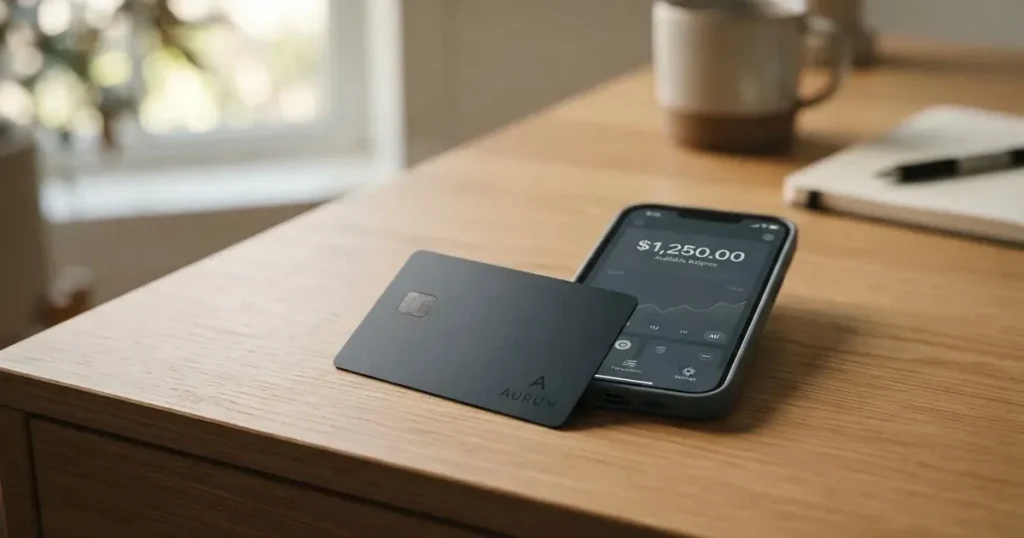
Bringin is a euro-denominated Visa card that converts Bitcoin into a spendable balance rather than holding a bank account for you. It comes as a physical card and as unlimited virtual cards, it works through Google Pay and Samsung Pay directly, and Apple Pay only by way of the Curve app. The card is aimed at people in the European Economic Area who want to spend Bitcoin, and it costs a flat annual plan with no monthly charge on top.
The conditions described below are current as of October 28, 2026.
I gave this card 5.7 out of 10. That is not a rounding of a strong offering and it is not a rejection either. It does exactly one thing competently, does it inside the EU, and the price is honest rather than teaser-shaped. What holds it back is the same thing that defines it: there are no stablecoins, so anyone holding USDC or USDT has to convert twice, and several operational details that matter to a daily spender are simply not published.
Who should read on: EU residents who already pay with Bitcoin or Lightning, who are comfortable with a prepaid-style balance rather than a current account, and who want the physical card in the post as well as virtual cards for online spending. Who should stop reading: anyone without a valid EEA identity document, anyone whose money sits mainly in stablecoins, and anyone who needs a bank account in a currency other than the euro.
| Criterion | Mark | Reason |
|---|---|---|
| Who can get it | 5 / 10 | Open to anyone 18+ with a valid EEA ID: EU member states plus Liechtenstein, Norway, Iceland |
| Cost | 5 / 10 | One plan at €37.69 for a year, “0 fee per usage”; 1% Bitcoin-to-euro conversion plus a 0.5% markup; 0% FX fee |
| Top-up options | 4 / 10 | SEPA transfer or Bitcoin on-chain and Lightning, all converted to euro; no stablecoins |
| Reliability and complaints | 7 / 10 | UAB Bringin in Lithuania, built on Lightspark Europe with a MiCA licence; issuer not named; no complaints found |
| Everyday use | 8 / 10 | Physical and virtual Visa, Google Pay and Samsung Pay natively, Apple Pay via Curve, €350 in cash per day |
| Total | 5.7 / 10 | A solid EEA Bitcoin card that is narrow by design |
Will they give you the card
They will, if you are 18 or older and hold a valid identity document from the EEA. The EEA as the card defines it covers the 30 EU member states plus Liechtenstein, Norway and Iceland, and those three are named alongside the EU in the card’s own material. That is the whole of the eligibility test: age, a document, and a country in that list.
Two things you should check before you bother. First, the card’s pages record the EEA requirement in terms of your identity document. Whether it is enforced against your citizenship as well as your residence is not stated, and that distinction matters if you hold a passport from one country and live in another. Bringin says it does not publish the test, so you are reading the document rule, not a nationality rule. If you are outside the EEA, this card is not available to you at all, and no application outcome changes that.
Second, there is a restricted-country list on top of the EEA requirement. The card cannot be used in restricted countries, and that list includes Belarus and Russia, along with Ukraine, Türkiye, the UAE, Nigeria, Egypt and others. The full list is worth reading before you travel with the card, because the restriction is about where the card may be used rather than where you live. A resident of the EEA who visits one of the listed countries should assume the card will not work there.
Everything else about who gets the card follows from those two points, and I would summarise the position this way: Bringin is a European card for European residents, and its ambition stops roughly at the border of the EEA. If you are reading this from outside the EEA, the sections on costs and top-ups are still worth a skim for context, but the card itself is not an option.
How to get it
The route is short and ordinary. You sign up, verify your identity, fund the euro vIBAN that comes with the account, and then either create a virtual card instantly or order the physical one. There is no application fee for either card; both the physical and the virtual card are free within the plan.
The card is a Visa, offered in both forms, and the virtual side is unusually flexible. You are not limited to one virtual card: unlimited virtual cards are offered, as well as one-time virtual cards that you would use for a single payment and then discard. The currency is the euro and only the euro, which is the reason the funding and fee structure later in this review works the way it does.
Delivery is where the public information runs out. A physical card is delivered to the address registered on the account, and the delivery time and any delivery cost are not stated. The virtual card is instant. If you need a card for something this week, the virtual card is the one to start with, and if you need the plastic in your wallet, you will have to wait an unstated period without knowing what to expect.
Identity verification is part of sign-up. There is also a point worth knowing about limits: the card states that limits depend on your KYC verification level, but it does not show the per-level figures or the reasons a level can be refused. That is not a red flag in itself, but it does mean the limits you get may differ from the headline ones listed later in this review.
One practical note. If your own situation makes standard identity documents awkward, this review is not a guide to getting around that. Bringin runs KYC at sign-up, the EU rules require institutions to establish who they are dealing with before the relationship starts, and where due diligence cannot be completed the institution is expected to stop rather than proceed. There is no legitimate workaround, and the card is not worth pursuing if the documents exist but do not match your address.
What it really costs
The headline number is a plan price of €37.69, shown with a “10% Discount” label and the note “Paid annually, €3.49 per month”. There is one plan and only one plan, so the price you see is the price you pay. Bringin describes it as “0 fee per usage”: no per-transaction charge on top of the plan.
The costs that do bite are conversion costs, and they bite specifically because this is a Bitcoin card. Converting Bitcoin to euro is charged at 1%, plus a Bringin markup of 0.5% on partner pricing, as the FAQ states it. On the foreign-exchange side the news is better: the card shows a “0% FX fee” and no forex fee on online purchases. Cash withdrawals are possible, and the ATM fee itself is not stated.
| Fee or limit | What the card says |
|---|---|
| Plan price | €37.69, shown with “10% Discount”; “Paid annually, €3.49 per month” |
| Per-usage fee | “0 fee per usage” |
| Physical card | Free |
| Virtual card | Free |
| Conversion | Bitcoin to euro 1%, plus a 0.5% Bringin markup on partner pricing |
| FX fee | “0% FX fee”; no forex fee online |
| ATM fee | Not stated |
| Card payments | €10,000 per day, €15,000 per month |
| Cash | €350 per day, €3,000 per month |
Two ordinary payments, so the fees land in the right places. Buying a €30 coffee: the plan cost is already sunk, per-usage is zero, and if the money came from a Bitcoin balance rather than a euro bank transfer you have paid the 1% conversion plus the 0.5% markup, which is €0.45 on that purchase. If the €30 came from a SEPA transfer of euros you had already loaded, the coffee costs exactly €30 in fees. Paying for a €60 subscription in a currency other than the euro: the FX fee is 0%, so the cost of the conversion is whatever the card network’s rate costs you, with no markup from Bringin on top.
A third, and this is the one that catches people out: withdrawing €200 in cash. There is no stated fee, but the monthly cash ceiling is €3,000 and the daily cash ceiling is €350, so a €200 withdrawal is well inside both. A day’s cash withdrawal is therefore limited by the ceiling rather than by cost. And if you want to see the cash-ATM price for yourself, the card’s own figures run out there: it is not published, which means you should treat it as an unknown rather than assume it is zero.
What I would not do is treat “0 fee per usage” as a promise that the card is free to run. The plan is the running cost; the conversion is the transactional cost; and if you never touch Bitcoin and simply top up from a bank, you are paying €37.69 a year for a euro prepaid Visa with a very good Apple Pay workaround.
How to top it up
There are two ways in, and one important limitation. You can send a SEPA bank transfer to your personal euro vIBAN, or you can send Bitcoin on-chain or over Lightning from any wallet. Either way the money arrives as euros in the vIBAN, and the card spends from that IBAN balance. For euro top-ups the destination is the Bringin euro account only.
The limitation is the one that costs Bringin points with a lot of people: there are no stablecoins. No USDC, no USDT, nothing. If your crypto balance is mostly in dollar-pegged tokens, using Bringin means converting those tokens to Bitcoin first and paying for that second conversion on top of the 1% plus 0.5% the card charges. That is the practical reason the top-up score is the lowest of the five criteria here, and it is worth being blunt about: for a large part of the crypto card user base this is a disqualifying gap, not a detail to look past.
What is not stated: the minimum top-up amount, and the fee charged on a top-up. Bringin does say that fees are displayed in the app before you confirm, which is the right place for that number to live but does not help you compare in advance.
Getting money back out works too. Withdrawals to your bank are described as available “anytime”, and the fees for that are not stated. Closing an account is done by email, according to an article dated 24 Jul 2026, and how the remaining balance is handled on closure is not stated either. Neither of those gaps is alarming, but both are things I would want answered before I closed an account with money sitting in it, so I would put the question to support before I ever needed it.
So the everyday loop is: transfer euros in, or send Bitcoin and let it convert, spend from the vIBAN balance. The choice between the two routes is a choice between convenience and Bitcoin purity, since a SEPA transfer costs nothing at the card level and the on-chain route costs you the network fee plus the conversion.
Paying with it every day
This is where Bringin is strongest. The physical and the virtual cards are both Visa, so acceptance is wherever Visa is accepted online and in stores. Four mobile wallets work directly: Google Pay, Samsung Pay, Fitbit Pay and Garmin Pay. Apple Pay is the exception — it only works through the Curve app, and direct Apple Pay support is described as “planned”. In practice that means Apple users get a working Apple Wallet entry today, with the Curve app in the middle, and “planned” means planned.
Cash is there too, within €350 a day and €3,000 a month. That is enough for a normal day’s spending and not enough to carry your month’s expenses in notes.
The security controls on the card are the ones I would expect: an instant card freeze, real-time alerts, and 3-D Secure on every transaction. You can add the card to a phone wallet as a tokenised number, which means the real card number never sits in the wallet. The app is available on iOS through TestFlight, on Android through Google Play, and as a web app, so a TestFlight link is what an iPhone user looks for; store ratings were not read, and I would rather say that than quote a number I did not check.
What the card does not advertise is worth listing too, because absence matters in this category. There is no cashback shown. The perks are modest and specific: 10% off Alby subscriptions and off the Koinly tax calculator. The countries and merchant categories where the card is blocked are not stated, which means you cannot check before you arrive at the till, and the dispute process is not stated either, so nobody will tell you what to do when a charge you did not make appears.
None of that changes my view that daily use is this card’s strongest suit: eight out of ten. The wallet support, the virtual card flexibility and the instant freeze add up to a card that feels normal to use once the account is funded.
What can go wrong
I looked for trouble and found remarkably little, which is itself worth explaining. No official incidents came up, and no user complaint threads surfaced. That is not the same as a clean bill of health; it may simply mean the card is young enough, or small enough, that nobody has written about it yet. There is no Trustpilot page I could find, so the “no complaints found” is absence of evidence rather than evidence of absence.
The structural risks are the ones to weigh. The card is UAB Bringin, registry code 306317430, based in Vilnius, Lithuania, and it is built on Lightspark Payments Europe AS, which the card describes as a MiCA-authorised CASP, with Lightspark Europe having received its MiCA licence in June 2026. The card issuer itself is not named. That last detail is the one I would want a plain answer to. In this category the issuer is the institution that actually holds the card programme and stands behind the balance; the crypto brand is often only the front end that markets it. A card whose issuing bank is not named is not automatically a problem, but it is a question you are entitled to ask before you load it.
On the crypto side, the card page describes a self-custody wallet, which means the Bitcoin stays in a wallet you control until the moment of payment rather than sitting with a custodian. That removes the counterparty-hack risk that has taken custodial platforms down in the past, and it puts the key-loss risk on you instead: a seed phrase is typically 12 to 24 words, anyone who obtains it can restore the wallet and spend from it, blockchain transfers are irreversible, and there is no built-in way for a network to freeze or return what has gone. If you do not already have a safe method for holding and using a seed phrase, the self-custody advantage is theoretical.
Safeguarding of the fiat balance is not stated, and that is the gap to watch. In the EU, an electronic money institution must safeguard customer funds, either by segregating them in dedicated accounts or insuring them, and such funds are not the same as bank deposits and may not sit under a deposit guarantee scheme. Bringin’s own pages do not tell you which arrangement applies, so I would ask.
Two more limits on what you can rely on. KYC level sets your limits, and the per-level figures are not published, so the €10,000 daily payment cap and €3,000 monthly cash cap are ceilings rather than guarantees. And declines are not uncommon in this category for reasons that have nothing to do with you: a merchant can decline a prepaid or foreign card when it looks up the BIN, address verification is generally unavailable on foreign-issued cards, and a declined authorisation can leave a hold on your money for up to seven days.
What to take instead
None of these is better than Bringin at the one thing Bringin does. Each is better at something else, and the honest way to choose is to name the thing you need first.
| Alternative | Score | Card | Plan | Currency | Who can get it |
|---|---|---|---|---|---|
| Bringin | 5.7 / 10 | Visa, physical and virtual | €37.69 annual, €3.49 per month shown | Euro only | 18+ with valid EEA ID |
| International Visa Card | 6.7 / 10 | US-issued Platinum Visa, virtual; physical “Coming soon” | Virtual issuance $5, no maintenance; Classic free, Pro $9.00/month, Max $19.00/month | Pays in USD | Not available to residents or registrants of a long restricted list |
| UNi Card | 6.1 / 10 | Mastercard network | “No annual fee” | Multicurrency | Not stated |
| Whop Cards | 5.2 / 10 | Visa | “No extra fees”; no amounts listed | Not stated | 31 US states for consumers, 41 for businesses |
If your money is in stablecoins rather than Bitcoin, the International Visa Card is the comparison that matters. It deposits USDC or USDT into a USD account free at 1:1, also takes USD, EUR, SEPA, SWIFT and FedNow, has no maintenance fee on the Classic plan, and charges 2% on foreign currency on top of the Visa exchange rate. Its physical card is “Coming soon”, so it is an online card, and its exclusion list is long and includes residents and legal registrants of Belarus, mainland China, North Korea, Cuba, India, Iraq, Iran, Israel, Myanmar, Nepal, Nicaragua, Russia, Syria, Turkey, Ukraine, Venezuela and Vietnam, with FATF grey-list countries reviewed case by case.
If you want multi-currency spending without an annual fee, UNi Card is a multicurrency Mastercard that spends from the UNi.Global account balance with no annual fee and no foreign transaction fee, converts at live OTC rates with “no hidden exchange fees”, and offers spend-to-earn rewards up to 3%. Who can get it is not stated, the funding route is not stated, and physical or virtual is not stated, which are all reasons to check before you commit.
If you are in the United States, Whop Cards may simply not apply to you as a consumer, since the card covers 31 states for consumers and 41 for businesses and excludes residents of a long list including Russia, Belarus, China, Cuba, Hong Kong, India, Iran, Iraq, Israel, Myanmar, Nepal, Nicaragua, North Korea, Syria, Turkey, Ukraine, Venezuela and Vietnam. It pays 5% cashback at select merchants, currently Uber, from a Whop balance backed by stablecoin collateral from a linked wallet, with pending balance usable as soon as a payment arrives. Its fees are not stated beyond “No extra fees”, and the coins and networks behind that collateral are not stated either.
My own summary: the alternatives trade specificity for breadth. Bringin is narrow, euro, EEA, Bitcoin. The others are broader on funding or currency and broader on who they accept, and they are correspondingly vaguer in the places where Bringin is specific.
Who I would recommend it to
I would recommend Bringin without hesitation to an EU or EEA resident who spends Bitcoin regularly, accepts the 1% plus 0.5% conversion as the cost of doing that spending rather than converting anywhere else, and wants both a physical card and unlimited virtual cards including one-time ones. For that person this is a well-shaped product: one plan, no per-payment fee, 0% FX, wallets on the phone, instant freeze, and a euro balance that behaves like an ordinary prepaid card.
I would recommend it with a caveat to someone whose crypto is mostly Bitcoin and Lightning but who also holds stablecoins. Top up from SEPA or from Bitcoin, and do not try to route dollar-pegged tokens through it.
I would not recommend it to anyone outside the EEA, anyone whose spending is mainly in a currency other than the euro, anyone who needs a bank account rather than a prepaid balance, or anyone who needs a card in Apple Wallet today without an extra app in the middle. Nor would I recommend loading it with money you cannot afford to lose track of while the KYC levels, the issuer’s name and the ATM fee remain unstated.
If you are still deciding, the three questions I would ask support before applying are the same three gaps I hit: who is the card issuer, what does a cash withdrawal cost, and what does my own KYC level actually give me in daily and monthly limits.
Frequently asked questions
What is the Bringin card?
Bringin is a euro Visa card built for spending Bitcoin. You top up by bank transfer or by sending Bitcoin, the money is converted into euros in a personal euro vIBAN, and the card spends from that balance like a prepaid card. It comes as physical plastic and as virtual cards, and it is aimed at people living in the European Economic Area.
How does the Bringin card work?
You sign up, verify your ID, fund the euro vIBAN, then create a virtual card instantly or order the physical one, which is delivered to your registered address. Every purchase draws on that euro balance. Bitcoin arrives on-chain or over Lightning from any wallet and is converted to euros, so the card itself never holds Bitcoin.
Is Bringin a bank?
No. Bringin is UAB Bringin, registry code 306317430, a company in Vilnius, Lithuania, built on Lightspark Payments Europe AS, which holds a MiCA licence granted in June 2026. The card issuer itself is not named on the public pages, and the balance behaves like a prepaid balance rather than a bank current account.
Who can get a Bringin card?
Anyone aged 18 or over with a valid identity document from the EEA: the EU member states plus Liechtenstein, Norway and Iceland, thirty countries in total. Whether the test is applied to citizenship as well as residence is not stated. The card also cannot be used in restricted countries, a list including Belarus and Russia.
How do I top up the Bringin card?
Two ways: a SEPA bank transfer to your personal euro vIBAN, or Bitcoin sent on-chain or over Lightning from any wallet. Both land as euros and the card spends from that balance. Minimum amounts and top-up fees are not published, though Bringin says fees are shown in the app before you confirm.
Does Bringin support stablecoins?
No. There is no stablecoin option, so USDC and USDT are not accepted as a way to fund the card. If your crypto sits in dollar-pegged tokens you will have to convert to Bitcoin first and pay for that extra step before the card’s own 1% plus 0.5% conversion applies.
How much does Bringin cost?
The plan is €37.69, shown with a “10% Discount” and “Paid annually, €3.49 per month”, and Bringin describes it as “0 fee per usage”. Converting Bitcoin to euro costs 1% plus a 0.5% Bringin markup. The FX fee is 0% online, and the ATM fee is not stated.
Can I add the Bringin card to Apple Wallet?
Yes, but through the Curve app rather than directly. Google Pay, Samsung Pay, Fitbit Pay and Garmin Pay work natively with the card. Direct Apple Pay support is described as planned, so Apple users currently pay through one extra app.
Is Bringin card safe?
It has the usual protections: instant card freeze, real-time alerts, 3-D Secure on every transaction, and a self-custody wallet so your Bitcoin is not held by a custodian. What is not stated is who the card issuer is and how the euro balance is safeguarded, and self-custody means key loss and wrong transfers are yours alone to bear.
Is the Bringin card worth it?
For an EEA resident who spends Bitcoin regularly and tops up from SEPA or from Bitcoin, yes, given one plan, no per-payment fee and 0% FX. If your balance is mostly stablecoins, if you are outside the EEA, or if you need a multi-currency account rather than a euro prepaid balance, it is not worth it.
App and neobank card reviews – cryptocardcheck
Content created by the «cryptocardcheck» team