
A cheap virtual card in three African markets, with a lot of its fine print unstated
 Available in US
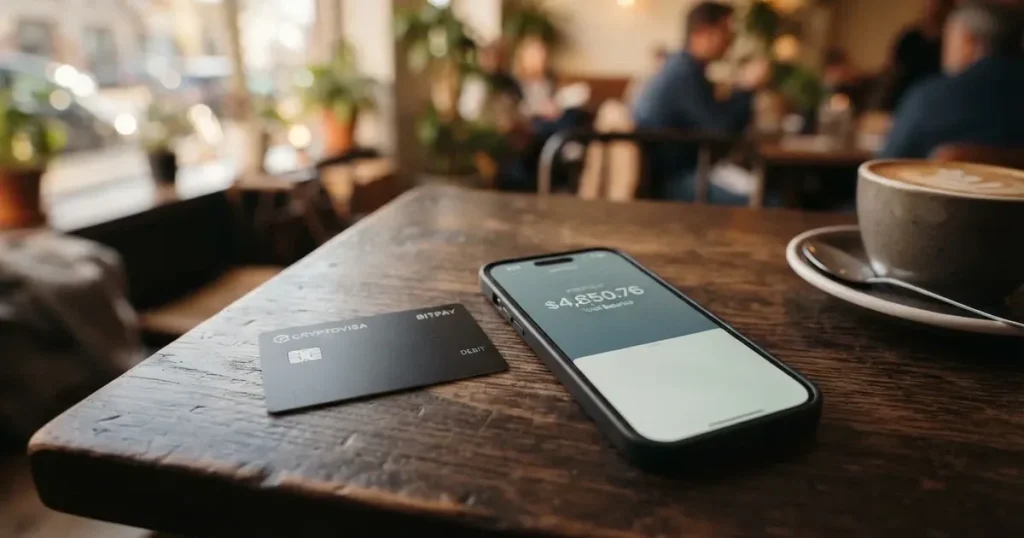
Busha is not a bank, and the card it offers is not a bank card in the ordinary sense. It is a virtual Visa card, issued inside a crypto exchange app, that spends the USD, USDT and USDC sitting in your Busha wallet. You load the balance, you pay with the card, and the numbers on the screen are the numbers that matter. My overall score for it is 4.8 out of 10. That is a low score, and it is low for a specific reason rather than because the product is broken: the card’s public pages answer some of your questions well and leave others entirely blank, and the blanks cluster exactly where your money would be at risk.
Let me be clear about what I mean, because a 4.8 can read as “avoid at any cost” and that would not be fair. The headline cost is genuinely low — a one-time $2 for the card and no funding or maintenance fees, according to the company. If your situation is simple (you hold stablecoins, you spend online in US dollars, you do not need a physical card or a cash machine), the arithmetic works in your favour. If your situation is anything more complicated — you need cash, you need Apple Pay, you need to know exactly what a non-dollar payment costs before you make it, or you need to be sure you are not sending money to the wrong blockchain — then this card is thin on the details, and I would not build a routine around it without asking support first.
The conditions described here are current as of October 28, 2026.
Scorecard
| Criterion | Mark | Why |
|---|---|---|
| Who can get it | 2 / 10 | Countries not named on the official pages; Busha entities exist in Nigeria, Kenya and Ghana; naira payments are not supported |
| Cost | 8 / 10 | $2 one-time card creation, no funding fees and no maintenance fees; FX not disclosed |
| Top-up options | 5 / 10 | Spending from USD, USDT and USDC balances in the Busha wallet; networks not named |
| Reliability and complaints | 6 / 10 | Busha Digital Limited, licensed by SEC Nigeria as a Digital Asset Exchange; card issuer not named; unofficial Trustpilot picture around 3.5–3.8 out of 5 |
| Everyday use | 2 / 10 | Virtual Visa only, Apple Pay and Google Pay not supported; unofficial report of no ATMs |
| Total | 4.8 / 10 | Cheap to open, hard to plan around |
Who this suits, in one line: a Nigerian, Ghanaian or Kenyan resident who already holds USDT and spends it online in dollars. Who it does not suit: anyone who needs a physical card, a cash withdrawal, a mobile wallet, or a published fee schedule before committing money.
Will they give you the card?
The honest answer is that the official pages do not name the countries, so I cannot tell you definitively where it is available — and neither, apparently, can the marketing pages.
What Busha says is that applicants “complete the eligibility questions”, and that this is the gate. That is the whole official statement. The company’s entities exist in Nigeria, Kenya and Ghana — Busha Digital Limited in Nigeria (registration 1495049), a Kenyan entity (PVT-GYUQJAEL), and a Busha Digital Ltd in Ghana (CS-182631123) — which tells you where the business is, but not who passes the eligibility check. Separately, a third-party site (UEEX, May 2026, not confirmed by Busha) says the card goes to applicants in Nigeria, Ghana and Kenya aged 18+ with a verified Busha account. Treat that as a lead to check, not as a rule. Documents, proof of address and age requirements are not stated on the pages I could reach.
One hard negative is worth stating early: naira payments are not supported. If your spending is in Nigerian naira, this is not your card. That single fact removes Busha from consideration for a large part of the population its own entity list points at.
And a caution about what you have heard: Busha is a crypto exchange, licensed by SEC Nigeria as a Digital Asset Exchange. It is not a bank, and it does not claim to be one. That matters for what happens to your balance if something goes wrong — more on that in the risks section.
How to get it
The route is short, and that is one of the card’s better qualities. You answer the eligibility questions, accept the Card Terms, and the card exists.
What happens next is less well documented. Busha’s help centre has an “AML & KYC Policy” and an “ID Verification” article, but the help centre redirected when I checked, so I have not read them and I will not paraphrase what I have not read. The help centre also carries a “Verification Levels and Limits” page with tiers for the Nigerian market in naira: Level 1 allows deposits only, with no withdrawals; Level 2 allows up to NGN 10,000,000 per month in deposits and withdrawals; Level 3 allows up to NGN 500,000,000 per month. Which level the card itself needs, what documents each level demands, how long verification takes and why a check might be refused — none of that is stated.
What is clear is the shape of the product. It is virtual only, on Visa, denominated in US dollars — Busha calls it a “stablecoin-backed virtual USD Visa card”. You can hold up to four cards, each with a custom name and colour, so separating subscriptions or work spending from personal spending is possible. There is no physical card, and the official post describes the card as issued “within minutes” after approval and payment of the $2 fee.
Fees: what it really costs
The good news first: creating the card costs $2 once, and Busha states plainly that there are “no funding fees or maintenance fees”. For a virtual card with no plastic, that is a hard mark to beat.
The bad news is everything else. The conversion fee is not stated. The foreign-exchange fee is not stated. The cash-advance fee is not stated — and since the card is virtual-only, cash advances are not something you would expect to work anyway. No spending limits are listed. There are no paid tiers: the blog describes one card type, up to four virtual cards with custom names and colours, and nothing more expensive.
The card is USD only. Busha says it works “wherever Visa supports international USD payments” — but if you pay in euros, pounds or naira, the exchange rate you get and any markup on top of it are not published. That is the single question I would put to support before using this card for anything recurring.
| Item | What Busha publishes |
|---|---|
| Card creation | $2, one-time |
| Monthly or maintenance fee | None, stated |
| Funding or top-up fee | None, stated |
| Conversion fee | Not stated |
| Foreign-exchange fee | Not stated |
| ATM / cash advance | Not stated; card is virtual-only |
| Card currency | USD only |
| Payment networks accepted | Wherever Visa supports international USD payments |
| Naira payments | Not supported |
| Daily spending limit | Not stated |
| Monthly spending limit | Not stated |
Now, three everyday payments, walked through as a person would meet them:
- A $12 monthly software subscription in dollars. This is the case the card is built for. $2 once when you create the card, no monthly fee, no per-payment fee stated, and the balance comes out of USD, USDT or USDC in your wallet. This is the cleanest scenario the card has, and it is the one the pricing points at.
- A €30 online purchase from Europe. You are spending dollars against a euro price, so somewhere a conversion happens — at the network rate, at Busha’s rate, or at Busha’s rate plus a markup. Busha does not publish the rate it uses or any fee applied on top. You cannot calculate your cost from public information. Assume the worst until told otherwise.
- A local payment. Not supported. Not expensive, not cheap — simply outside what the card does. This is the clearest illustration of a card that works for a specific corridor and not for the country it is registered in.
One more caution, because unofficial sources disagree with the official page here. A third-party review (UEEX, May 2026, not confirmed by Busha) says there are no annual, monthly, transaction or foreign-transaction fees at all, and that only platform fees for buying USDC and network fees apply. That same page describes a USDC Mastercard with up to 10 cards, which contradicts the official description of a Visa with up to four cards and a $2 creation fee. I am flagging the contradiction rather than resolving it. Where an unofficial source contradicts the company, believe the company — and where the company is silent, that silence is itself the answer to your question.
Top up: how the balance gets there
The mechanism is one line long: “Busha Card currently supports spending from USD, USDT, and USDC balances” in the Busha wallet. Three balances, one card, and the card spends whichever is there.
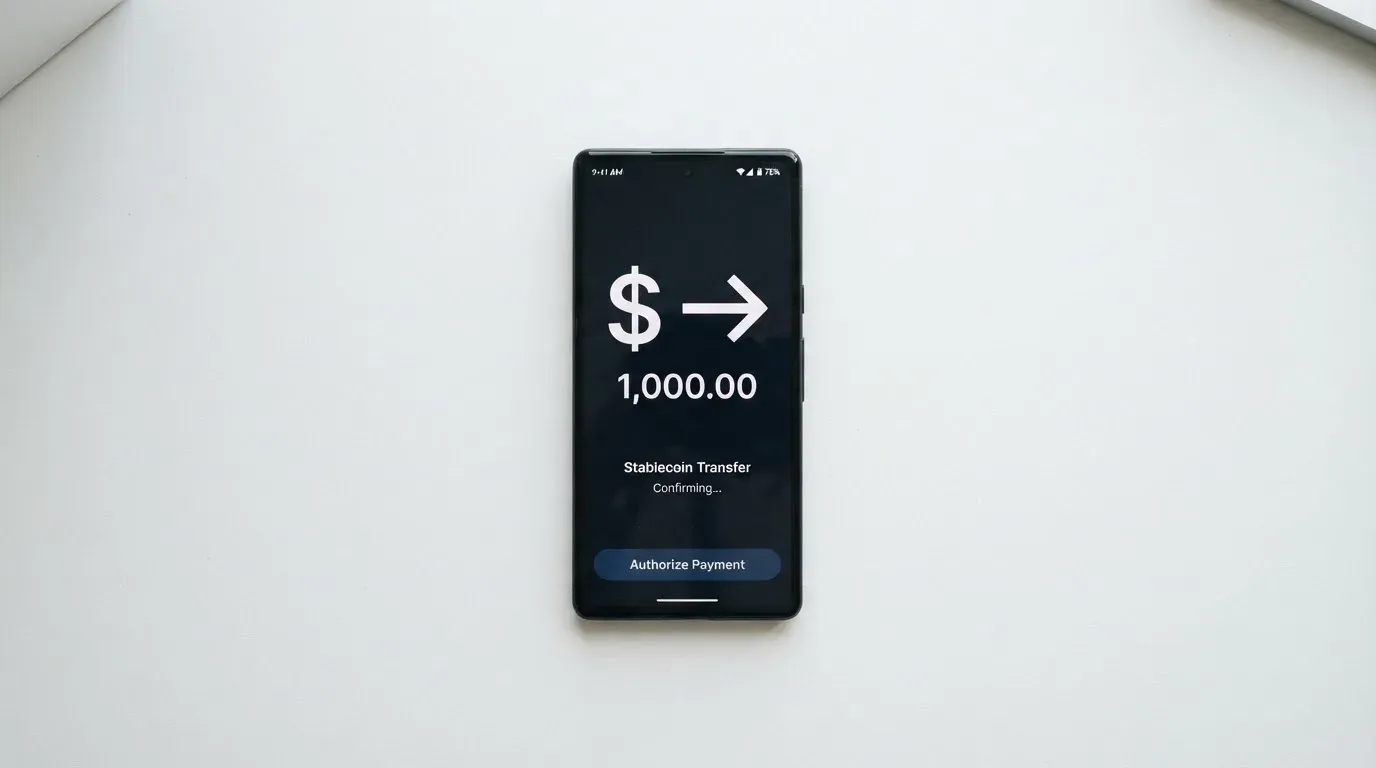
What that line does not tell you matters more than the line itself. The networks are not stated. This is the practical crux of using any stablecoin card: on Ethereum you need ETH in the wallet to pay gas, so a wallet holding USDT and no ETH cannot send it; on Tron fees are paid by burning TRX through bandwidth and energy; and Circle stopped supporting USDC on Tron in February 2024, so “USDC over TRC20” is not a native option either. If Busha supports one network and you send on another, the transfer is irreversible — it can be lost or need manual recovery, with no guarantee.
Minimum top-up amounts and deposit network fees are not stated in the current post. A 2022 post for an earlier version of the product gave a minimum of 2 USDC and a maximum of 5,000 USDC per funding, with up to 10,000 USDC held per card. That was a different product, and it is not confirmed for the card you would be opening today — I mention it only so you recognise it if you find it while searching, and do not plan around it.
What you also cannot find: how to move money back out, or how to close a card. The current post does not describe withdrawing a card balance back or closing a card, and gives no closure terms; the Card Terms are not linked from it. In practice, if you are choosing between cards, “how do I get my money off this” is not a question Busha currently answers in public. Ask.
One structural note. The wallet inside Busha is custodial — Busha holds the credentials, so you are trusting the provider. That is a different risk profile from a card linked to a wallet where you hold the seed phrase yourself. It is not automatically worse; it is a trade you should make knowingly.
Paying with it every day
The honest summary is: online, in dollars, it should work. Much beyond that, no.
Apple Pay and Google Pay are not currently supported. That removes the single most common way people use a virtual card daily, and it is a bigger practical loss than the missing $2 back. If your habit is tapping a phone at a terminal, this card asks you to paste a card number into a checkout page instead.
Blocked merchant categories are not stated. Gambling is the category card issuers most often restrict, and many do so by policy rather than by law — but you will not find a list here. The card works “wherever Visa supports international USD payments” and nothing more specific is published.
The app is on iOS and Android. Ratings look healthy: the App Store Nigeria listing shows 4.6 out of 5 from 5.4K ratings, and Bush’s own site cites 4.6 on the App Store (5k+) and 4.5 on Google Play (11k+). Those are real signals, though an app rating measures how the software feels, not whether your deposit arrived.
Two things that would reassure me and are absent: no cashback or rewards are mentioned, and no dispute, chargeback or refund terms appear in the post — the Card Terms are not linked from it. For a card you might one day need to dispute a charge with, the absence of published chargeback terms is a bigger deal than it sounds. In the US, debit card reversal rights come from Regulation E and credit card rights from Regulation Z, but prepaid-card coverage varies and should not be assumed to apply to this card.
What can go wrong
I found no official complaints about this card, and I want to be precise about why: I ran a dedicated search for Busha virtual USD card complaints across Reddit and Trustpilot, and it returned no Busha reviews at all — only reviews of other companies (Wirex, Spend). No user reports and no news came back. That is not a clean bill of health. It is an absence of data.
What data does exist is third-party. A UEEX review page (May 2026, not confirmed by Busha, Trustpilot page itself not fetched) cites Busha on Trustpilot at roughly 3.5–3.8 out of 5 from about 16–17 reviews, with recurring themes: deposits and withdrawals that are slow or never appear, KYC delays and forced upgrades, rate gaps when selling crypto, and slow support. Google Play is around 4.36. Sixteen reviews is a small sample, but slow withdrawals and slow KYC are exactly the two problems that hurt most when your money is already in the system.
The company side is the more solid half. Busha Digital Limited is registered in Nigeria (1495049), operating through entities in Kenya (PVT-GYUQJAEL) and Ghana (CS-182631123) with data-protection registrations in all three. What is not stated is the card issuer or BIN sponsor — the institution actually standing behind the Visa programme. For a card, that name matters.
On security, the public post gives nothing about card freeze, two-factor authentication or spending controls. The footer mentions an ISMS Policy, and the help centre has a “Security” collection of 11 articles I did not read — so treat the security posture as unknown rather than poor.
Support is Help Center (support.busha.io, English) and a Contact Us page. Notably, there is no Busha Card collection in the help centre — the collections include KYC, Security, Busha Spend and Busha Business. The card is a product without a documented support library, which is consistent with the slow-support theme in the reviews.
Finally, the history. On 8 July 2022 Busha announced earlier USD virtual cards: USDC-funded, on Mastercard, early access, up to 10 cards, “completely free”. The current post — a Visa, up to 4 cards, $2 creation fee — replaces that description. The date of the current Visa post was not captured on the page I read. A product that has already changed its network, its card count and its price is a product whose details may move again. And the category has form: in November 2022 Visa said it had “terminated our global agreements with FTX” and the FTX US debit card programme was wound down; WaveCrest, a Visa issuer that supplied crypto card brands, was suspended by Visa in Europe in 2018, closing all its Visa programmes. Closures typically mean a notice period, then spending and loading stop, then you are asked to withdraw what is left. That is the tail risk nobody prices in.
What to take instead
If you are outside Bush’s three markets, or you simply want more published detail before you commit, these are the alternatives I compared.
International Visa Card — 6.7 / 10. A U.S.-issued Platinum Visa, virtual, paying in USD, with a physical card “coming soon”. $5 one-time issuance, no maintenance fee, and paid tiers at Pro $9.00/month and Max $19.00/month, with Classic free. Card use in USD is free on all plans; foreign currency is charged at “Visa exchange rate + 2% FX fee” — a published, knowable number, which is more than Busha offers. Deposits of any kind are free, and you can fund with USD, EUR, SEPA, SWIFT, FedNow, USDC or USDT. No cashback is stated. The catch is reach: account and card are not available to residents or legal registrants of Belarus, mainland China, North Korea, Cuba, India, Iraq, Iran, Israel, Myanmar, Nepal, Nicaragua, Russia, Syria, Turkey, Ukraine, Venezuela and Vietnam, with FATF grey-list countries reviewed case by case. Purchases are blocked in North Korea, Cuba, Iran, Russia, Syria, Ukraine and Venezuela. The rule follows residence or registration, not citizenship. If Bush’s silence about who qualifies frustrates you, this card tells you exactly who does not — which, for many readers, is the more useful list.
UNi Card — 6.1 / 10. A multicurrency card on the Mastercard network, spending from the UNi.Global account balance. “No annual fee or foreign transaction fee”, assets converted at “live OTC (Over-the-Counter) rates” with “no hidden exchange fees”, and Spend-to-Earn rewards up to 3% with the card. Eligibility is not stated, the top-up routes are not stated, and whether it is physical or virtual is not stated. The fee philosophy is the selling point: conversion at a published live rate rather than an undisclosed markup.
Whop Cards — 5.2 / 10. Visa, accepted anywhere Visa is taken online and in stores. The page says “No extra fees” but lists no issuance or monthly amounts, and no conversion or FX amounts — the same silence as Busha on the thing that matters most. It spends from a Whop balance, and a pending balance becomes usable as soon as a payment arrives. Backed by stablecoin collateral from a linked wallet, though coins and networks are not stated. Rewards are 5% cashback at select merchants, currently Uber, more planned; payout currency and conditions are not stated. Geography is the widest here and the narrowest in effect: 31 US states for consumers (including California, Florida, New York, Texas, Washington and others) and 41 for businesses, with consumer countries unsupported in Belarus, China (Mainland), Cuba, Hong Kong, India, Iran, Iraq, Israel, Myanmar, Nepal, Nicaragua, North Korea, Russia, Syria, Turkey, Ukraine, Venezuela and Vietnam.
| Busha | International Visa Card | UNi Card | Whop Cards | |
|---|---|---|---|---|
| Score | 4.8 / 10 | 6.7 / 10 | 6.1 / 10 | 5.2 / 10 |
| Network | Visa | Visa | Mastercard | Visa |
| Card type | Virtual only | Virtual; physical “coming soon” | Not stated | Not stated |
| Issuance cost | $2 one-time | $5 one-time | Not stated | Not stated |
| Ongoing cost | None stated | Classic free; Pro $9.00/mo; Max $19.00/mo | No annual fee | “No extra fees”, amounts not listed |
| FX | Not stated | Visa rate + 2% | Live OTC rate, no hidden exchange fees | Not stated |
| Mobile wallets | Apple Pay, Google Pay not supported | Not stated | Not stated | Not stated |
| Rewards | Not stated | No cashback stated | Up to 3% | 5% cashback at select merchants |
| Cash | No ATM, unofficial | Not stated | Not stated | Not stated |
Two structural differences are worth naming. Whop and UNi both attach to a wallet or balance inside a wider product — a Whop balance, a UNi.Global account — so what you are really choosing is which ecosystem holds your money. And Busha is the only one of the four whose card issuer is not named at all.
Who I would recommend it to
I would recommend Busha to someone in Nigeria, Ghana or Kenya who already holds USDT or USDC, already trusts the exchange with that balance, spends online in US dollars, and wants a second or third virtual card for subscriptions — four cards with custom names and colours is a genuinely useful feature that costs nothing beyond the $2. For that person, the card does a small job well and cheaply.
I would not recommend it as your only card, and I would not recommend it if any of these apply: you need cash; you tap a phone to pay; you spend in anything other than dollars and cannot tolerate an undisclosed conversion cost; you are outside the three markets; or you need a card where the dispute terms, the issuer’s name and the withdrawal route are written down. In that last case you are being asked to trust on the strength of an app-store rating and a licence that covers crypto trading, not card issuing.
Before you commit anything, I would get three answers in writing: which blockchain networks my deposits must use, exactly what rate and fee apply when I pay in a non-dollar currency, and who the card issuer is. Bush’s support is reachable at support.busha.io and a Contact Us page, and the fact that there is no Busha Card collection in the help centre is itself reason to ask early.
And one caution that applies to any card, not just this one: if you fund it with crypto, that payment is generally a taxable disposal in the sense tax authorities use it. That is not advice, it is a flag — check your own position.
Frequently asked questions
What is the Busha card?
It is a virtual Visa card issued inside the Busha crypto exchange app, denominated in US dollars and described by Busha as stablecoin-backed. It spends the USD, USDT and USDC balances in your Busha wallet, there is no physical version, and you can hold up to four cards with custom names and colours. Creating one costs $2 once, with no funding or maintenance fees.
How does the Busha card work?
You load or convert funds into your Busha wallet balance, then the card spends it like a prepaid card — it cannot go below what you hold. Payments route through Visa wherever international USD payments are supported. Apple Pay and Google Pay are not supported, naira payments are not supported, and the conversion and foreign-exchange fees are not stated.
Is Busha a bank?
No. Busha is a crypto exchange, operating through Busha Digital Limited in Nigeria with entities in Kenya (PVT-GYUQJAEL) and Ghana (CS-182631123) and data-protection registrations in all three. Your balance is an exchange wallet balance, not a bank deposit, and the institution that issues the Visa card is not named on the public pages.
Who owns Busha?
Busha Digital Limited is the Nigerian parent, registered as 1495049. Busha also has a Kenyan entity, PVT-GYUQJAEL, and a Ghanaian Busha Digital Ltd, CS-182631123. The company holds data-protection registrations in Kenya (ODPC 15965), Ghana and Nigeria.
Which countries can I use the Busha card in?
The official pages do not name any countries — applicants simply “complete the eligibility questions”. Naira payments are not supported, so it is not a card for spending inside Nigeria. A third-party site (UEEX, May 2026, not confirmed by Busha) says it serves Nigeria, Ghana and Kenya. Card use anywhere depends on Visa accepting international USD payments at the merchant.
How do I get the Busha card?
Answer the eligibility questions in the app and accept the Card Terms. Once approved and the $2 fee is paid, the card is issued “within minutes” as a virtual card only. Documents, proof of address and minimum age are not stated on the pages I could reach, though an AML & KYC Policy and an ID Verification article exist in the help centre.
How much does the Busha card cost?
Creating the card costs $2 one time, and Busha states there are no funding fees and no maintenance fees. What is not stated: the conversion fee, the foreign-exchange fee, any cash-advance fee, and any spending limits. There are also no paid tiers — one card type, up to four virtual cards. An unofficial review contradicts the $2 figure by describing a free Mastercard product.
Can I add the Busha card to Apple Wallet?
No. Busha states plainly that Apple Pay and Google Pay are not currently supported. You will be pasting card details into checkout forms rather than tapping a phone or a watch. If contactless mobile payment is central to how you pay, this is not the card for you.
Is the Busha card safe?
It carries the usual risks of a custodial crypto product: Busha holds your wallet credentials, blockchain transfers are irreversible, and card programmes can be closed with a notice period before you withdraw your balance — as happened with the FTX US debit card in 2022 and WaveCrest’s Visa programmes in 2018. I found no official Busha card complaints, and no third-party reviews at all on the dedicated search I ran.
Is the Busha card worth it?
For a resident of Nigeria, Ghana or Kenya who already holds stablecoins and spends online in dollars, a $2 card with no monthly fee and four named virtual cards is good value for subscriptions. Elsewhere the value is hard to judge: eligibility countries, conversion fees, FX fees, spending limits, dispute terms and the card issuer are all unstated. My score for it is 4.8 out of 10, and that gap is about missing information, not price.
App and neobank card reviews – cryptocardcheck
Content created by the «cryptocardcheck» team