
A Russian-language virtual card that spends a USDT balance — and leaves most of the numbers unstated
 Available in US

If you have been searching for an ordinary bank card that actually works, you have probably been through the same sequence: a card gets declined abroad, a bank freezes an account, or the bank simply will not open one for you. Crypto payment cards come up in that conversation for a reason, and ByDex is one of the names that turns up. Before you move any money toward it, here is what I could actually confirm, what the service describes, and what nobody states at all.
ByDex is a virtual card, named “ByDex Virtual”, that you add to Apple Pay or Google Pay and fund from a USDT balance. The service is in Russian, the interface works in rubles and through the SBP payment system, and registration runs through the website or a Telegram bot. It is built for someone topping up a virtual card with USDT or with rubles from a bank account, and on that narrow path it does the job it describes. The problem is everything around the edges: there is no published country list, no fee table, no named issuer, and no legal entity — the site carries only a copyright line reading “© 2026 ByDex”.
The conditions described here are current as of October 28, 2026.
Verdict: 4.8 out of 10
My score for ByDex is 4.8 / 10. That is not a verdict on the product being fraudulent — I found nothing that says it is. It is a verdict on how little the public pages let you check before you commit money. Every criterion I could examine landed between 4 and 5, which is what a service with a real, working card and an almost entirely unstated cost structure tends to look like.
Here is the breakdown:
| Criterion | Mark | Why |
|---|---|---|
| Who can get it | 4 / 10 | No country list published; the service is in Russian, priced in rubles, and funds through SBP |
| Cost | 5 / 10 | Issuance cost and fees are not disclosed; rate, fees and limits are shown before you confirm |
| Top-up options | 5 / 10 | Funded from a USDT balance; USDT from an exchange or wallet (network not named) or a bank transfer |
| Reliability and complaints | 5 / 10 | Legal entity and issuer not named; I found no complaints |
| Everyday use | 5 / 10 | Virtual only, Apple Pay and Google Pay supported; ATM situation not disclosed |
| Total | 4.8 / 10 |
Who this suits: someone who already holds USDT, already has a working way to buy it, and wants a virtual card for everyday payments without handing over a document to anyone. The card is issued and funded “instantly” according to the service, and a bank top-up usually takes under a minute. If that is your situation, this is a tool that does something specific and does it fast.
Who it does not suit: anyone who needs to know the fee before they pay, anyone who needs a physical card, anyone who needs an ATM, and anyone whose situation involves your citizenship or your country of residence as a possible blocker. Those are not small gaps. With no country list published, “will they give me one?” cannot be answered from anything the service publishes.
There is one more thing to hold in your head while reading the rest, and I will come back to it in the risk section. I searched for complaints about ByDex and found none — and that is not the reassuring result it sounds like. No complaints usually means either a very new service, a very small one, or a very quiet one. It is not evidence that everything is fine.
Will they give you the card?
Short answer: the service publishes no list of countries at all, so there is no way to check your eligibility from the outside.
The public pages do not name a country list, and I could not find one anywhere else that the service itself points to. What they do say is the shape of the service: it is Russian-language, it works in rubles, and payments go through SBP — the Russian domestic bank transfer system. That combination points at a Russian-facing product. But pointing is not the same as stating, and I am not going to convert a reasonable inference into a rule the service never wrote down.
Two things follow from this gap, and both matter if you are reading from outside Russia. First, if your country is not the one this was built around, you have no way to learn that in advance — you would find out at registration or at your first payment attempt. Second, the answer changes depending on who you are, not just where you are. In this whole product category, citizenship and country of birth get recorded and screened separately from your address, because sanctions screening and issuer risk policy are applied to citizenship as well as to residence. A service that publishes nothing about this gives you nothing to check.
For context on the rest of the category: prepaid and debit cards are generally available to adults aged 18 and over, and some issuers set higher limits on their own. That is a general statement about crypto cards, not something ByDex states.
My suggestion: before you spend time on registration, find out from support — the Telegram bot answers around the clock — whether your country and your citizenship are both fine. Treat the answer you get as the answer, because there is nothing published behind it.
How to get it
The signup path is short, and the service describes each step. In your account you open the “Virtual card” (ByDex Virtual) section, click “Issue card”, confirm the terms, fund the card from your USDT balance, and add it to Apple Pay or Google Pay. That is the whole sequence the site publishes.
On identity checks, the page says a USDT top-up from an exchange or wallet goes “without a mandatory identity check”. I want to be precise about what that sentence covers and what it does not. It is scoped to one specific route: funding the card with USDT that comes from an exchange or a wallet. It is not a statement that the platform has no compliance obligations, and it is not a promise that no check will ever reach you. The same page qualifies it immediately: requirements depend on the product, the amount and the rules in force, and any extra check is shown before the operation. So the honest reading is that the check is not guaranteed and not guaranteed away — it is disclosed at the moment it matters.
What documents you might need: the card’s public pages do not say. That is a real gap, not a trick. If a check is triggered, you will learn the requirements at that point rather than in advance.
There are two channels: a web version at web.bydex.net, and a Telegram bot. Store apps are not stated — I could not confirm whether a native iOS or Android app exists, only the web version and the bot. Support is available 24/7 through the bot at t.me/ByDexnetbot.
The card you get is virtual. “ByDex Virtual” is the name the site uses. A news headline on the same site calls it “International ByDex VISA card” — an international ByDex VISA card. Note the difference: a news headline is marketing copy, not a product page, and the card currency is not stated anywhere. Delivery is not applicable to a virtual card, which is the one part of the usual card-application checklist that this product genuinely removes.
Fees: what a ByDex payment really costs
Here is the honest position: I cannot tell you what ByDex charges, because the service does not publish it. Issuance cost is not stated. Fees are not stated. The ATM situation is not stated. The card currency is not stated — the funding instruction mentions USDT only, so I cannot even tell you which currency your balance sits in once the crypto is converted.
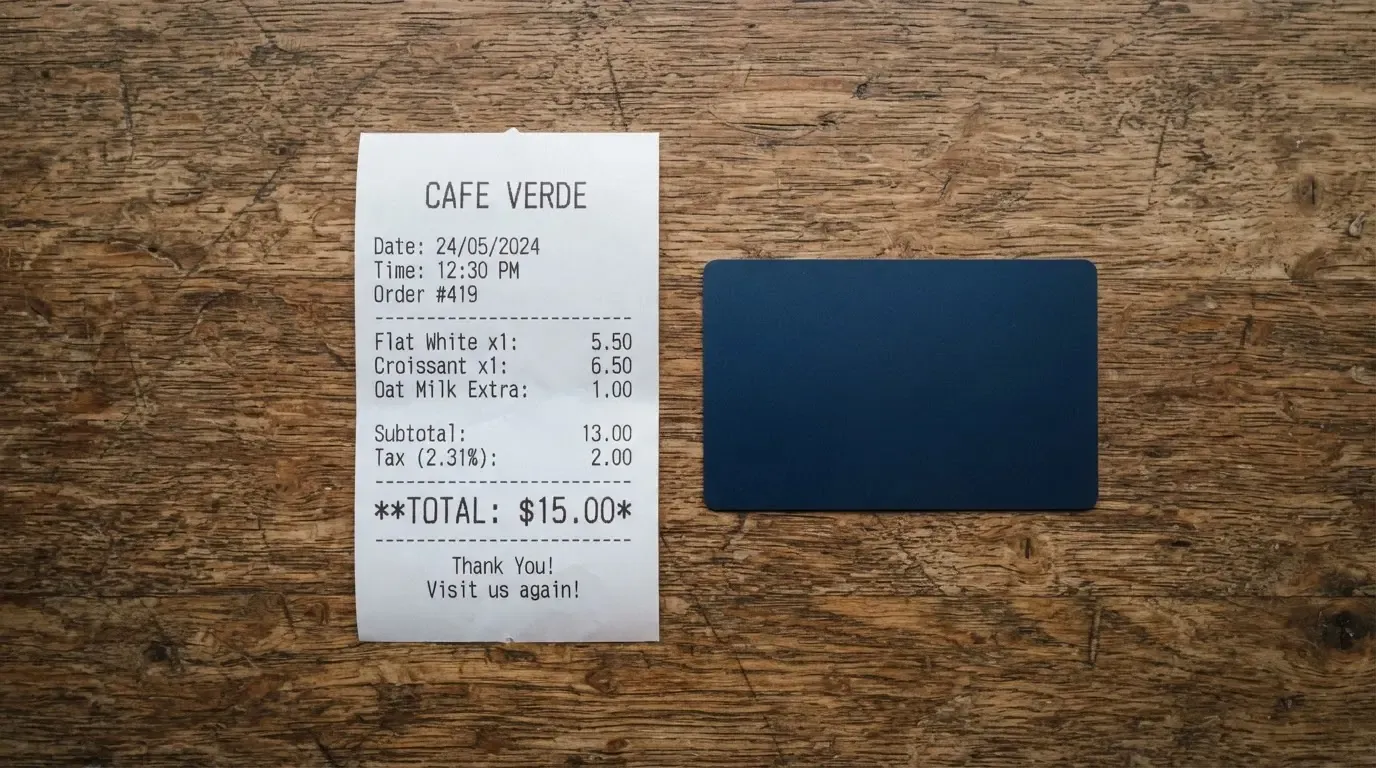
What the site does say is that the rate, the fees and the limits are shown to you before you confirm an operation. That is a real design choice and better than nothing, but notice what it means in practice: the price is a per-transaction prompt, not a schedule you can plan a month against. If you are budgeting, you have to build your budget from the screens rather than from a published table, and you should re-read them at each payment rather than assuming the same number next time.
Here is the full set of cost and limit items, as far as the public pages go:
| Item | What ByDex publishes |
|---|---|
| Card issuance cost | not stated |
| Monthly fee | not stated |
| Conversion fee | not stated |
| Foreign exchange fee | not stated |
| ATM / cash withdrawal | not stated |
| Card spending limits | not stated |
| Exchange limits | 1 000 to 500 000 RUB |
| Card currency | not stated (funding instruction mentions USDT only) |
So let me walk through what that means at the till, because abstract gaps are easy to skip. Three ordinary payments:
A coffee shop, small amount. The exchange rate you get is the one displayed before you confirm, and any fee is part of that same display. You will not be able to compute the final amount in advance from anything published — you read it, you confirm. This is the best case for ByDex’s model: small payments, single conversion, and the disclosure happens immediately before the money moves.
A weekly supermarket run. Same per-payment disclosure, repeated. The exchange limits of 1 000 to 500 000 RUB apply on the exchange side, so a large shop can run into a limit depending on what you are topping up and how. There are no published card spending limits at all, which means you cannot tell in advance whether a card-level cap exists under this particular card. You will find out at the confirmation screen, like everyone else.
Anything priced in a currency other than the card’s own. And here the review has to stop, because the card currency is not stated. If you are spending abroad or in a foreign currency on a site that prices in something else, there may be an exchange cost applied on top, and the service publishes nothing about it. This is the single biggest cost question I cannot answer for you from the public pages.
One category fact worth holding in mind: on-chain network fees — gas or bandwidth — are charged by the blockchain itself, not by the card provider. If you are funding with USDT moved on a network, part of what you pay for the transfer is not ByDex’s fee and will not appear in any ByDex fee schedule. And USDT, like every stablecoin, has to be sent on a network the provider supports; a deposit sent on the wrong network can be lost, because blockchain transfers are irreversible.
There are no card tiers to compare — a single “ByDex Virtual” is shown — so you are not choosing a level of service, you are choosing whether to have the card at all.
Top up: how money reaches the card
The funding route is the part of ByDex I can describe most concretely, and it is straightforward. The card draws on a USDT balance. That balance is topped up in one of two ways: with USDT from an exchange or a wallet, or by bank transfer from any bank’s card or account.
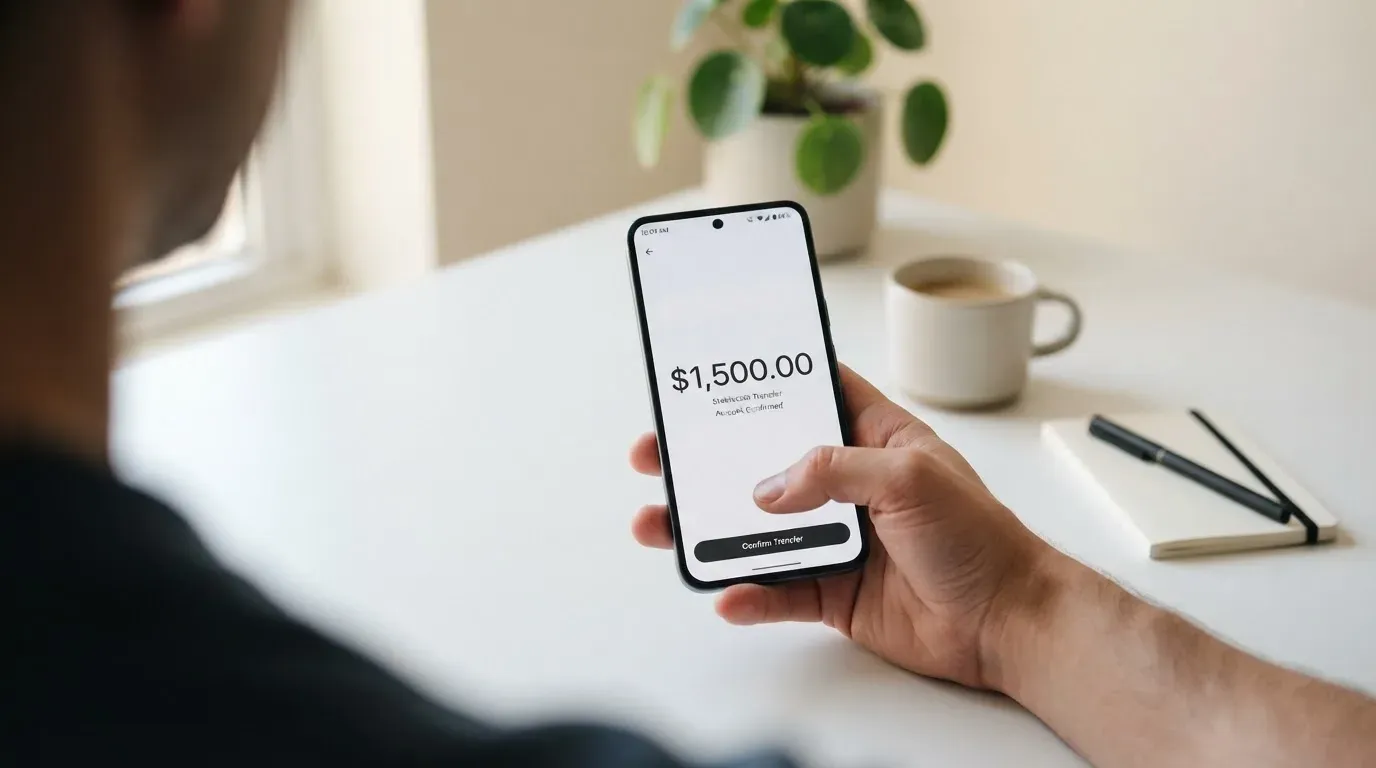
On timing, the service says the card is issued and funded “instantly”, and that a bank top-up usually completes in under a minute. Fees for top-up are not stated.
Two gaps in that route deserve your attention. The first is the network. When you send USDT from an exchange or a wallet, the network matters and ByDex does not name which one it accepts. USDT exists on Ethereum, Tron, Solana, Polygon, Avalanche and others, and each has its own fee structure and its own failure modes. If you send on a network the provider does not support, the transfer is irreversible and recovering it becomes a support problem with no guarantee of success. The second gap is withdrawal: whether you can move money back out, and on what terms, is not stated.
The general category background explains why the network question is not a technicality. USDT is built on multiple blockchains, and one of the most common is Tron, whose fees are paid through bandwidth and energy resources, often burning TRX rather than a stablecoin. Ethereum is different again: ERC-20 is the Ethereum token standard, and gas must be paid only in ETH, so a wallet holding USDT with no ETH cannot send it at all. In both cases the cost and the possibility of the transfer depend on assets you may not hold.
One more thing about stablecoins that matters when you choose which one to use. They aim to hold a stable value against a dollar, but as the BIS put it in July 2025, “despite the name, stablecoins are not necessarily stable” — about 90% of stablecoin market capitalisation sits in USDT and USDC. TerraUSD collapsed in May 2022 and USDC temporarily lost its peg in March 2023 during the US banking crisis. A “USDT balance” on a card is a claim on a token that has lost its peg before, not a bank account.
Paying with it every day
Here ByDex is at its most straightforward and at its limits at the same time. Apple Pay and Google Pay are both supported, which covers the overwhelming majority of everyday payments on a phone. The card is virtual, so there is no plastic to carry, lose, or keep in a wallet — and also no way to use it in a terminal that insists on a physical card.
The wallet mechanics are worth understanding because they change how the payment arrives. Apple Pay replaces the card number with a device-specific Device Account Number held in the Secure Element, never on Apple’s servers, and each payment carries a one-time dynamic security code. The issuer can still restrict that tokenised number — blocking it on magnetic-stripe, phone or website use is a normal issuer power. And online payments may go through 3-D Secure, where the issuer either approves them without friction or challenges you with a one-time code or a biometric check; Visa’s brand is Visa Secure, Mastercard’s is Identity Check.
What is not stated: which merchant categories are blocked. That is not a minor omission for anyone who spends online. The category code that matters here is MCC 7995, which covers gambling — casinos, betting, lotteries. Many issuers block it on specific cards by policy rather than by law, and the blocked list varies by issuer. ByDex publishes no blocked list, so if you gamble, or if any of your subscriptions sit in an unusual category, you will discover the answer at the till.
Three more everyday-use gaps. There is no ATM arrangement stated, so I would plan on the card being for card payments only. There is no rewards or cashback scheme stated. And there is no dispute procedure stated — no description of how a chargeback would work, what reason codes apply, or who you would file with. For a card funded from crypto, where every payment is a conversion on your side as well as a purchase on the merchant’s, that last gap is the one I would want closed before I relied on the card for anything I would have to fight over.
Where the card can be used in the world, physically, is also not stated — the headline calls it international, and a headline is not a coverage list.
What can go wrong
I found no complaints. I searched for reviews of ByDex and its site and found nothing relevant, and no Trustpilot or review pages exist that I could see. Take that as a fact about the search, not about the service: a young or small product often has no review trail at all, so the absence of complaints is mostly a statement about how new or quiet this is.
Here is what I would actually worry about, in order.
Nobody is named. The site carries only “© 2026 ByDex”. No legal entity, no issuer, no regulator, no jurisdiction. A news post dated 12.07.2026 announced the ByDex VISA international card, and I found no licence or issuer events attached to it. That means you cannot check the provider against any register. Under EU rules, ESMA maintains an interim register of authorised crypto-asset service providers, white papers and non-compliant entities, and looking a provider up there is a five-minute check that ByDex’s own pages give you no way to perform, because they never name an entity to look up. This is, for me, the biggest single item.
Understand who is actually issuing. A card payment involves several parties: the network routes the messages and sets the rules, the issuer holds the card programme, and the crypto brand is often only a programme manager or front end that markets it. Visa and Mastercard do not issue crypto cards to consumers themselves; they license issuers, and they can suspend a programme. They have done it. In November 2022 Visa said it had “terminated our global agreements with FTX”, and the FTX US debit card programme was wound down by its issuer. Separately, WaveCrest — a Visa issuer that supplied crypto card brands — was suspended by Visa in Europe in 2018, closing all WaveCrest-issued Visa programmes. So the name on your app is not the entity standing behind your money, and programmes do end.
Your funds may sit with a custodian, and that has a history. Control of crypto belongs to whoever holds the private key. With a custodial wallet the provider holds the credentials, so you must trust it completely — and a seed phrase, typically 12 to 24 words in an unencrypted form, is enough to restore a wallet and spend its funds. Transfers are typically irreversible, and a stolen key has no built-in recovery because the network cannot freeze or return anything. The record is not reassuring: Mt. Gox, about US$350 million reported stolen across 2011–2014; Coincheck, about US$400 million in 2018; Ronin Network, US$625 million in 2022. If the balance you fund ByDex with sits with a third party, you carry that counterparty and hack risk.
Programme closure is a real ending, not a scare. Closures typically follow a pattern: a notice period, then spending and loading stop, then users are asked to withdraw remaining balances. A 2026 closure reported by a secondary source had new loads ending 8 July 2026 and spending stopping 8 August 2026 — I have only one source for that and cannot confirm it, so treat it as the shape of an ending rather than a prediction. Either way, the money you have loaded is the money at risk when it happens.
Some payments simply get declined. This is category behaviour, not a ByDex-specific fault, but it is what people actually notice. Merchants can look up the BIN — the 6 or 8 digit issuer identification number at the start of a card number — and see which institution and which country issued the card, and apply extra scrutiny if the issuer country differs from your billing address. Some merchants decline prepaid or foreign BINs for that reason. Address verification, which compares the numeric parts of the billing address a buyer typed against issuer records, is mainly offered in the US, Canada and the UK and is generally unavailable for foreign-issued cards, which can cause declines. And a declined authorisation can leave a hold on your funds for several days, typically up to seven.
Tether can freeze. Stablecoins are not censorship-proof. Tether says it disables tokens in wallets on the OFAC sanctions list and has frozen funds tied to illicit activity.
Protections are thinner than they look. On paper, a chargeback is a refund ordered by the issuer to settle a dispute, with reason codes for fraud, duplicate billing or goods not received. But prepaid-card coverage varies and should not be assumed — in the US, debit card reversal rights come from Regulation E and credit card rights from Regulation Z, and a virtual card funded with crypto may not sit neatly in either. Under 3-D Secure, liability for fraudulent online payments can shift from merchant to your bank, or per its critics to you. ByDex states nothing about dispute handling at all. Separately, on tax: I am not giving tax advice and you should check locally, but the general position is that the IRS treats digital assets as property, so exchanging them for goods or dollars generally produces a taxable gain or loss, measured in local currency at the value on the transaction date — which would make each card payment a separate disposal. In other jurisdictions the treatment differs, and that is a question for a professional, not for me.
Security practices are not stated. No mention of two-factor authentication, instant freeze, spending limits, or how the site protects the USDT balance. The usual safeguards in this category are app-based 2FA, instant card freeze, spending limits, 3-D Secure confirmation and tokenised mobile wallets; I simply cannot tell you which of them ByDex has.
On regulations generally, so you can place this card. MiCA, the EU’s markets-in-crypto-assets regulation, took legal effect in June 2023; its rules on stablecoins applied from 30 June 2024 and the remaining crypto-asset service provider provisions from 30 December 2024. Under MiCA, e-money tokens may be issued only by a credit institution or an electronic money institution, and providers operating under national law had a transitional period running only until 1 July 2026 or until a MiCA authorisation. A card is regulated separately from the crypto side — a crypto card often depends on two licences. Electronic money institutions must safeguard customer funds by segregating them or insuring them, but such funds are not bank deposits and may not be covered by deposit guarantee schemes. None of this tells you where ByDex stands; it tells you what you would be entitled to look for, and ByDex names nothing.
What to take instead
The alternatives below are described from public pages, and they carry the same lesson in different packaging: every one of them also leaves fees unpublished. I am not offering any of them as safer than ByDex — I am giving you the comparison so you can see which gaps matter for you.
Cardex — score 5.6 / 10. Describes itself as “One crypto card, 200+ countries”, with no country list or exclusions published; its App Store listing is Naira-focused, paying in Naira. It is a debit crypto card on the networks VERVE, VISA, Mastercard and UnionPay, with virtual and physical cards. Its conversion story is the most interesting of the three: real-time crypto-to-fiat conversion at the moment of payment, with an “AI-Powered Conversion Rate” it says scans global exchange rates and picks the best one as you spend — though no fee percentage is published. Funded from USDT, USDC and BTC wallets, networks not stated.
CardFlow — score 4.9 / 10. Aimed at Nigeria, calling itself “Nigeria’s smartest fintech card platform” for “Nigerians and global users”, again with no country list or exclusions stated. A virtual USD Mastercard. It is the only one of the four services that says anything about card creation being free — the FAQ has a “Create Free Card” heading and calls creating a virtual card completely free — though a monthly fee is not stated. Funded from Bitcoin, USDT, ETH or a Naira bank transfer, networks not stated.
HyperCard — score 4.7 / 10. A prepaid card whose network is not stated on the App Store page, with a balance in USD or EUR. Its pages state no country list, and the App Store says the card works in “more than 176 countries” — that is a statement about acceptance, not about eligibility, which is a distinction worth holding on to. You deposit crypto such as USDT, BTC or ETH in the app, and it is converted to USD or EUR on the card; networks not stated.
| ByDex | Cardex | CardFlow | HyperCard | |
|---|---|---|---|---|
| Score | 4.8 | 5.6 | 4.9 | 4.7 |
| Form | Virtual | Virtual and physical | Virtual | Prepaid |
| Currency stated | No | Naira | USD | USD or EUR |
| Card creation cost | Not stated | Not stated | Free (virtual) | Not stated |
| Fees published | No | No (rate shown at payment) | No | No |
| Funding | USDT balance; bank transfer | USDT, USDC, BTC | BTC, USDT, ETH, Naira transfer | USDT, BTC, ETH |
| Networks named | No | No | No | No |
| Rewards | Not stated | Not stated | Not stated | Not stated |
Read that table for what it says: four services, four different payment models, and not one published fee table among them. In this category that is normal, which means it is your job to check the screens. The one real differentiator on cost is CardFlow’s free virtual card creation. The one differentiator on form is Cardex’s physical option. The one differentiator on currency clarity is Cardex and HyperCard, which at least name the currency their balance sits in. None of them names an issuer in what I read, either.
If you want a genuinely different answer rather than another crypto card, the honest comparison point is an ordinary bank or e-money account that already works for you: it comes with deposit-guarantee framing, published fees, and a dispute procedure. The trade-off is exactly the reason people end up looking at cards like this one.
Who I would recommend it to
I would recommend ByDex to one person: someone who already holds USDT, already knows how to move it safely, has a bank card or account they are happy to top up from, and wants a virtual card in their phone for everyday spending this week — with the understanding that the fee is whatever the confirmation screen says it is, and that the counterparty is unnamed.
I would not recommend it to someone deciding about their taxes, since every payment from crypto may be a taxable event locally and the service offers nothing on that. I would not recommend it to anyone planning a large or long-lived balance, for the custody reasons above. I would not recommend it as the only card you have, because there is no dispute procedure, no ATM, no physical option, and no published blocked-merchant list.
Before you load anything, do three things. Ask the Telegram bot, in writing, who the issuing entity is and under which licence — if the answer is vague, that is your answer. Ask what network your USDT must be sent on, and get the deposit address before you send anything, because a wrong-network transfer is gone. And run one small payment end to end, reading the rate and fee screen, before you trust it with anything larger.
None of that makes the card better. It just means you stop being surprised by it, which for a service that publishes this little, is the whole job.
Frequently asked questions
What is ByDex card?
ByDex is a virtual payment card sold by a Russian-language service. The card is called “ByDex Virtual” in the site’s own product section, and a company news headline from 12.07.2026 refers to a ByDex VISA international card. You add it to Apple Pay or Google Pay and spend from a balance funded with USDT or with a bank transfer. The service runs through a web version at web.bydex.net and a Telegram bot.
Is ByDex a bank?
The public pages do not say, and that is the plain answer. The site carries only a copyright line reading “© 2026 ByDex” — no legal entity, no issuer, no regulator, no jurisdiction. For context on how these products are usually built: the network sets the rules, a licensed issuer holds the card programme, and the crypto brand is often only a programme manager or front end. I found no name behind which you could check anything.
Who owns ByDex?
Not stated anywhere on the pages I could read. The only ownership-adjacent detail is the “© 2026 ByDex” line and the July 2026 news post about the card itself — I found no licence or issuer events attached to it. If ownership matters to your decision, this is a direct question for their 24/7 Telegram support, and an unclear answer should weigh on you.
Does ByDex card require KYC?
For the USDT route specifically, the page says a top-up from an exchange or wallet goes “without a mandatory identity check”. The same page qualifies that: requirements depend on the product, the amount and the rules, and any extra check is shown before the operation. Which documents you might need is not stated. I would read that sentence as “not guaranteed and not ruled out”, not “no checks”.
How do I top up ByDex card?
Two routes, both described on the site. Either you convert your account to a USDT balance by sending USDT from an exchange or a wallet, or you bank-transfer from any bank’s card or account. The service says the card is issued and funded instantly, and a bank top-up usually completes in under a minute. Top-up fees are not stated, and the network for the USDT route is not named — which matters, because a transfer on the wrong network is unrecoverable.
How much does a ByDex card cost?
I cannot tell you, and neither can the public pages: issuance cost, fees, conversion cost and foreign exchange cost are all not stated, and the card currency is not stated either. What the service does say is that the rate, fees and limits are displayed before you confirm an operation. Exchange limits of 1 000 to 500 000 RUB are published; card spending limits are not. Treat the confirmation screen as the only price list that exists.
Can I use the card in Apple Pay?
Yes, Apple Pay is supported, alongside Google Pay. The card number is replaced in Apple Pay by a device-specific token held in the Secure Element rather than on Apple’s servers, with a one-time code per payment. The issuer can still restrict that token — blocking it on phone, website or magnetic-stripe use is a normal issuer power. Whether any merchant categories are blocked on this card is not stated, so unusual subscriptions may behave unpredictably.
Can I withdraw cash from an ATM?
Nothing on the public pages addresses it. ATM access is not stated, and with no ATM arrangement published I would treat the card as a payments-only card rather than assume cash withdrawal will fail gracefully. If cash is part of how you plan to use the card, ask support directly before you rely on it.
Is ByDex card safe?
I found no complaints and no review pages, but that is a thin result rather than a clean one — it more likely reflects a new or quiet service. What I can say is what is missing: no named issuer or legal entity, no stated security practices such as two-factor authentication or instant freeze, no published blocked-merchant list, and no dispute procedure. The balance you load sits with a provider, which is a category with real counterparty history.
How do I delete my ByDex account?
Not stated on the public pages, so I cannot walk you through it and I would not guess. Two things make it worth asking rather than assuming: the card may be moving your balance in USDT, and closing an account does not by itself tell you what happens to funds already loaded. Contact the 24/7 Telegram bot and get an answer on both the balance and the card before you consider it closed.
Virtual card reviews – cryptocardcheck
Content created by the «cryptocardcheck» team