
The no-KYC crypto card with Europe-only spending and two different price lists
 Available in US
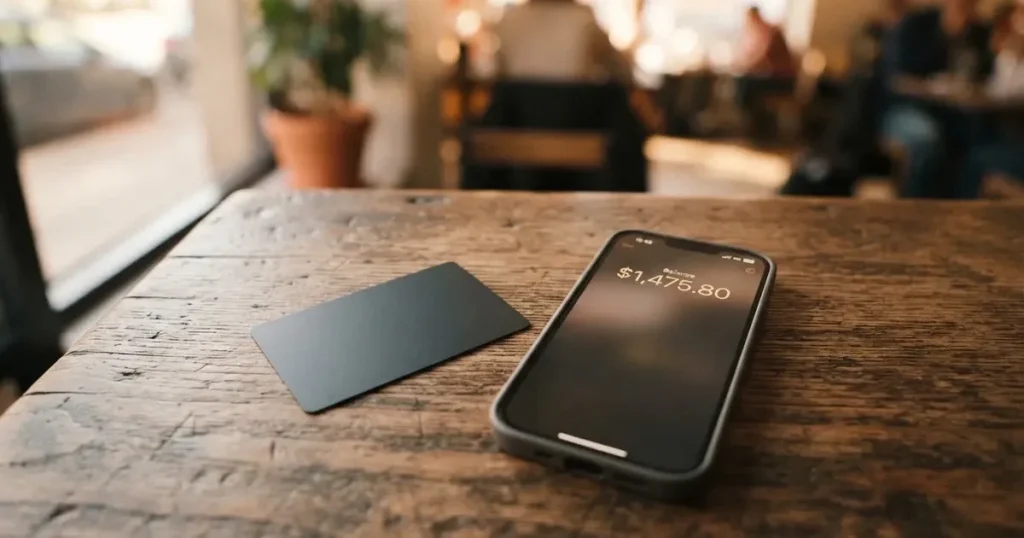
The DeFiPay card is one of those crypto cards that skip the identity checks entirely: you register without a name, an ID document, a phone number or an email verification, put crypto in, and get a Mastercard number to spend from. That part works, and it works well. The problem is everything around it. Spending is limited to Europe, the site’s own pages quote two different price lists for the same card, deposits cost a flat 5%, and almost nothing about the company behind it is verifiable from the outside. I scored it 5.3 out of 10 — a middling card with one genuinely strong feature and a long list of unanswered questions.
The conditions described here are current as of October 28, 2026.
I want to be clear about what that number means. It is not a verdict on whether crypto cards are a good idea in general, and it is not a prediction. It is a snapshot of how much this particular card can be trusted with your money today, based on what its own pages state and what they leave out.
The score in full
| Criterion | Mark | Why |
|---|---|---|
| Who can get it | 5 / 10 | Use is limited to Europe (EEA/UK merchants and ATMs); online purchases outside Europe are possible, in-store use is limited to European merchants; the list of registration countries is not named |
| Cost | 2 / 10 | Prices contradict each other: virtual 10 USDT and physical 16 USDT, or 7 USDT/month and 19 USDT/month; top-up 5% |
| Top-up options | 8 / 10 | BTC, ETH, USDT, TRX, LTC, SOL, XRP, BNB, plus USDC on the support page; networks not named |
| Reliability and complaints | 4 / 10 | SC PAYMENTS LIMITED, number 78350827, country inconsistent in sources (Singapore or Hong Kong), issuer not named; no Trustpilot page |
| Everyday use | 10 / 10 | Virtual and physical Mastercard, Apple Pay and Google Pay for both, ATM €750 per day |
| Total | 5.3 / 10 | A good daily-payment surface wrapped in weak disclosure |
The pattern in that table is worth pausing on. The strongest mark is the one that measures whether the card works when you tap it. The weakest is what it costs you, and second-weakest is who is actually behind it. That combination — easy to use, hard to price, hard to verify — is what you are being asked to accept.
Will they give you the card?
Yes, to almost anyone, and that is the whole point. There is no KYC: no name, no ID, no phone number, no email verification is needed to register. There are no KYC tiers either, because there is no verification at all. No specific age restriction is stated, though prepaid and debit cards are generally available to adults aged 18 and up, and some issuers set higher limits. Personal accounts only — a business option is described as “under development”.
Where you can spend is a narrower story than where you can register. The card’s own limit is the important sentence: use is limited to Europe, specifically EEA/UK merchants and ATMs. Online purchases outside Europe are possible. In-store use is limited to European merchants. So if your life is a mix of a European city and non-European online subscriptions, the card behaves well. If you need to tap in a shop outside Europe, it does not.
Registration requires only a signup — Google or wallet login is also offered — followed by a crypto deposit and then either collecting a virtual card or ordering a physical one. The virtual and physical cards are both Mastercard, accepted wherever Mastercard is accepted, and your balance is shown in EUR.
The physical card ships free in standard delivery, about 5–7 business days (the home page says “4-7 days”), with the delivery address deleted from their records after delivery and unbranded packaging. Secure shipping costs 4 USDT; express is 1–3 business days with no price stated. Replacement cost is not stated anywhere I could find.
If you are weighing this against a normal bank card in a country where you can open one easily, be honest with yourself about which problem you are actually solving. This card’s pitch is anonymous crypto spending in Europe with no KYC. That is a real niche, and in that niche the absence of checks is the feature rather than a flaw.
How to get it
Four steps, and none of them involve paperwork: sign up (Google or wallet login is also offered), deposit crypto, take the virtual card or order the physical one. That is the entire flow. No documents to scan, no selfie, no waiting for an approval decision.
The card types are two, and only two: virtual and physical Mastercard. There is also an unexplained “Pro plan” referenced in the FAQ, and the home page ties the €750 ATM limit to it. Beyond that, there is no tier structure to understand — no tiers, no upgrade path, no plan comparison table. If someone tells you there are three DeFiPay card tiers, they have read something the site does not say.
One practical note before you commit funds: there is no dedicated app. Everything happens on a web dashboard. That is fine on a laptop, and it means your card management — freezing, checking balances, ordering a replacement — lives in a browser rather than in an app you can lock with biometrics.
Fees: what it really costs
This is where the card gets genuinely confusing, and I would not want you to discover the contradiction after topping up. The site carries two price sets that do not agree.
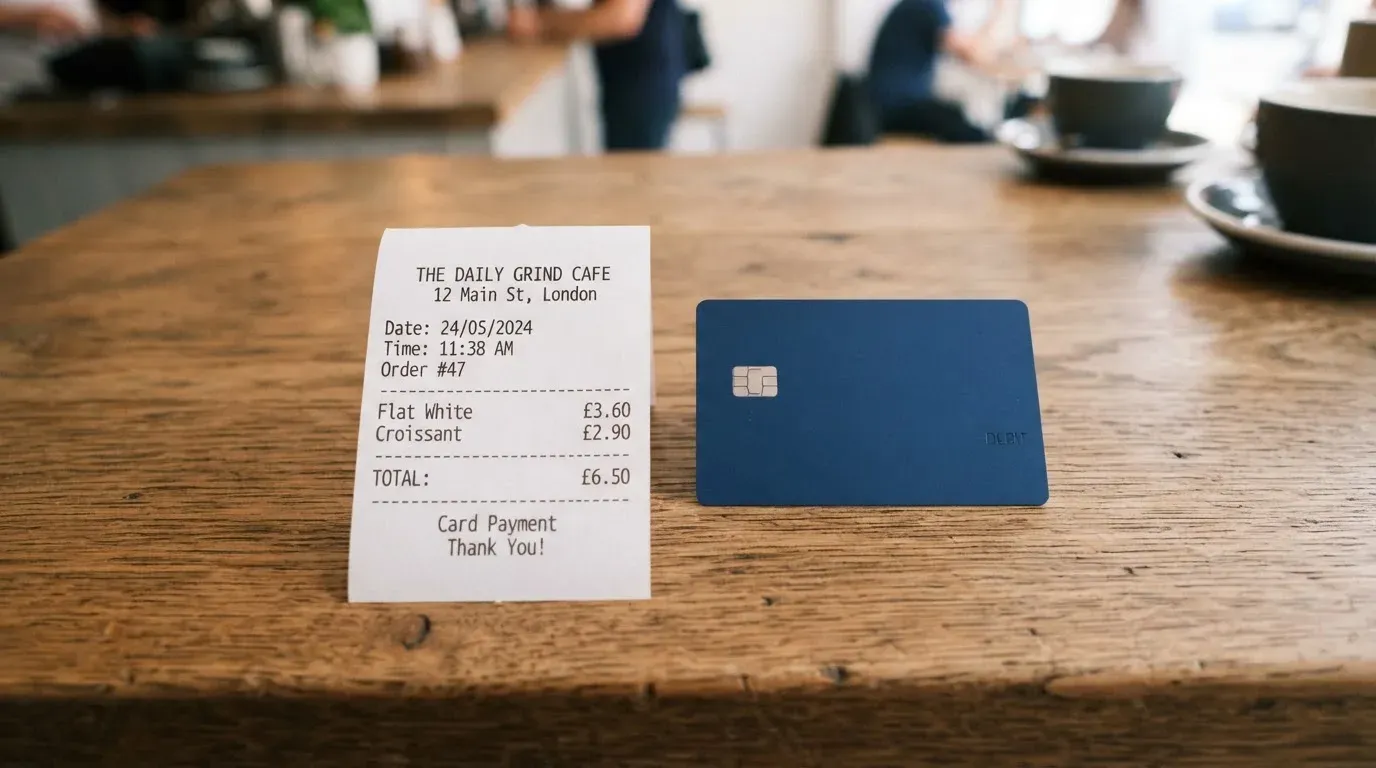
The pricing section says a virtual card costs 10 USDT and a physical card 16 USDT. The guide and FAQ section says virtual is 7 USDT per month and physical is 19 USDT per month. The support page says each card carries a monthly fee and then lists $10 (virtual) and $16 (physical) in one section and 7/19 USDT per month in another. So: are these one-off issuance prices or recurring monthly fees? The pages do not settle it. Both readings are defensible from the text, and I cannot tell you which one will be charged to you. Plan for the worse case and then be pleasantly surprised.
On top of that, a flat 5% deposit fee. Deposits convert to USDT and the balance is shown in EUR. The FX fee is not stated. Conversions typically complete within two business days.
Let me run three ordinary payments through it, using only the figures the card publishes.
A €30 supermarket shop in Berlin, virtual card. The 5% deposit fee applies at the moment you load, not at the moment you spend. If you loaded €200, roughly €10 came off before the balance appeared. At the till, the card is a Mastercard, so the shop accepts it. What you cannot tell from the published pages is the FX fee, because none is stated, and no spending fee is listed either.
A €9 monthly streaming subscription billed online from outside Europe. Online purchases outside Europe are possible, so this is the use the card explicitly supports. Again the published figures list no per-payment fee. The risk here is not price but acceptance: whether a given foreign merchant declines the card is not something the card can promise you, and declined authorisations can leave a hold on funds for several days.
€400 from a cash machine in Madrid. This is the one case the card prices explicitly. ATM withdrawals are available in Europe at €750 per day and up to €15,000 per month. There is no DeFiPay fee on the withdrawal, but the ATM operator may charge its own. The PIN cannot be changed; a forgotten PIN is reset via support.
| Fee or limit | Value |
|---|---|
| Virtual card price | 10 USDT (pricing section) / 7 USDT per month (guide and FAQ) |
| Physical card price | 16 USDT (pricing section) / 19 USDT per month (guide and FAQ) |
| Secure shipping | 4 USDT |
| Express shipping | 1–3 business days, price not stated |
| Deposit fee | 5% flat |
| Conversion timing | typically within 2 business days |
| FX fee | not stated |
| ATM withdrawal | €750 per day, up to €15,000 per month; no DeFiPay fee, operator may charge |
| ATM PIN | cannot be changed; reset via support |
| Virtual card daily limit | $20,000 (home page) |
| Physical card daily limit | $30,000 (home page) |
| Purchase limit | €30,000 per month (support page) |
| Cards per account | up to 200 |
| Rewards | not stated |
| Withdrawal of balance | not stated |
Two entries in that table deserve your attention. The FX fee being unstated means I cannot tell you what a euro-to-dollar payment actually costs you. And withdrawal is not stated at all — whether you can move your balance back out to crypto or to a bank account is simply not on the pages. That last one matters more than it first appears, and I will come back to it.
How to Top up the card
You fund it in crypto only. Supported assets are BTC, ETH, USDT, TRX, LTC, SOL, XRP and BNB, with USDC additionally listed on the support page. You send to a personal deposit address, the deposit converts to USDT, and your balance shows in EUR. No fiat top-up is stated.
The 5% deposit fee applies here. The minimum top-up is not stated, and neither is who pays the blockchain network fee for your deposit — that is normally charged by the network itself rather than by the card provider, but the card does not address it.
Read this part twice: the networks are not named. This is the single most common way people lose money on a card like this. You have a USDC balance in your own wallet, you send it, and you pick a network. If the network you pick is one the provider does not support, or you send to an address belonging to a different network, the transfer can be lost or need manual support recovery with no guarantee — blockchain transfers are irreversible by nature. The card’s support page lists USDC alongside the others, but without saying which chain any of them should arrive on. Confirm the network with support before your first transfer, and confirm it again before any large one.
If you hold USDC specifically, note that Circle stopped supporting USDC on Tron in February 2024, so “USDC over TRC20” is not a native option anywhere in this ecosystem. And while USDT sits on networks including Ethereum, Tron, Solana, Polygon and Avalanche, Tether describes it as a token built on multiple blockchains with reserves intended to back it one-to-one — it is a dollar peg, not a dollar. Stablecoins can and do lose their peg: TerraUSD collapsed in May 2022, and USDC briefly lost its peg in March 2023 during the US banking crisis.
Paying with it every day
This is the card’s strongest suit, and it earned a 10 out of 10 for a reason. Both card types — virtual and physical — are listed as working with Apple Pay and Google Pay. Add a virtual Mastercard to your phone wallet and you have a card that works at contactless terminals, in apps, and online, without carrying anything. Bank of America and Starbucks are not special cases; any contactless terminal is the normal case.
Two things I could not establish from the pages. Blocked merchant categories are not stated — the card does not publish a list of what it declines, and gambling (MCC 7995) is precisely the category many issuers block by policy, with the list varying by issuer. So do not assume a betting site will or will not work. And there is no rewards structure: rewards are simply not stated.
Also worth knowing for online payments: address verification (AVS) compares the numeric parts of the billing address you type with issuer records, and it is mainly offered in the US, Canada and the UK, generally unavailable for foreign-issued cards — which causes declines. Separately, some merchants decline prepaid or foreign BINs outright, because a merchant can look up the six- or eight-digit issuer identification number at the front of your card number and see which institution and country issued it. That is also why a card issued in one country can look “foreign” to a shop in another. Nothing about the card’s pages addresses this.
On disputes and protection: chargebacks — a refund ordered by your issuer to settle a dispute, with reason codes such as fraud, duplicate billing, or goods not received — are simply not addressed. Terms, Guidelines and Risk Disclosure are linked as PDFs on the site; I have not read them, and you should, because they are the only place these things may be spelled out. A declined authorisation can also leave a hold on your funds for several days, typically up to seven.
What can go wrong
Start with the company, because that is where the thinness is most uncomfortable. The footer names SC PAYMENTS LIMITED, licence number 78350827. The home page says the programme “runs via licensed partners in the EU” — an unverified claim, and I could not confirm it. The support page says the company is registered under Singapore law and headquartered in Singapore, while the starting data says Hong Kong with the same BRN 78350827. The issuing bank is not named.
You can see why the name matters. A payment card involves several parties: the network (Visa or Mastercard) routes the messages and sets the rules, the issuer — a bank or e-money institution licensed under that network — holds the actual programme, and the crypto brand is often just a programme manager or front-end that markets it. If the issuer is not named, you do not know who holds your balance or who stands behind the card when something goes wrong. That is not a minor gap.
On complaints: there is no Trustpilot page for this domain, and a search for reviews turned up nothing about it — only unrelated pages about other products with similar names. No official incidents have surfaced either, and I want to be careful with what that means. It does not mean the card is safe. It means nobody is publicly complaining, which for a young service with no review presence tells you very little.
The custody model is not stated. That is the biggest single unknown. With a custodial wallet the provider holds your credentials and you must trust them completely; with a self-custody-linked card the funds stay in your wallet until the moment of payment, but you carry the full risk of key loss and phishing. I cannot tell which model this card uses, so I cannot price that risk. What I can tell you is that custodial platforms have a real history of failure — Mt. Gox (about US$350 million reported stolen, 2011–2014), Coincheck (about US$400 million, 2018), and Ronin Network (US$625 million, 2022). And blockchain transfers are irreversible, so a stolen key has no recovery path: the network cannot freeze or return funds.
Some mitigations do exist and are cheap to use. Cards can be frozen and unfrozen from the dashboard. Lost cards should be blocked immediately and replaced. Your delivery address is deleted after delivery. Support is 24/7 by email and Telegram, plus a community group, with an average response time of 15 minutes — genuinely good, on paper.
Then there is the regulatory layer, and it cuts both ways here. In the EU, customer due diligence normally covers name, address, date of birth, nationality and identity documentation, a sanctions check, the purpose of the relationship, and politically-exposed-person screening. If due diligence cannot be completed, EU rules require the institution to refrain from the transaction or relationship. The absence of KYC here is the feature you came for — and it is also, structurally, the thing that would prevent a regulated European institution from being comfortable issuing the card. The site says the programme runs via licensed partners in the EU; how that works under MiCA, whose rules on e-money tokens applied from 30 June 2024 and whose remaining crypto-asset service provider provisions applied from 30 December 2024, is not explained. ESMA keeps an interim register of authorised providers, white papers and non-compliant entities, and that is worth checking a provider against yourself.
Programme closures are also not hypothetical. Visa terminated its global agreements with FTX on 13 November 2022 and the FTX US debit card was wound down; WaveCrest, a Visa issuer that supplied crypto card brands, was suspended in Europe in 2018, closing all its programmes. When a programme closes, the typical sequence is a notice period, then spending and loading stop, then users are asked to withdraw remaining balances. If your balance cannot be withdrawn — and withdrawal is not stated here — that sequence is the risk.
One last thing, and it is not the card’s fault but it will affect you. Tax treatment of crypto-funded spending varies and I am not qualified to advise on it; please take your own professional advice. The general shape: in the US the IRS treats digital assets as property, so exchanging them for goods or services generally produces a taxable gain or loss measured in local fiat currency at the value on the transaction date — which means each card payment funded from crypto may be its own disposal event. Your jurisdiction may be different. Ask someone who knows it.
What to take instead
None of these are clearly better; they are differently shaped. Here is the comparison as I found it.
| DeFiPay | Cardex | CardFlow | HyperCard | |
|---|---|---|---|---|
| My score | 5.3 / 10 | 5.6 / 10 | 4.9 / 10 | 4.7 / 10 |
| KYC | None | Not stated | Not stated | Not stated |
| Where it works | Use limited to Europe (EEA/UK merchants and ATMs); online outside Europe possible | “One crypto card, 200+ countries”; no exclusions listed; app listing is Naira-focused | Aimed at Nigeria and “Nigerians and global users” | App listing says “more than 176 countries” (acceptance, not eligibility) |
| Card | Virtual and physical Mastercard | Debit crypto card on VERVE, VISA, Mastercard and UnionPay; virtual and physical; card currency Naira per listing | Virtual USD Mastercard, created in about 3 minutes | Prepaid “HyperCard”; network not stated; balance in USD or EUR |
| Price | Conflicting: 10/16 USDT or 7/19 USDT per month | Not stated | Creating a virtual card is “completely free”; monthly fee not stated | Not stated; app page lists no fees |
| Fees | 5% flat deposit fee; FX not stated | Real-time conversion at payment; no percentage stated | Not stated | Not stated |
| Top-up | BTC, ETH, USDT, TRX, LTC, SOL, XRP, BNB, plus USDC on support page | USDT, USDC and BTC wallets; networks not stated | Bitcoin, USDT, ETH or Naira bank transfer | Crypto such as USDT, BTC, ETH in the app |
| Rewards | Not stated | Not stated | Not stated | Not stated |
Two things jump out. First, Cardex scores slightly higher than DeFiPay and covers 200+ countries rather than Europe only — but it publishes no fee percentage either, and its app listing being Naira-focused suggests the card’s practical home is Nigeria rather than yours. CardFlow is the cheapest to start with (a free virtual card) and the most regionally specific. HyperCard publishes the least of the four; I could not find fees or even the card network on the pages I could read, which is worse than DeFiPay’s inconsistency because there is nothing to reconcile.
What none of them do is state a fee percentage clearly. That is a property of this corner of the market, not a quirk of one provider.
My honest read: if you need a card that works outside Europe, Cardex is worth a look first. If you are in Nigeria and want a Naira card, Cardex or CardFlow. If you specifically need the no-KYC European position and you are comfortable with the price contradiction, DeFiPay does that and does it in a way the others do not — none of the three alternatives makes any claim about not requiring ID.
Who I would recommend it to
I would recommend DeFiPay to exactly one kind of person: someone who already holds crypto, already values not being identified by a card issuer, spends their life inside the European Economic Area or the UK, and can absorb a 5% deposit fee plus an unknown FX fee as a cost of doing business. For that person, a virtual Mastercard in Apple Pay, no paperwork, and €750 a day at a European cash machine is a genuinely useful tool, and there is not another card in this comparison that offers the same combination.
I would not recommend it as a primary card, to anyone whose spending spreads across continents, or to anyone whose decision to use crypto payment rails rests on being able to check where their money is. Withdrawal of the balance is not stated — you may be able to get your money out, and you may not. The issuing bank is not named. The country of the operator is given two different answers. The card’s own pages quote two different prices for the same product. Each of those on its own might be a missing detail; together they are a pattern, and the pattern says that the people running this have not finished telling you how it works.
If the reason you are reading about no-KYC cards is that ordinary banking is hard for you — no fixed address, documentation problems, a country where opening an account is slow or impossible — then I understand why this is where you ended up, and I hope the card works. Just fund it with an amount you could afford to have stuck, keep your own records of what you put in, and know that the absence of KYC protects your privacy and simultaneously removes the normal consumer protections you might otherwise rely on. That trade is real, and it is yours to make, not the card’s to make for you.
Frequently asked questions
What is the DeFiPay card?
The DeFiPay card is a prepaid Mastercard that spends a balance funded with crypto, either virtual or physical, with the balance shown in EUR. It stands out from most cards in this category by requiring no identity checks at all: no name, ID, phone number or email verification to register. Deposits convert to USDT and then to your euro balance. Spending is limited to Europe for in-store use and ATMs.
Does DeFiPay require KYC or ID verification?
No, and there are no KYC levels either, because there is no verification. You register with no name, ID, phone number or email verification, then deposit crypto and take a virtual card or order a physical one. Personal accounts only; a business option is described as “under development.” No specific age restriction is stated on the site.
Where can I use the DeFiPay card?
The card’s stated limit is Europe, for EEA/UK merchants and ATMs, with in-store use limited to European merchants. Online purchases outside Europe are possible. At the cash machine the limits are €750 per day and up to €15,000 per month, with no DeFiPay fee though the ATM operator may charge its own.
Is DeFiPay a bank, and who owns it?
Not a bank, as far as its pages show. The footer names SC PAYMENTS LIMITED with licence number 78350827. The home page says the programme runs via licensed partners in the EU, an unverified claim, and the issuing bank is not named. The support page says registered under Singapore law, headquartered in Singapore; starting data says Hong Kong with the same BRN.
How much does the DeFiPay card cost?
The site contradicts itself. The pricing section lists a virtual card at 10 USDT and a physical one at 16 USDT, while the guide and FAQ section lists 7 USDT per month and 19 USDT per month. The support page carries both versions too. There is also a flat 5% deposit fee, and the FX fee is not stated at all.
How do I top up the DeFiPay card?
Send crypto to your personal deposit address. Supported assets are BTC, ETH, USDT, TRX, LTC, SOL, XRP and BNB, with USDC also listed on the support page. The deposit converts to USDT and shows in EUR, and a 5% fee applies. Crucially, the networks are not named, so confirm the correct chain with support before sending anything.
Can I add the DeFiPay card to Apple Pay or Google Pay?
Yes, and both card types are listed as working with both wallets, which is the card’s strongest practical feature. A virtual Mastercard added to your phone works at contactless terminals and in apps without carrying anything. Be aware that blocked merchant categories are not published, and some merchants decline prepaid or foreign-issued card numbers.
Is the DeFiPay card safe, and is it well reviewed?
The custody model is not stated, so I cannot price the risk of leaving crypto with the provider, and custodial platforms have a real history of large losses. There is no Trustpilot page for the domain and no review-site results, which tells you little either way. On the positive side, cards can be frozen from the dashboard and support runs 24/7 with an average response time of 15 minutes.
Can I withdraw money from the DeFiPay card?
The card’s pages do not say. Withdrawal of the balance back to crypto or to a bank account is not stated, which matters because if a programme is wound down, the usual sequence is that spending stops and users are asked to withdraw remaining balances. Account closure is possible at any time by emailing support. Ask support directly before you fund it.
How do I delete or close my DeFiPay account?
The stated route is email: you can close the account at any time by writing to support, which also handles a forgotten PIN reset. Card freezing and unfreezing is available directly from the web dashboard, and lost cards should be blocked immediately and replaced. There is no dedicated app — management happens on the web dashboard.
Virtual card reviews – cryptocardcheck
Content created by the «cryptocardcheck» team