
The crypto card with a real US Bank Visa behind it — and the numbers it still doesn't publish
 Available in US
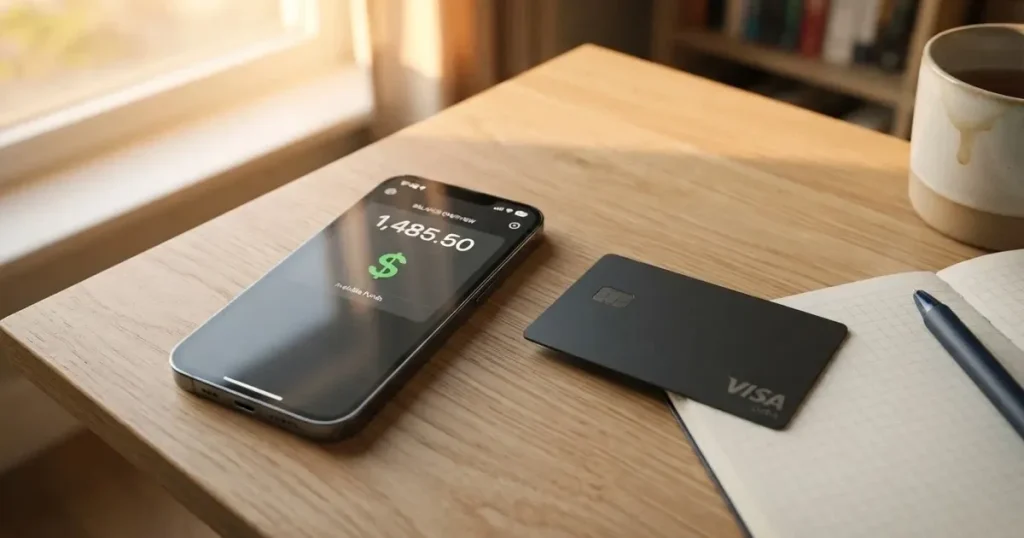
The DPT card is one of the more interesting things to come out of the crypto card wave, and for a specific reason: it uses a solid, three-party structure with a bank issuer and a licensed programme manager. If you already hold USDC or USDT and want to spend it at an ordinary shop, the plumbing is real. If you are comparing cards on price, though, DPT is frustrating: the fee schedule lives inside the app, and the public pages simply do not tell you what issuance or a monthly costs. You will have to install it to find out.
I scored it 8.5 out of 10. That is a high number for a card in this category, and it is high mainly on who can get it, what it costs to move money in, and how clean the structure is. It loses points on everyday use, because cash-machine access is not described at all and wallet support is hedged with “where available”.
This review is written for you if you have stablecoins sitting on a blockchain and no comfortable way to spend them — or if you are simply looking for the cheapest reliable crypto card. If you want a card with a published, complete fee table and ATM terms on day one, DPT will frustrate you and the section on costs below is where you will see it.
The conditions described here are current as of October 28, 2026.
Verdict: 8.5 / 10, and what that number is made of
DPT scores well because the fundamentals are unusually solid for this category, and badly in one specific respect: disclosure. Let me walk through the criteria as I scored them.
| Criterion | Mark | Why |
|---|---|---|
| Who can get it | 9 / 10 | Spending in “150+ countries” wherever Visa is accepted; services are not offered to persons located in, incorporated in or resident of the United States, Canada, or comprehensive-sanctions jurisdictions |
| Cost | 8 / 10 | Issuance and monthly fee amounts not stated; USD operations free, other currencies 0% to 2.00% FX, no DPT top-up fee |
| Top-up options | 9 / 10 | USDC or USDT on Ethereum, Polygon, Tron, Solana; Base, BNB and fiat still on the roadmap |
| Reliability and complaints | 9 / 10 | Operator DPT (HK) Limited, TCSP licence TC010834; card issued by U.S. Bank under Visa licence; custody with BitGo; no complaints found |
| Everyday use | 7 / 10 | Virtual (Apple Pay, Google Pay) and physical (chip, contactless); ATM terms not disclosed, wallets “where available” |
| Total | 8.5 / 10 |
Who this suits: you already hold USDC or USDT, you want a card issued by an actual bank rather than an e-money outfit, you are outside the US and Canada, and you are comfortable with a stablecoin-balance model where your crypto converts at the moment of the transaction. You will like that the issuer is U.S. Bank and that DPT itself charges nothing to load funds.
Who it does not suit: you need cash machines, you want to see a full fee schedule before committing, you want USDC on Base or BNB today, or you live in a sanctioned jurisdiction. Anyone in the United States or Canada falls into that last group by rule, not by application.
Will they give you the card?
Mostly yes, but “yes” is checked in the app, not on the website.
Eligibility depends on your country of residence, and the app is where that determination happens. The terms state that services are not offered to persons located in, incorporated in or resident of the United States or Canada, or in comprehensive-sanctions jurisdictions. This is a harder exclusion than many cards apply, and it is worth reading carefully if you are a US citizen or resident living elsewhere — the wording covers residence and location, not citizenship alone, but the practical effect for someone in the US is the same.
One thing I want to flag honestly: a failed identity check can come from an “unsupported jurisdiction”. That means a rejection is not always about your documents being wrong. If you are somewhere unusual, expect the possibility of a decline and do not read too much into it.
The spending side is much wider than the eligibility side. DPT says spending works in “150+ countries” wherever Visa is accepted. So the asymmetry to keep in mind is this: broad acceptance for spending, narrow rules for who can hold the account.
How to get it
The process is standard, quick, and mostly self-serve inside the app.
- Minimum age is 18.
- One DPT account per individual.
- Verification needs a government-issued ID and a live selfie in the app.
- It usually takes minutes; the stated worst case is up to 24 hours.
- KYC is required for the card, for deposits at full capacity, and for payouts.
There is one inconsistency worth knowing about, because it is the kind of thing that wastes an afternoon. The card section says government-issued ID plus a live selfie. The Learn guide instead says passport or national ID plus proof of address — a utility bill or bank statement no more than three months old. The two pages differ. My read: keep a recent utility bill or bank statement ready even though the main flow does not ask for it.
The card is a Visa, issued by U.S. Bank under a Visa licence. You can choose:
- a virtual card for Apple Pay or Google Pay, or
- a physical card with chip and contactless.
One detail that is implied rather than stated outright: the card currency is USD. That comes from the fact that USD transactions are free of FX fee while other currencies are not, not from a sentence that says “the card is denominated in US dollars”. Treat it as strong inference, not as published fact.
What is not stated: physical card delivery. Shipping time, shipping cost and replacement cost are not described anywhere on the public pages. If you need a plastic card next week rather than next month, you cannot plan from the website — you have to ask support.
I also could not find specific DPT tiers or named verification levels. Limits are shown in the app after verification, and a higher tier has larger limits. Failures commonly come from blurry or expired IDs, mismatched personal information, or an unsupported jurisdiction; processing runs from minutes to 24 hours.
Fees and what a payment really costs
This is the section where DPT is weakest, so I will be blunt: the issuance fee and the monthly fee amounts are not stated. The fee schedule is inside the app. No monthly fee is mentioned in the text. If those two numbers decide it for you, you must install the app before you can compare honestly.
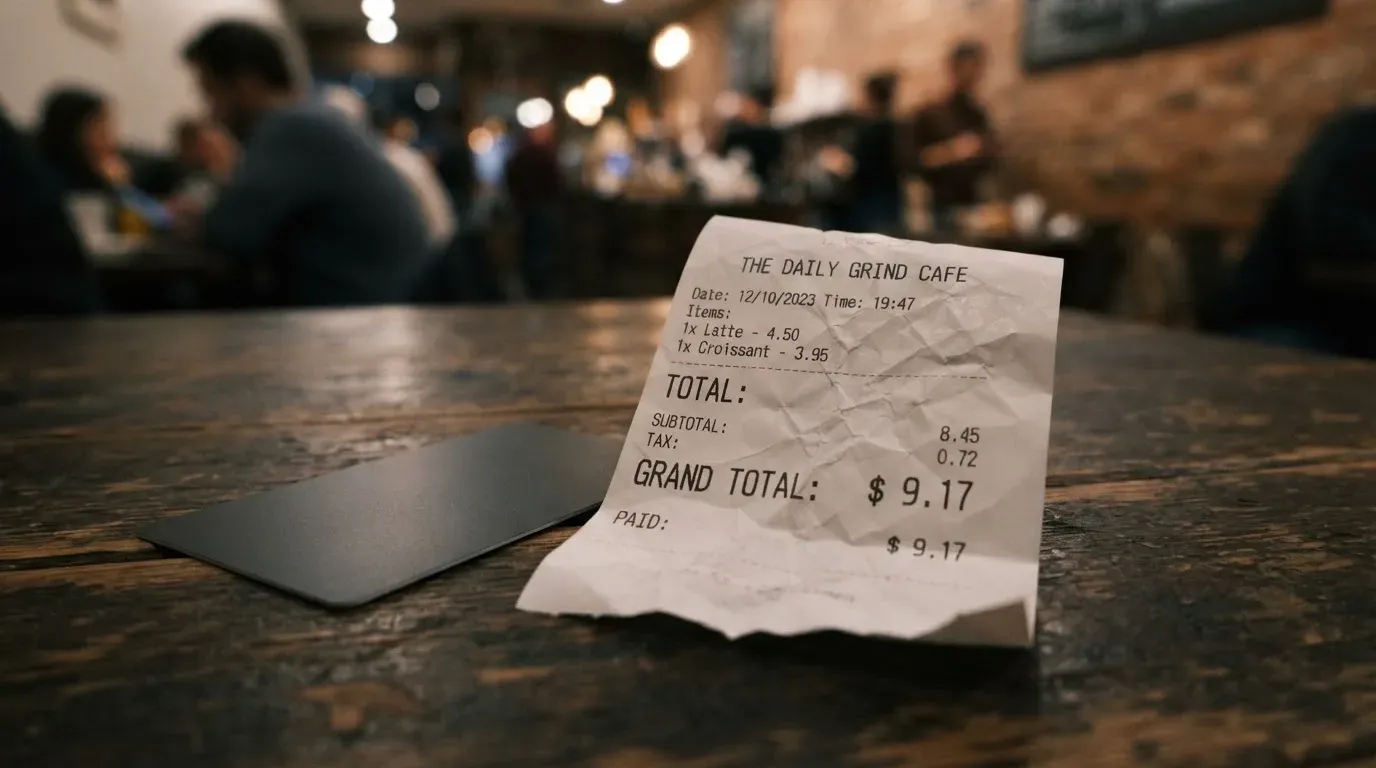
What is published is good. Here is the full set of values I could confirm.
| Fee or limit | Value |
|---|---|
| Issuance fee | Not stated — fee schedule is in the app |
| Monthly fee | Not stated; no monthly fee mentioned |
| USD transactions | Free |
| Foreign-currency transactions | 0% to 2.00% FX depending on the currency |
| Transactions of $25 or less | $0.10 fee, currently waived as a limited-time promotion |
| Declined payments | First 3 declines per calendar month free, then $0.50 each |
| ATM withdrawal | 2% of the amount, plus 0% to 1.75% FX surcharge depending on location, plus any ATM operator fee; free allowance not stated |
| Top-up / deposit | No DPT deposit fee |
| Spending limits | Not stated; shown in the app after verification |
| Crypto withdrawal | 0.1% DPT commission plus gas (about Ethereum $2.00, Polygon $1.00, Solana $1.00, Tron $5.00) |
| Payouts to 100+ currencies | Provider fee per corridor, from 0.30% to 0.80% |
Now three everyday payments, worked through with the published numbers.
Coffee in your own country, USD. Say $4. USD transactions are free, $4 is under the $25 threshold, and the $0.10 small-transaction fee is currently waived anyway. If your card balance is sitting in stablecoins, the conversion happens at the transaction. Cost on the published numbers: the conversion rate you get, and nothing else.
A €30 dinner abroad. This is where the FX band bites. The foreign-currency fee runs from 0% to 2.00% depending on the currency — the card does not publish a per-currency table, so €30 plus up to 2.00% FX is the honest range. Add the network’s own rate difference, which no card can control. Still cheaper than a typical airport card exchange.
A $20 online subscription that gets declined. Declines are free for the first three per calendar month, then $0.50 each. This one is easy to miss and it is where cardholders feel the sting: a subscription that retries nightly burns the allowance in two weeks and then costs you $0.50 every time. Cancel the thing that is failing rather than letting it retry.
Two things here deserve emphasis rather than a footnote. The $0.10 fee waiver and the Obsidian tier are both undated — nobody publishes an end date for the promotion, so do not build a monthly budget that assumes it lasts. And the ATM line is the one that should stop a cash-user cold: 2% plus up to 1.75% plus whatever the operator charges, with no free allowance stated at all. If you take out physical cash regularly, this card is not built for that.
On the card tiers: Oxygen is a Visa Platinum with travel accident insurance up to US $500,000, instant digital cards and member prize draws. Obsidian is a Visa Infinite tier, invite-only, with insurance up to US $1.5M, 24/7 concierge, a dedicated lifestyle manager, Priority Pass lounge access and DPT events; top-spending Oxygen holders are auto-upgraded.
Top up: USDC or USDT, on four networks
Topping up is the strongest part of the offer. There is no DPT deposit fee at all. What you pay is the blockchain’s own network fee, paid by the sender.
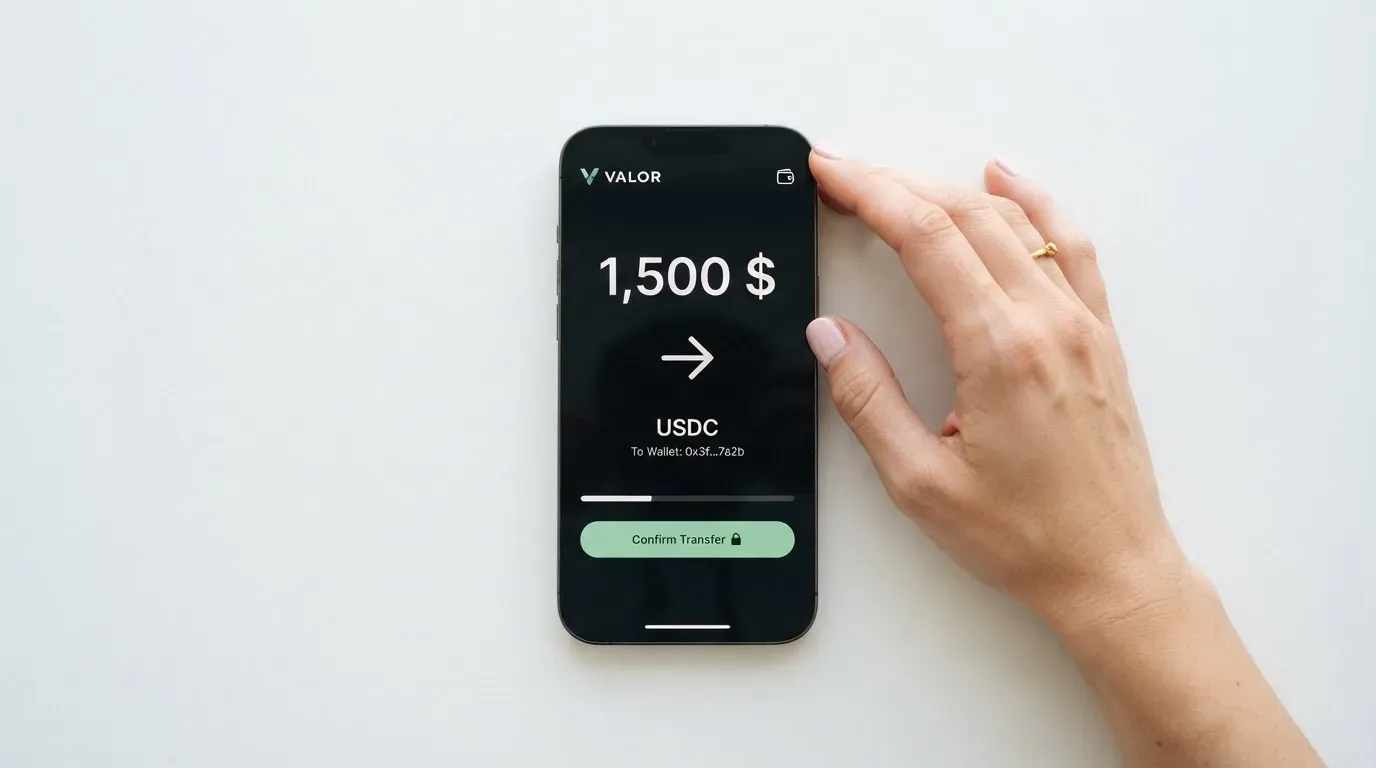
Live today: USDC or USDT on Ethereum, Polygon, Tron, Solana. On the roadmap, not live: Base, BNB and fiat deposits. So if you are sitting on Base, you have a conversion ahead of you before anything else.
The details that trip people up:
- Your card balance and your account balance are the same thing. There is no separate fiat wallet; the stablecoin balance converts at the Visa transaction.
- Minimums: 1 USDC or USDT on Ethereum, Polygon and Solana; 10 USDT on Tron.
- Crediting is about 1 minute after confirmation.
- Gas: about Ethereum $2.00, Polygon $1.00, Solana $1.00, Tron $5.00.
- No USDC over TRC20. Circle stopped supporting USDC on Tron in February 2024, so on Tron it is USDT only — send USDC there and you are sending to an unsupported path.
- A wrong network or a wrong address is the single most expensive mistake available to you. Blockchain transfers are irreversible; a deposit sent on a network the provider does not support, or to another network’s address, can be lost or need manual support recovery with no guarantee.
Getting money back out has its own price list. Crypto withdrawal is 0.1% from DPT plus gas. Bank payouts carry a provider fee per corridor: India 0.30%, Nigeria 0.80%, Vietnam 0.60%, Philippines 0.50%, Brazil 0.45%, Mexico 0.50%, Indonesia 0.55%, Thailand 0.40%, Europe SEPA Instant 0.35%, UK Faster Payments 0.35%. Payouts run in 100+ currencies, though the navigation bar mentions 80+ corridors; multi-currency balances are not stated.
One closing detail with a sting in it: what happens to a balance if you close the account is not stated, and the terms say DPT may delete an account on seven days’ notice. If you are thinking of winding down, ask first.
Paying with it every day
The day-to-day experience is good where it is described and unhelpfully vague where it is not.
What works:
- Virtual card for Apple Pay and Google Pay.
- Physical card with chip and contactless.
- Instant card freeze in the app if it is lost or stolen.
- 3 wrong CVV, expiry or PIN attempts trigger a 24-hour auto-lock.
What is soft:
- Wallets are supported “where available”, and whether Apple Pay and Google Pay work with the physical card is not stated.
- Blocked merchant categories are not stated. The help centre does contain merchant-restriction articles, so restrictions exist somewhere; I just could not confirm the list. Gambling is the usual suspect — category 7995 covers casinos, betting and lotteries, and many issuers block it by policy rather than by law, with the list varying by issuer — but I will not tell you DPT blocks it, because DPT has not said so.
- No card cashback is stated. There is a Rewards and Referral Program covering referral commissions, points and elite rewards, and a DPT Earn stablecoin yield vault. Whether either is worth anything to you depends on how you spend, and the terms are not laid out here.
Apps: Apple App Store and Google Play, plus a direct Android APK at download.dpt.xyz. I found no store ratings — no listing was located by search when I checked, on 21 October. That is a small signal, but if ratings matter to you, note that you will be the first to leave one.
Disputes are where the two pages again disagree, in a way that matters. The Learn guide says file with support within 60 days of the statement posting date for unauthorised charges. The terms say card disputes or chargebacks within 90 days of the transaction date. The safer reading is 60 days from the statement — it satisfies the tighter of the two. Decisions by DPT or its Service Partners are generally final, with Hong Kong courts or LCIA arbitration in London as the forum. Before you rely on either, one background fact: US debit card reversal rights come from Regulation E, credit card rights from Regulation Z, and prepaid-card coverage varies and should not be assumed. I am not giving you legal advice here — I am telling you that a 90-day window in the terms is not a guarantee that a claim will succeed.
What can go wrong
The risks here are less dramatic than the risks in this category generally, and that is the point.
Counterparty structure. The operator is DPT (HK) Limited, holding a Hong Kong TCSP licence no. TC010834 under AMLO Cap. 615. Custody is with BitGo, and DPT describes itself as arranging issuance through a Service Partner, with Hong Kong law governing. So you are trusting a Hong Kong programme manager, a US bank as issuer, and a US custodian — three parties, each with its own failure modes. The category background explains why this matters: custodial platforms have a record of failures, including Mt. Gox (about US$350 million reported stolen, 2011–2014), Coincheck (about US$400 million, 2018) and the Ronin Network (US$625 million, 2022).
A wording tension worth reading twice. The homepage says assets are held with BitGo, described as a “qualified custodian” with coverage up to $250M subject to terms. The terms say users do not deposit funds with DPT on a custodial basis. Those two statements are not the same claim, and the second one is the contract. I cannot reconcile them for you; I would ask support before funding a large balance.
Programme closure. Cards in this category do get shut down. Visa terminated its global agreements with FTX on 13 November 2022 and the FTX US debit card was wound down; WaveCrest, a Visa issuer that supplied crypto card brands, was suspended by Visa in Europe in 2018 and all its Visa programmes closed. The pattern is usually a notice period, then loading and spending stop, then you are asked to withdraw. One 2026 closure reported by a secondary source had new loads ending 8 July 2026 and spending stopping 8 August 2026 — a single unconfirmed source, so treat the dates as illustrative, not factual.
Declines and holds. A merchant can look up the BIN and see the issuing institution and country, and apply extra scrutiny when that differs from your billing address. Some merchants decline prepaid or foreign BINs for exactly that reason. Address Verification is mainly offered in the US, Canada and UK and is generally unavailable for foreign-issued cards, which causes declines. And a declined authorisation can leave a hold on funds for several days, typically up to seven.
Sanctions screening. Tether says it disables tokens in wallets on the OFAC sanctions list and has frozen funds tied to illicit activity — so stablecoins are not censorship-proof. Nationality is also screened separately from residence, because issuer risk policy often applies to citizenship and country of birth, not just your address.
What I did not find. No official incidents. A search for DPT Pay reviews returned nothing on Trustpilot or Reddit, and there is no Trustpilot page for the DPT website. Third-party and unofficial: one KuCoin-hosted post by DeFi Warhol — a single author’s view — noted about 5,000 Android downloads and no public card-volume figures. And no dated licence or programme events are published, so there is no timeline to anchor anything to.
The absence of complaints cuts both ways. A young, small card has fewer complaints because it has fewer users.
What to take instead
None of the three alternatives below matched DPT when I scored them, and the honest reason is that they disclose less, not more. Here is the comparison.
| DPT | Cardex | CardFlow | HyperCard | |
|---|---|---|---|---|
| My score | 8.5 / 10 | 5.6 / 10 | 4.9 / 10 | 4.7 / 10 |
| Reach | Spending in 150+ countries | “One crypto card, 200+ countries”; no country list or exclusions | Aimed at Nigeria and “Nigerians and global users”; no list stated | App Store says works in “more than 176 countries” (acceptance, not eligibility) |
| Card | Visa, U.S. Bank; virtual + physical | Debit card on VERVE, Visa, Mastercard, UnionPay; virtual + physical; Naira per listing | Virtual USD Mastercard, about 3 minutes | Prepaid “HyperCard”; network not stated; balance in USD or EUR |
| Fees | USD free; 0–2.00% FX; $0.10 under $25, currently waived | Real-time conversion with an “AI-Powered Conversion Rate”; no percentage stated | Not stated; “creating a virtual card is completely free” | Not stated; App Store lists no fees |
| Funding | USDC/USDT on Ethereum, Polygon, Tron, Solana | USDT, USDC, BTC wallets; networks not stated | Bitcoin, USDT, ETH or Naira bank transfer; networks not stated | Crypto such as USDT, BTC, ETH; networks not stated |
| Rewards | None stated; referral programme and DPT Earn exist | Not stated | Not stated | Not stated |
Where each one might suit you anyway:
- Cardex if you actually want to spend in Naira and live there — its App Store listing is Naira-focused, which is a real specialisation rather than a flaw.
- CardFlow if you want a virtual Mastercard in three minutes at no creation cost, and you are Nigerian.
- HyperCard if you want a prepaid balance in USD or EUR and do not care which network sits underneath.
Take DPT if you want a bank-issued Visa and can live with an app-resident fee schedule. Take one of the others if a published all-in price matters more to you than the issuer’s identity.
Who I would recommend it to
I would recommend the DPT card to you if all four of these are true.
You already hold USDC or USDT on Ethereum, Polygon, Tron or Solana, and moving them elsewhere would cost you real money in gas.
You live outside the United States and Canada and outside comprehensive-sanctions jurisdictions, and your country of residence is one the app will accept.
You want a card issued by a bank under a Visa licence, with a Hong Kong-licensed operator and BitGo custody behind it, rather than an e-money institution front end.
You spend in USD most of the time, or you accept a 0–2.00% FX band when you do not — and you do not rely on cash machines.
I would point you elsewhere if you need a printed fee schedule before signing up, if you plan to live on Base or BNB balances, if you take out physical cash often, or if you want your card to work in the US.
The single most useful thing you can do before depositing: open the app, read the in-app fee schedule, and send support a message asking what happens to an unused balance at account closure. Those are the two numbers the public pages withhold, and they are the two that could change your mind.
Frequently asked questions
What is the DPT card?
The DPT card is a crypto payment card: you load stablecoins, and the card spends them as ordinary currency. Your card balance and account balance are the same stablecoin balance, which converts at the moment each Visa transaction happens. Custody of assets sits with BitGo.
Is DPT a bank?
No. DPT is not a bank. The card is issued by U.S. Bank as the licensed issuer, but DPT itself is a Hong Kong company operating under a TCSP licence, described in its terms as arranging issuance through a Service Partner. Hong Kong law governs. So you are dealing with a programme manager and a custodian alongside the bank, not with a bank account. That distinction matters if you are comparing this with an ordinary current account.
How does the DPT card work?
You top up with USDC or USDT on Ethereum, Polygon, Tron or Solana, then spend. Because the card converts at the transaction, there is no manual conversion step. Spending works in “150+ countries” wherever Visa is accepted. US-dollar transactions carry no FX fee; other currencies pay between 0% and 2.00%. Top-ups have no DPT deposit fee, only the blockchain’s network charge.
Who owns DPT?
The card’s operator is DPT (HK) Limited, licensed in Hong Kong as a TCSP under AMLO Cap. 615, licence number TC010834. The issuing bank is U.S. Bank, acting under a Visa licence. Custody is with BitGo, which the homepage calls a qualified custodian with coverage up to $250M subject to terms, while the terms separately say users do not deposit funds with DPT on a custodial basis. Ownership of the brand itself is not something the public pages state.
Can I use the DPT card in my country?
Spending, most likely yes, in the “150+ countries” where Visa is accepted. Holding the account, it depends: eligibility turns on your country of residence, checked in the app, and the terms exclude persons located in, incorporated in or resident of the United States, Canada, or comprehensive-sanctions jurisdictions. A failed identity check can come back as an “unsupported jurisdiction” rather than a document problem, so ask support before funding if you are somewhere unusual.
How do I apply, and does it need KYC?
Yes, KYC is required for the card, for deposits at full capacity, and for payouts. You need to be 18, hold one account per person, and supply a government-issued ID plus a live selfie in the app. It usually takes minutes, up to 24 hours in the stated worst case. The Learn guide additionally mentions proof of address — a utility bill or bank statement no more than three months old — though the main flow does not ask for it.
Is the DPT card free?
Partly. There is no DPT deposit fee, US-dollar transactions are free, and the first three declined payments each calendar month are free before a $0.50 charge applies. Transactions of $25 or less carry a $0.10 fee, currently waived as a limited-time promotion with no published end date. But the issuance fee and any monthly fee are not stated on the public pages — the schedule is inside the app, and no monthly fee is mentioned in the text. You cannot answer this question from the website alone.
How do I top up, and which networks work?
Top up with USDC or USDT on Ethereum, Polygon, Tron or Solana; Base, BNB and fiat deposits are on the roadmap, not live. Minimums are 1 USDC or USDT on Ethereum, Polygon and Solana, and 10 USDT on Tron. Funding lands about a minute after confirmation, and the sender pays the network fee — about $2.00 on Ethereum, $1.00 on Polygon and Solana, $5.00 on Tron. Note that USDC is not available over Tron; Circle stopped supporting it there in February 2024.
Where can I use the DPT card every day?
Anywhere Visa is accepted, on a virtual card in Apple Pay or Google Pay, or a physical card with chip and contactless. Wallet support is described as “where available”, and whether it works with the physical card specifically is not stated. Blocked merchant categories are also not stated, though the help centre contains merchant-restriction articles. Cash machines carry 2% plus a 0% to 1.75% FX surcharge plus the operator’s own fee, with no free allowance published.
Is the DPT card safe and worth it?
It is structured better than most in this category: a bank issuer, a licensed operator, custody with BitGo, instant card freeze, auto-lock after three wrong PIN or CVV attempts, and 2FA and spending alerts in the help centre. I found no complaints on Trustpilot or Reddit and no official incidents. But I would not call it risk-free: stablecoins can depeg, blockchain transfers are irreversible, card programmes in this industry do close, and the homepage’s custody claim and the terms’ custodial statement do not plainly agree. Judge it on that basis.
How do I withdraw money or delete my account?
Crypto withdrawal costs 0.1% from DPT plus network gas — roughly $2.00 on Ethereum, $1.00 on Polygon and Solana, $5.00 on Tron. Bank payouts go out in 100+ currencies with a provider fee per corridor, ranging from 0.30% in India and Europe SEPA Instant to 0.80% in Nigeria. On deletion: what happens to a leftover balance is not stated, and the terms say DPT may delete an account on seven days’ notice — so ask, and withdraw, before you close anything.
Virtual card reviews – cryptocardcheck
Content created by the «cryptocardcheck» team