
A virtual dollar card from a Nigerian app, published with a lot of blanks
 Available in US
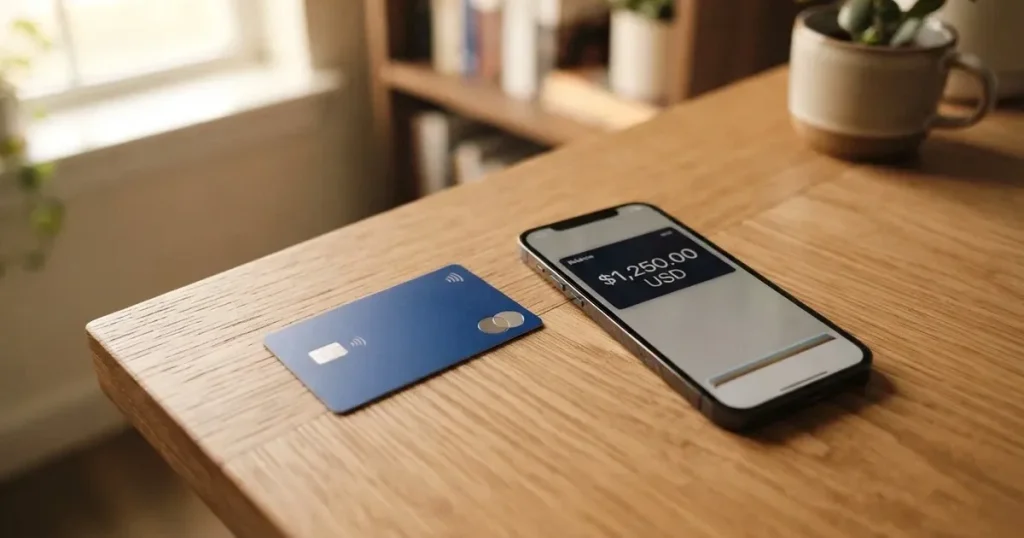
Ecstasy is a virtual VISA card in dollars, issued by Ecstasy Data Nigeria Limited and funded by converting crypto to naira inside the app. That is the whole product in one sentence, and almost everything else you might want to know about it is either thin or missing from the pages the company publishes. I scored it 3.6 out of 10. It is not a bad idea; it is an idea that has not yet been documented well enough for me to recommend it to anyone who cannot afford to be wrong.
The conditions described here are current as of October 28, 2026.
Verdict: 3.6 out of 10
Here is the card by card, with the mark I gave each line and why.
| Criterion | Mark | Reason |
|---|---|---|
| Who can get it | 2 / 10 | Nigeria only as far as anything published shows: the issuer is Ecstasy Data Nigeria Limited and the app converts crypto into naira. No country list is given, so nobody outside Nigeria can tell from the public pages whether they are eligible. |
| Cost | 5 / 10 | The scoring is mid-range only because nothing is disclosed. Neither the issuance fee nor any charge for funding is published, so I can neither confirm a fair price nor confirm an unfair one. |
| Top-up options | 4 / 10 | One documented route: USDT on TRC20 is converted to naira in the app, and the resulting naira funds a dollar wallet. No cards, bank transfers or other coins are described. |
| Reliability and complaints | 4 / 10 | The issuer is named, but no licence or registration is. The App Store shows 2.7 out of 5 from 9 ratings, with reviews describing freezes after updates and trouble logging in. |
| Everyday use | 3 / 10 | Virtual VISA cards in dollars, for online payments and subscriptions. No physical card is mentioned, no ATM, and neither Apple Pay nor Google Pay is listed. |
| Total | 3.6 / 10 | A narrow, thinly documented product. |
Who this suits, in one line: a Nigerian user who already holds USDT on TRC20, wants to pay a subscription in dollars online, and is willing to discover the fees by experimenting. Who it does not suit: anyone who needs a physical card, cash withdrawal, Apple Pay or Google Pay, a published fee schedule, or certainty about who is regulated for the money.
The core problem is not that Ecstasy is bad. It is that the app is a wallet with a card attached, and the parts a reader would use to decide — the price of the card, what a dollar payment costs, whether money can leave again, whether identity is checked — are not on the public pages. I have marked those as “not stated” throughout, because that is exactly what they are: the card’s public pages do not say.
Will they give you the card?
There is no country list, no citizenship or residence rule, and nothing said about applicants from Russia or Belarus. The one solid fact is that the issuer is Ecstasy Data Nigeria Limited and the app converts crypto into naira.
That single sentence tells you where the product is built. It converts dollars back to naira and settles in naira, which means the product is designed around a Nigerian user with crypto and a reason to spend in dollars — typically a software or service subscription priced in USD that a local bank card cannot reach.
But “built for Nigeria” is not the same as “open to Nigerians only”. The issuer being a Nigerian company tells you who holds the card programme; it does not tell you the eligibility criteria. So if you are reading this from outside Nigeria, the honest position is that you cannot tell whether you qualify from anything published. Not “probably not” — genuinely, the pages do not say.
Note also what is missing in the other direction. Several crypto card competitors publish acceptance or eligibility statements openly; one of the alternatives below markets itself to more than 200 countries, another describes itself as for Nigerians and global users. Ecstasy publishes neither a list nor an exclusion. You are left with the shape of the product rather than the terms of it.
There is also the identity question, which I cover in the next section, because “will they give you the card” and “how do you get it” are really the same question here: the app converts your crypto, so it must know who is converting it, and the details of that are not described.
How to get it
The steps are implied by the app’s structure rather than written down anywhere, and the identity requirements are not stated. The product is a virtual card in dollars, VISA-branded per the app description, created and used inside an app available on iPhone and iPad through the App Store and on Google Play. There is no physical or metal card mentioned, and no delivery information exists because there is nothing to deliver.
What the App Store privacy section does say is what the app collects: payment information, name, email, phone number, and photos or videos. That is a data-collection statement, not a verification policy. It tells you the app is built to receive identity documents; it does not tell you whether your verification is accepted, whether a selfie is required, how long it takes, or whether it is required at all before the card appears.
The parts a reader would look for on a serious card page — what documents, what checks, what happens if they fail, what tier you end up at — are all absent. Several cards of this kind run a two-step approach, taking basic details first and documents later above a threshold. I found no such description for Ecstasy, and I am not going to guess at it.
One practical consequence: because the card is virtual and dollar-denominated, “getting it” and “adding it to a wallet” are two different problems. Adding a virtual VISA card to a phone wallet is technically routine. But the card’s own pages list no mobile wallet support, so I would not plan on Apple Pay or Google Pay being available. If you need to tap to pay in a shop, this is not the product for that.
My advice at this stage is procedural and boring: read the app listing and the developer site before you send anything, and keep your own record of what you submitted. That is not a workaround for anything. It is just what you do with an app whose support link is missing from its listing.
Fees: what it really costs
Nothing is published. Not the issuance fee, not the monthly fee, not the conversion fee, not the foreign-exchange treatment, not the ATM price, and not the limits. This is the single largest gap in the review, and it is the gap that most affects whether you would be well off using this card.
Here is the fee and limit picture exactly as the public pages leave it:
| Fee or limit | What the card publishes |
|---|---|
| Issuance | Not stated |
| Monthly fee | Not stated |
| Conversion (crypto to naira, naira to dollar) | Not stated |
| Foreign exchange on the dollar card | Not stated |
| ATM withdrawal | Not stated |
| Card funding | Not stated |
| Daily spending limit | Not stated |
| Monthly spending limit | Not stated |
| Card currency | Dollar card and dollar wallet in USD; the naira side is handled inside the app |
| Physical card | None mentioned — virtual only, for online and subscription payments |
| Tiers | Not stated |
Where the card does say something, it is structural rather than numeric. The card and the wallet are in dollars; naira appears on the other side of the conversion inside the app. That tells you the currency mismatch a dollar card creates, but not the rate you pay across it.
Now the part you asked for: two or three everyday payments, and which fees apply.
A monthly streaming subscription in dollars. You pay in USD from the dollar wallet. The card’s own conversion fee is not stated, so what it takes from the wallet balance is not knowable in advance. What you do know is that on-chain network fees for your deposit are charged by the blockchain, not by the card provider — sending USDT on TRC20 costs bandwidth on Tron, paid via TRX, and that is a separate cost from anything the app might charge. If you convert from naira to dollars to make this payment, at least one conversion is involved, and its price is not on the page.
A small online purchase in a non-dollar shop. The card is denominated in dollars and issued in Nigeria. Merchants can look up the issuer from the card’s identification numbers, and if the shop’s country differs from your billing country, extra scrutiny is a possibility — some merchants decline prepaid or foreign-issued cards for exactly that reason. Any currency the shop charges in, other than the dollar, puts the question of exchange rate somewhere in the middle. The card’s own FX treatment is not stated, so I cannot tell you who eats that rate.
A cash withdrawal. There is no card to put into a machine. The product is a virtual card for online and subscription payments, and no ATM pricing exists because ATM withdrawal is not part of it. If you need cash, look elsewhere.
What I would do with a card like this is run one small real payment first and read the transaction history afterward, comparing what left the wallet to what the shop charged. That is the only available substitute for a published fee table. But be honest with yourself that you are using your own money to discover a price list that a competitor’s website would simply have printed.
Top up: how the money gets in
The documented route is USDT on TRC20, converted to naira in the app, which then funds a dollar wallet. That dollar wallet has top-up, transfers and transaction history — and its fees, minimums and available fiat options are not stated.
So the full path the card describes looks like this: you hold USDT on Tron, you send or convert it in the app, the app converts it to naira, and that value lands in a dollar wallet. The dollar wallet is what you use to claim the virtual dollar card and then spend from it. The app listing mentions both wallets, which tells you the design intent clearly: one side is crypto and naira, the other side is dollars and the card.
Three things follow from that, and none of them are in the app’s favour.
First, the number of legs. Your money passes through a crypto network, a conversion into naira, and a dollar balance. Every one of those legs is a place where a fee can exist and where a rate can move. Only the network leg has a publicly known cost structure; the other two are not stated.
Second, network choice. Choosing TRC20 matters more than it looks. Chain transfers are irreversible: a deposit sent on a network the provider does not support, or to an address belonging to another network, can be lost or need manual support recovery with no guarantee. Tron is a real and busy network with real support, but the general rule stands for every card in this category. If the app shows you an address, read it twice.
Third, exit. Whether money can leave the dollar wallet again — a bank transfer, a payout, a withdrawal back to another currency — is not stated at all. This is the item I would ask about first, before any amount, because a wallet you can fund but not empty is a different product from a card. I want to be precise here: I am not saying withdrawal is impossible. I am saying the card does not say, and that is a fact about the documentation, not about the company.
Referral rewards exist in the app, with no cashback rate stated. Treat that as a marketing feature of unknown value, not as income.
Paying with it every day
Daily use here means one thing: virtual dollar VISA cards for online payments and subscriptions. There is no physical card, no ATM, and no listed mobile wallet support, and the app itself carries a low rating.
Take the product at its narrowest first. It is a card number you put into a checkout form. For recurring software and services priced in dollars, that is genuinely useful, and the dollar denomination is the point. Online card payments also usually involve an extra identity step: the issuer assesses the risk and either approves the payment silently or challenges you, for example with a one-time code. Address verification can also matter — the numeric parts of the billing address you type are compared against issuer records, and that service is mostly offered in the US, Canada and the UK, so a Nigerian billing address may not help you when a merchant runs that check. These are category facts, not Ecstasy specifics; they simply describe the paths a virtual card payment takes.
Then the constraints. No physical card means no paying in a shop by handing something over, no restaurant, no queue. No mobile wallet support listed means no tap-to-pay, which is how a lot of people now pay. No ATM means no cash. What remains is online and subscriptions, which the card does say.
The wallets question is unresolved too: the app describes a dollar wallet and a naira side, but not the full set of wallets or self-custody arrangements it supports. Whether the crypto ever sits in an account you control, or only inside the provider’s system, is not stated — and that difference matters more than most people expect. With a custodial wallet, the provider holds the credentials and you must trust them completely. With a self-custody-linked arrangement, the funds stay in your own wallet until the moment of payment, and you carry sole responsibility for key loss, phishing and malware that swaps a copied address.
The app’s own track record is the weakest point in this section. In the App Store the rating is 2.7 out of 5 from 9 ratings — a very small sample, but a bad one — with the latest version listed as 2.8.2 from 24 September. Two recent reviews describe the app freezing after updates and problems logging in. A card that will not open when a subscription renews is a bad card, whatever the terms are.
One unofficial figure is worth flagging because it disagrees. A third-party snapshot shows 3.5 out of 5 from 54 ratings, on an older version (2.7.7), with no date shown. That is not from the card, it is not confirmed by the App Store page, and I would not treat it as current. The Google Play rating was not readable.
What can go wrong
The named risks are thin on official incidents and real on user experience: two recent App Store reviews cite update freezes and login problems, and no complaints threads specific to Ecstasy turned up in one search of Trustpilot and Reddit. No Trustpilot page was found.
Start with what is missing rather than what happened, because there has been no public incident to report. I found no official Ecstasy-specific incident, and that is a genuinely good sign — but it is also what you would expect from a small app that launched on 24 May 2023 and has nine App Store ratings. Absence of incidents is weak evidence when there is so little activity to generate them.
The company is Ecstasy Data Nigeria Limited, named as the developer. The issuing bank or partner, the licences and any registration are not stated. That is the single fact I would most want changed before recommending this to anyone. Throughout this category, the issuer is the entity licensed to hold the card programme, and the crypto brand is often only a manager or front end. If you cannot tell which body is regulated, or by whom, you are trusting a name on a store listing.
Then the category risks, which apply here because this is a crypto-funded card:
- Irreversibility. Blockchain transfers cannot be undone. A wrong network or a wrong address can mean lost money with no guaranteed recovery.
- Custody. Whoever holds the private key or seed phrase controls the funds. Transfers are irreversible, and a stolen key has no built-in recovery — the network cannot freeze or return it.
- Stablecoin behaviour. USDT and USDC aim to hold a dollar value, but stablecoins are not necessarily stable. USDC lost its peg temporarily in March 2023. Tether also states that it disables tokens in wallets on the OFAC sanctions list and has frozen funds tied to illicit activity, so these tokens are not censorship-proof.
- Network costs and network dependence. On Tron, fees are paid via bandwidth and energy, often burning TRX. Gas on other chains is paid in that chain’s own token, so a wallet with USDT but no ETH cannot send on Ethereum at all.
- Merchant declines. Some shops decline prepaid or foreign-issued cards, and a declined authorisation can leave a hold on your funds for several days.
- Programme closure. Cards in this category do get wound down. Visa terminated its agreements with FTX in November 2022; WaveCrest, an issuer that supplied crypto card brands, was suspended by Visa in Europe in 2018. Closures typically mean a notice period, then loading stops, then you are asked to withdraw. One 2026 closure reported by a secondary source ended new loads on 8 July and spending on 8 August — single source, unconfirmed, but the pattern is the thing to watch for, not the date.
On the practical side: the App Store listing contains no support link beyond Apple’s billing support. The developer site is ecstasynigeria.com, with a privacy policy at ecstasynigeria.com/privacy, and the listing language is English. When a card’s dispute process, refund handling and security arrangements are not stated — and here none of the three is — you have no stated route when a payment goes wrong. A chargeback is a refund ordered by the issuer to settle a dispute, with reason codes such as fraud or duplicate billing; whether this card participates, and under whose rules, is not published.
What to take instead
Nothing in this category is well documented either, but three alternatives publish more than Ecstasy does — and two of them name Naira explicitly. Here they are at a glance:
| Ecstasy | Cardex | CardFlow | HyperCard | |
|---|---|---|---|---|
| My score | 3.6 / 10 | 5.6 / 10 | 4.9 / 10 | 4.7 / 10 |
| Who it is for | Not stated beyond a Nigerian issuer and naira conversion | “One crypto card, 200+ countries”; no list or exclusions | Aimed at Nigeria: “Nigerians and global users” | No country list on official pages; App Store says acceptance in “more than 176 countries” |
| Card | Virtual VISA, USD | Debit card on VERVE, VISA, Mastercard and UnionPay; virtual and physical | Virtual USD Mastercard, created in about 3 minutes | Prepaid “HyperCard”; network not stated on the App Store page; USD or EUR balance |
| Cost | Not stated | Not stated | Creating a virtual card is free; monthly fee not stated | Not stated; no fees listed on the App Store page |
| Conversion and fees | Not stated | Real-time crypto-to-fiat conversion at payment; an “AI-Powered Conversion Rate” scans exchange rates and picks a rate; no percentage stated | Not stated | Not stated |
| Funding | USDT TRC20 to naira, then a dollar wallet | USDT, USDC and BTC wallets; networks not stated | Bitcoin, USDT, ETH or naira bank transfer | Crypto deposit such as USDT, BTC or ETH, converted to USD or EUR |
| Rewards | Referral rewards, no rate stated | Not stated | Not stated | Not stated |
Reading the table, three differences stand out. Cardex is the only one of the four that says something concrete about conversion — that the rate is chosen at the moment of payment from scanned global rates. It is still true that no percentage is published, and “AI-powered” is marketing language, but a mechanism is more than nothing. CardFlow is the only one that states a price for anything: creating a virtual card is free. And it is the only one of the four that says a card takes a few minutes to create, which tells you how much of the onboarding is automated.
None of the three fixes the category problem, and I want to be clear about that. Cardex does not publish its costs or its country exclusions. CardFlow does not publish its conversion fee. HyperCard publishes the least of all and has the vaguest card description — a prepaid card whose network is not stated on its store page, which is a poor sign when acceptance is the whole point. Card rewards are not stated for any of the three.
What differs is documentation, and documentation is the thing you are actually short of here. If you are Nigerian and want to pay dollars online, Cardex and CardFlow are the two I would read first, because each answers one question Ecstasy leaves blank. If you are outside Nigeria and your decision hinges on whether you are eligible, Cardex’s 200+ countries line is at least a starting position, whereas Ecstasy gives you nothing.
Who I would recommend it to
A Nigerian user who already holds USDT on TRC20, pays a subscription in dollars online, and is prepared to find out the fees by testing them.
That is a real category of person and this card serves them. The route is coherent: crypto to naira in the app, naira into a dollar wallet, dollar wallet pays a dollar bill online. If your spending is entirely online, if your currency problem is specifically “my local card cannot reach this service”, and if you are comfortable holding crypto through a provider rather than in a wallet you control, then the concept fits your situation even if the paperwork around it is thin.
I would not recommend it to you if any of these is true:
- You need a physical card, or you pay by tapping a phone. There is no physical card and no mobile wallet support is listed.
- You need cash. There is no ATM function.
- You are outside Nigeria and are trying to work out whether you are eligible. The pages do not say.
- You need to know what a payment costs before you make it. Nothing is published.
- You plan to keep money in the account long-term. Whether money can leave the dollar wallet is not stated, and holding funds with a custodian carries counterparty and hack risk — the sector has a long record of it.
- You want a published complaint or dispute route. There is no support link in the listing and no dispute process described.
The decisive question, if you only ask one, is this: can you get your money out? The card does not say. Everything else — the dollar denomination, the virtual format, the missing wallet support — is a limitation you can work around by choosing other tools. Not knowing whether you can withdraw is the kind of unknown that costs real money to discover late.
One last thing, because it is not the card’s fault and it will still cost you if you ignore it. In the US the tax authority treats digital assets as property, so exchanging them for goods, services or dollars generally produces a taxable gain or loss, measured in local currency at the value on the date of the transaction. Each card payment funded from crypto may therefore be a separate disposal. I am not giving you tax advice and I am not qualified to; I am telling you that spending crypto through a card is a taxable event in many places, and that it is worth checking with someone who knows your situation before you convert a large balance.
Frequently asked questions
What is the Ecstasy card?
It is a virtual VISA card denominated in dollars, according to the app description, offered by Ecstasy Data Nigeria Limited. You convert crypto to naira inside the app, and that value funds a dollar wallet, which you use to claim and spend from the card. No physical or metal card is mentioned anywhere in the card’s own materials.
How does the Ecstasy card work?
The route described is USDT on TRC20 to naira conversion inside the app, then funding of a dollar wallet that supports top-up, transfers and transaction history. The card draws on that stored balance, so it behaves like a prepaid card rather than a debit card tied to a bank account — the card can spend only what is loaded.
Is Ecstasy a bank?
Not on the evidence published. The developer named is Ecstasy Data Nigeria Limited. The issuing bank or partner is not stated, and no licence or registration is named on the pages I could read. That gap matters, because in this category the issuer is the licensed party and the app brand is often only a front end.
Does Ecstasy require KYC?
Not stated. The App Store privacy section says the app collects payment information, name, email, phone number, and photos or videos — which indicates it is built to receive identity material — but the card publishes no verification policy, no list of documents, no tiers and no statement of when checks are required.
How do I top up the Ecstasy card?
Through the app: convert USDT TRC20 into naira, and the dollar wallet it funds is what the card spends from. The dollar wallet also lists top-up, transfers and transaction history. Fees, minimum amounts and any other ways of funding the wallet are not stated.
Can I withdraw money from Ecstasy?
The card does not say, and that is the honest answer. No withdrawal method is published, and no ATM function exists because there is no physical card. This is the first thing I would ask about, because a wallet you can fund but not empty is a very different product from a payment card.
Can I add Ecstasy to Apple Wallet or Google Pay?
Not on what is published. The apps are available on the App Store and Google Play, but neither Apple Pay nor Google Pay is listed among the features. If you pay by tapping a phone, treat this card as unsuitable until the card’s own pages say otherwise.
Is the Ecstasy card safe?
There is no published security arrangement — no description of two-factor authentication, card freezing, spending limits or 3-D Secure. The App Store rating is 2.7 out of 5 from 9 ratings, with two recent reviews describing update freezes and login problems. Your crypto is converted by the provider, so you are trusting a Nigerian company whose licences are not stated.
Is Ecstasy card free?
Nobody knows, because the card does not say. Issuance cost, monthly fee, conversion fee, foreign-exchange treatment and funding charges are all unstated. One alternative in this category does state that creating a virtual card is free, which makes the silence here harder to excuse rather than easier.
Is Ecstasy worth it?
For one narrow case — a Nigerian user holding USDT on TRC20 who wants to pay an online subscription in dollars and can tolerate undocumented fees — yes, potentially. For anything wider, no: with 3.6 out of 10, no published costs, no stated withdrawal route and no support link, the alternatives that publish at least part of their pricing are the safer place to start.
Virtual card reviews – cryptocardcheck
Content created by the «cryptocardcheck» team