
A self-custody Visa card built for ELLIPAL wallet users, with thin public details on costs and limits
 Available in US
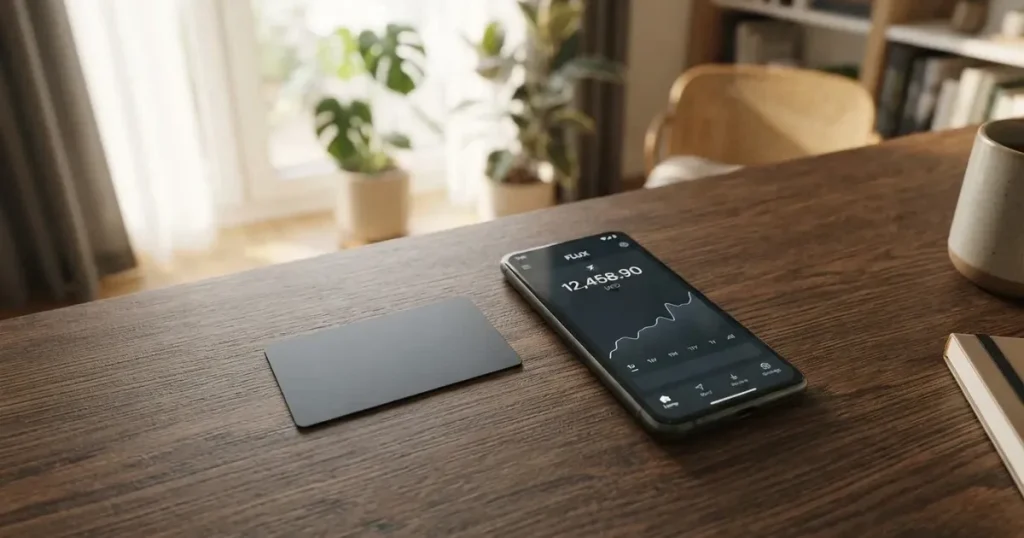
ELLIPAL Pay is a Visa card that spends stablecoins directly from a self-custody wallet, settled on the Gnosis Chain at the moment of payment. It is aimed at people who already hold an ELLIPAL hardware wallet and want to use their stablecoin balances in everyday shops without first converting to a bank balance. The promise is clean: no bank holds the funds, no third party can freeze them, and the card itself is free.
The reality, at least from what ELLIPAL publishes, is a thinner picture. Costs are presented as zero, yet the partner programme that powers the card (Gnosis Pay) lists a 30.23 EURe card fee and 2% ATM charges after a free allowance. The product page still says “coming soon” in places, no physical card is described, and the issuing bank is not named. For a card that is supposed to compete with MetaMask, KAST, and TokenPocket, that lack of clarity matters.
This review walks through who can get the card, what it really costs, how top-up works, and where the gaps are, so you can decide whether ELLIPAL Pay fits your situation or whether one of the alternatives makes more sense.
Conditions are current as of October 28, 2026.
Verdict
ELLIPAL Pay scores 5.8 out of 10. It is a credible idea: a Visa card that draws on stablecoins in a self-custody wallet, with conversion happening on-chain at the moment of payment. For ELLIPAL hardware wallet owners who want to spend USDC, USDT, or similar balances without trusting a custodian, the architecture is the right shape. The score is pulled down by what the public pages do not say: no physical card is described, no Apple Pay or Google Pay support is confirmed, the issuing bank is not named, and the “free” claim conflicts with the partner programme’s own fee schedule.
In practice, the card suits a narrow reader: someone who already uses an ELLIPAL hardware wallet, lives in one of the listed European or Latin American countries, and is comfortable with stablecoins settling on Gnosis Chain. It does not suit readers who want a metal card, mobile wallet support, a clear cashback programme, or a card from an institution that publishes its licence.
| Criterion | Score | Why |
|---|---|---|
| Who can get it | 6 / 10 | Legal residents of selected countries in Europe and Latin America; the rest join a waitlist |
| Cost | 7 / 10 | Officially free with no transaction, conversion, or gas fees; partner programme lists a 30.23 EURe card fee and 2% ATM charges after 5 free withdrawals |
| Top-up options | 5 / 10 | Stablecoins from a self-custody wallet, settled on Gnosis Chain at payment; EURe, GBPe, and USDCe balances |
| Reliability and complaints | 6 / 10 | Partner is Gnosis Pay with KYC by SumSub; product page still says “coming soon” in places |
| Everyday use | 4 / 10 | Virtual card on activation; no physical card, Apple Pay, or Google Pay confirmed in the official pages |
| Total | 5.8 / 10 | A self-custody concept with thin public details on the parts that matter day-to-day |
Who will give you the card
ELLIPAL Pay is open to legal residents of a specific list of countries in Europe and Latin America. The starting list I saw named Austria, Belgium, Bulgaria, Croatia, Cyprus, the Czech Republic, Denmark, Estonia, Finland, France, Germany, Greece, Hungary, Iceland, Ireland, Italy, Latvia, Liechtenstein, Lithuania, Luxembourg, Argentina, Brazil, and Colombia. If you live somewhere else, you go on a waitlist; the card is not advertised as open globally.
The ELLIPAL Pay product page states that the application flow is rolling out gradually, which matches the “rolling out gradually” language the company uses. So even within the listed countries, you may not be able to apply right now.
Nationality is not the same as residence for this card. The card’s geography is described in terms of where you live, and the rules are not stated for citizens of a listed country who live elsewhere, or for residents of a non-listed country. The age requirement is not stated. The card is described as a Visa card usable worldwide where Visa is accepted, so the spending geography is wider than the application geography.
One thing worth raising for anyone reading this: the issuing institution is not named on the ELLIPAL pages I read. Third-party data (DeFiLlama, October 2026) lists the Gnosis Pay card issuer as Monavate, but that is not confirmed by ELLIPAL. If knowing which bank or e-money institution backs your card matters to you, that is a question to ask before you apply.
How to get it
The sign-up steps run inside the ELLIPAL app. You open Assets, then Pay, then ELLIPAL Pay, and tap Apply. From there, identity verification kicks in: email, government ID, a utility bill from the last three months as proof of address, and then a wait while Gnosis Pay (the partner) verifies you. KYC is run by SumSub on the partner side, not by ELLIPAL itself. Once you are approved, you activate a virtual card with your phone number and a source-of-funds confirmation. No age requirement is published.
A few practical points that come up when you read the steps carefully:
- The verification step is run by Gnosis Pay, not by ELLIPAL. That means the documents you submit, and any data retention tied to them, sit with the partner.
- Source-of-funds confirmation is a separate step from identity. It is a common anti-money-laundering ask and is not optional.
- The card you get at the end is described as virtual. No physical or metal card is described in the official pages I read.
- The KYC processing time is not stated. The flow says “wait for Gnosis Pay to verify” without giving a window.
If you have already gone through KYC with another crypto card on the same SumSub stack, you may find the process faster, but ELLIPAL does not promise that.
Fees: what it really costs
ELLIPAL’s ordering guide calls the card free, and the marketing language is unambiguous on that point: no transaction fees, no markup on currency conversion, and no gas fees on card payments. That is a clean claim, and on the surface it is one of the more attractive fee structures in this category.

It does, however, come with a caveat. The partner programme that powers the card is Gnosis Pay, and Gnosis Pay’s own ordering guide (help.gnosispay.com, October 2026) lists a card cost of 30.23 EURe, paid from a Gnosis Chain wallet, plus a small amount of xDai for gas. After that, the same Gnosis Pay help pages describe ATM withdrawals as 250 per withdrawal, 500 per day, with a fair-use allowance of 5 free withdrawals or 200 per month, then 2% thereafter. These partner figures conflict with “free”, and ELLIPAL does not address the conflict in its public pages.
For everyday use, the practical picture looks like this:
- In-store or online card payment in a currency you hold (EURe, GBPe, or USDCe): no transaction fee, no conversion fee from ELLIPAL.
- In-store or online card payment in a currency you do not hold: the rate comes from the card network; no ELLIPAL markup is published.
- ATM withdrawal: the partner programme allows 5 free withdrawals per month, then 2%; ELLIPAL does not publish a separate ATM policy.
- 24-hour rolling cap: 8,000 in EURe, GBPe, or USDCe, with a 5,000 limit per single transaction.
- Top-up: stablecoins move from your self-custody wallet; blockchain fees apply where an on-chain movement is part of the flow (this is a generic ELLIPAL FAQ statement, not a card-specific fee table).
| Fee or limit | Amount |
|---|---|
| Card issuance | Free per ELLIPAL; 30.23 EURe per partner programme (conflicting) |
| Monthly fee | None published |
| Transaction fee | None |
| Conversion markup | None from ELLIPAL; card network rate applies |
| ATM withdrawal | 250 per withdrawal, 500 per day (partner programme); 2% after 5 free per month |
| Daily limit | 8,000 (rolling 24h) |
| Per-transaction limit | 5,000 |
The honest summary: for someone who never uses an ATM and only spends in the three supported stablecoin currencies, the card is effectively free in the way ELLIPAL describes. For someone who wants ATM access, the partner fees are the ones that will apply, and they are not in the ELLIPAL marketing.
Top up: how to fund the card
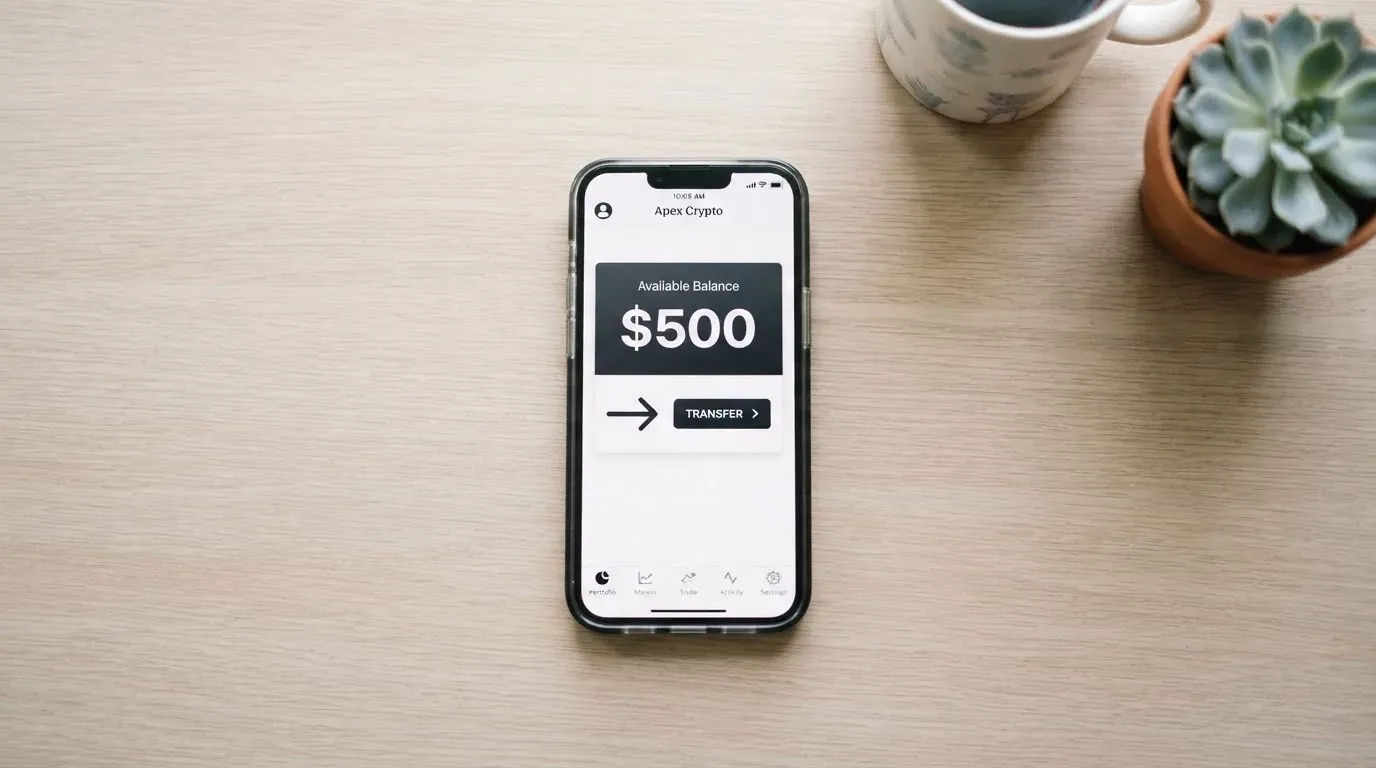
Top-up is the part of the flow that is genuinely different from most crypto cards. There is no deposit step in the usual sense. Your funds stay in your self-custody wallet, and the card draws on them at the moment of payment. Settlement happens on-chain via a Gnosis Pay smart contract on Gnosis Chain when you tap or insert the card.
In practice, this means:
- You do not move stablecoins into a card account first. They sit in your wallet until you pay.
- The balances the card understands are EURe (euro stablecoin), GBPe (pound stablecoin), and USDCe (USDC on Gnosis).
- The on-chain settlement uses the Gnosis Chain. If your stablecoins live on Ethereum, Polygon, Arbitrum, or another network, you may need to bridge them to Gnosis before the card can use them, and bridging costs gas.
- Blockchain fees apply only where an on-chain movement is part of the flow, per ELLIPAL’s generic FAQ. The card payment itself does not charge gas on the ELLIPAL side, but the underlying transfer does cost a small amount of xDai on Gnosis.
This is the part of the design that will appeal to people who already use an ELLIPAL hardware wallet: nothing is held by a third party, so there is no balance to freeze and no platform to withdraw from. It is also the part that requires the most setup. If you have never bridged to Gnosis Chain or held EURe, the first purchase will take longer than it would on a card that simply debits a prepaid balance.
There is no published withdrawal step, because there is no balance to withdraw. The funds never leave your wallet in the first place.
Paying with it every day
For day-to-day use, the card behaves like a Visa contactless or chip-and-PIN card, with a few specifics worth knowing.
The card is virtual on activation. The official pages do not describe a physical card, a metal card, or Apple Pay or Google Pay support. Third-party reviews mention Apple Pay and Google Pay, but ELLIPAL does not confirm that on the product page, so it is safest to assume neither is available until you see it in your app.
The merchant categories that are blocked are not stated. That is a small gap. Many crypto cards block gambling (MCC 7995) and similar categories by policy, and the issuer’s policy is what determines this, not the card network. If you regularly buy from a category that crypto cards often block, the absence of a published list is something to ask about.
There is no published cashback or rewards programme for ELLIPAL Pay. The partner programme (Gnosis Pay) pays 1% to 5% cashback in GNO depending on how much GNO you stake, per a third-party review, but that is not confirmed for ELLIPAL Pay and would only apply if you also hold GNO.
The app side is straightforward. You applied inside the ELLIPAL App, and the same app is where you will see transactions. The App Store and Google Play ratings for the ELLIPAL App were not part of what I read, so I cannot tell you how users rate it.
Disputes and chargebacks are not described in the ELLIPAL pages. As a Visa card, the chargeback mechanism exists, but how ELLIPAL handles a dispute case, what evidence it asks for, and how long it takes are not published. If you plan to use the card for large purchases from unfamiliar merchants, that is worth checking before you rely on it.
What can go wrong
The honest answer is that there is very little public incident data to go on, and that itself is a risk worth naming.
What I could not find:
- No dated news about the ELLIPAL Pay card specifically. The product page still describes itself as rolling out gradually, and parts of it still say “coming soon”.
- No physical card option described. If you need a card you can hand to a cashier, that is currently a gap.
- No named issuing institution on the ELLIPAL side. The partner (Gnosis Pay) is named, and third-party data points to Monavate as the issuer, but ELLIPAL does not confirm that.
- No published security controls beyond the self-custody architecture. Two-factor authentication, instant card freeze, and per-merchant spending controls are common in this category but are not described here.
- No phone support. ELLIPAL says on Trustpilot that it does not offer phone support. Help is via the help centre at support.ellipal.com.
What I did find on Trustpilot is for ellipal.com as a whole, not the Pay card. The hardware wallet business sits at 4.1 out of 5 from 303 reviews, read on 21 October 2026. The recurring themes are delivery delays, device defects (including battery), and wallet or app issues. None of those reviews are about the Pay card, but they tell you something about how ELLIPAL handles support and logistics in its core product.
The architecture has its own risk profile. Self-custody means no one can freeze your funds, but it also means no one can return them if you lose your seed phrase or send to the wrong address. Cryptocurrency transfers are typically irreversible. If a phishing attack or clipboard-hijacking malware swaps the address you copy, the network cannot undo the transaction. That is the trade-off you accept for not having a custodian.
Finally, a regulatory point. MiCA, the EU’s markets-in-crypto-assets regulation, applied in stages from June 2023 through 30 December 2024, with a transitional period that runs until 1 July 2026. E-money tokens like the EURe this card uses may, under MiCA Article 48, be issued only by a credit institution or an e-money institution. ELLIPAL does not name its issuer, so I cannot tell you which licence category the card sits under. That is something to confirm before you rely on the card in an EU country.
What to take instead
ELLIPAL Pay is one of four cards in this category with a self-custody or self-custody-adjacent design. The table below compares the four on the dimensions that matter most for the reader in this review.
| Card | Score | Open to | Card type | Issuance | Cashback | Notable |
|---|---|---|---|---|---|---|
| ELLIPAL Pay | 5.8 | Selected EU and LatAm residents | Virtual Visa (no physical described) | Free per ELLIPAL; 30.23 EURe per partner | Not stated | Self-custody, Gnosis Chain settlement |
| MetaMask Card | 7.1 | 45 listed countries, waitlist elsewhere | Mastercard, virtual then Metal | Virtual free; Metal $199/year | Virtual 1% in mUSD; Metal 3% on first $10,000 then 1% | Spends from connected wallet on Linea, Base, Monad, Solana |
| KAST | 6.1 | Residence-based, country list shown at KYC | Visa, virtual and physical, up to 10 per user | Standard $0; Premium $1,000/year; Private $10,000/year | 1.5%–3% USD cashback by tier | Multi-card, multi-network stablecoin top-up |
| TokenPocket (TP Card) | 5.8 | Visa in parts of Europe; Mastercard in parts of Asia-Pacific | Virtual, on Arbitrum | NFT creation fee partly covered; “no additional fees” | 1% deposit fee, later refunded via rewards | Balances in EUR24 and USD24 |
The right alternative depends on what you are missing from ELLIPAL Pay.
If the gap is physical card and metal: MetaMask Card offers a Metal tier for $199 a year, with cashback that starts at 3% in mUSD on the first $10,000 of spend and drops to 1% after that. KAST offers a Visa Infinite metal (Premium, $1,000 a year) and a gold-plated Visa Infinite (Private, $10,000 a year), with cashback up to 3% in USD.
If the gap is mobile wallet support: MetaMask Card and KAST both publish clearer support for tokenised payments. ELLIPAL Pay does not currently confirm Apple Pay or Google Pay.
If the gap is country coverage: MetaMask Card is open in 45 listed countries, including Argentina, Brazil, Canada, Mexico, Germany, France, Spain, and Uruguay. ELLIPAL Pay’s list is narrower in Latin America. KAST shows the country list at the KYC step rather than publishing it.
If the gap is cashback or rewards: KAST’s tier structure is the most explicit (1.5% to 3% USD cashback depending on tier), and MetaMask Card’s mUSD cashback is published on the page. ELLIPAL Pay publishes nothing.
If the gap is a published issuer: MetaMask Card names its issuer as Monavate and its card provider as Crypto Life. KAST names its card programmes directly. ELLIPAL Pay does not name its issuer on its own pages, which is the biggest single gap in the official information.
TokenPocket’s TP Card sits at the same overall score as ELLIPAL Pay (5.8) and is the closest analogue in design: a virtual card on Arbitrum, balances in EUR24 and USD24, with a 1% deposit fee that is later refunded via rewards. Its geographic coverage is split between a Visa debit in parts of Europe and a Mastercard debit in parts of Asia-Pacific, with the Americas “planned for Q2 2025” in the materials I read.
Who I would recommend it to
ELLIPAL Pay is the right card for a narrow reader, and the wrong card for most.
The right reader looks like this. You already own an ELLIPAL hardware wallet. You hold stablecoins, mainly USDC, USDT, or one of the EURe and GBPe tokens. You live in one of the listed European or Latin American countries, and you are comfortable bridging to Gnosis Chain. You do not need a physical card, you do not need Apple Pay or Google Pay, and you do not expect cashback. You want your funds to stay in your own wallet until the moment you pay, and you accept that this means you bear the full risk of seed-phrase loss and address-swap malware.
If that is you, the card’s design is a better fit than any of the alternatives, because it is the only one that ties spending to the ELLIPAL wallet specifically. MetaMask Card ties spending to the MetaMask wallet; KAST and TokenPocket are their own ecosystems. If you are already an ELLIPAL user, ELLIPAL Pay is the path of least resistance.
The wrong reader is almost everyone else. If you want a metal card, if you want cashback, if you want a card whose issuer you can name, if you want mobile wallet support, if you live outside the listed countries, or if you want a card from a brand with a longer public track record for its card product, you will find a better fit in MetaMask Card, KAST, or TokenPocket.
A practical recommendation: before you apply, ask ELLIPAL (or the partner support) for the card’s issuing institution and the licence it sits under, confirm whether a physical card is on the roadmap for your country, and confirm the ATM policy that will actually apply to you. The official pages do not answer these questions clearly, and they are the questions most likely to matter if something goes wrong.
Frequently asked questions
What is ELLIPAL Pay?
ELLIPAL Pay is a Visa payment card that spends stablecoins directly from a self-custody wallet. The funds stay in your wallet until the moment of payment, and the card settles on-chain on Gnosis Chain via a Gnosis Pay smart contract. It is built for people who already use an ELLIPAL hardware wallet and want to use their stablecoin balances in everyday shops.
How does ELLIPAL Pay card work?
When you pay, the card triggers an on-chain settlement on Gnosis Chain that draws the equivalent amount from your self-custody wallet. Balances are held in EURe, GBPe, or USDCe. There is no pre-loaded fiat balance; the conversion happens at the moment of payment, not before. The card is virtual on activation, and the official pages do not describe a physical card.
Is ELLIPAL Pay a bank?
No. ELLIPAL is a hardware wallet company, and the Pay card is a card programme run with partner Gnosis Pay. KYC is handled by SumSub on the partner side, and the issuing institution is not named on ELLIPAL’s own pages. Third-party data points to Monavate as the issuer, but ELLIPAL does not confirm that. The funds on the card side stay in your self-custody wallet; ELLIPAL does not hold them.
Who owns ELLIPAL Pay?
ELLIPAL Pay is a product of ELLIPAL (ELLIPAL Limited), a hardware wallet company. The card is operated in partnership with Gnosis Pay, which runs the KYC. The card-issuing bank or e-money institution is not named on the ELLIPAL pages, so the ownership of the card programme itself, at the regulatory level, is not publicly stated.
Is ELLIPAL Pay card available in my country?
It is open to legal residents of a list of countries in Europe and Latin America, including Austria, Belgium, Bulgaria, Croatia, Cyprus, the Czech Republic, Denmark, Estonia, Finland, France, Germany, Greece, Hungary, Iceland, Ireland, Italy, Latvia, Liechtenstein, Lithuania, Luxembourg, Argentina, Brazil, and Colombia. If you are not in one of those, you go on a waitlist. The product page still describes the rollout as gradual, and parts of it say “coming soon”.
How do I get ELLIPAL Pay card?
Inside the ELLIPAL app, go to Assets, then Pay, then ELLIPAL Pay, and tap Apply. You complete identity verification (email, government ID, a utility bill from the last three months), wait for Gnosis Pay to verify you, confirm your phone number and source of funds, and activate a virtual card. The age requirement and the verification time are not stated.
Does ELLIPAL Pay require KYC?
Yes. You submit a government ID and a utility bill from the last three months as proof of address. The verification is run by Gnosis Pay via SumSub, not by ELLIPAL. There is no published tier system or set of higher limits for stronger KYC.
How do I top up ELLIPAL Pay?
You do not top it up in the usual sense. Your stablecoins stay in your self-custody wallet, and the card draws on them at the moment of payment via an on-chain settlement on Gnosis Chain. If your stablecoins are on another network, you may need to bridge them to Gnosis first. Blockchain fees apply where an on-chain movement is part of the flow.
How do I add ELLIPAL Pay card to Apple Wallet?
The official ELLIPAL pages do not describe Apple Pay or Google Pay support. Until that is confirmed in your app, it is safest to assume it is not available. MetaMask Card and KAST publish clearer support for tokenised mobile wallets, if that is what you need.
Is ELLIPAL Pay card safe?
The architecture is safer in one specific way: no third party holds your funds, so there is no custodian to fail or freeze your balance. The trade-off is that you bear full responsibility for your seed phrase and for address-swap malware. The card side has no published two-factor authentication, instant freeze, or per-merchant spending controls, and the issuing institution is not named, which makes the regulatory safety net harder to assess.
Wallet card reviews – cryptocardcheck
Content created by the «cryptocardcheck» team