
Fuse is cheap and simple if you live in the Americas, hold USDC, and spend from an iPhone
 Available in US
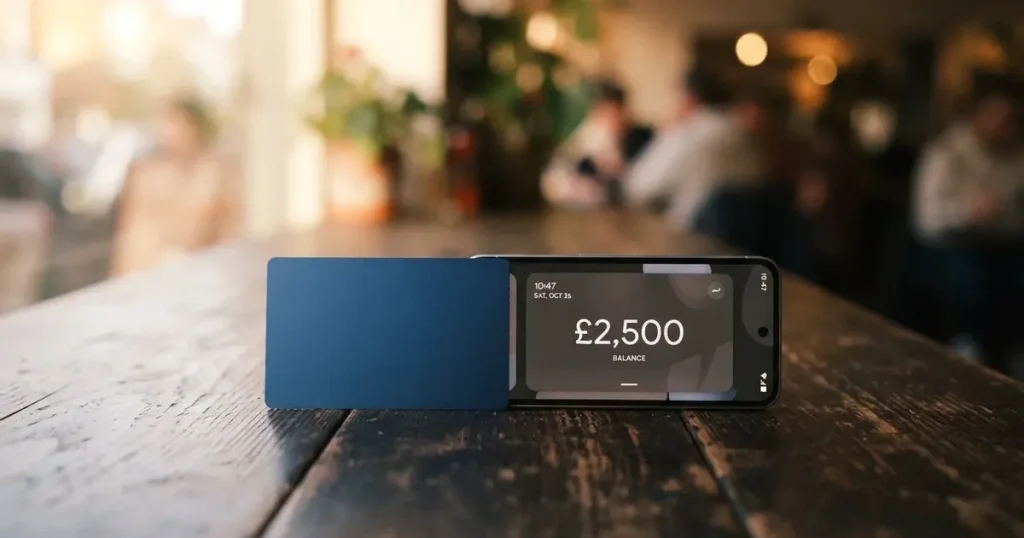
The Fuse card is a virtual Visa debit card, issued by a Missouri state-chartered bank and run by a company that positions itself around Solana. It costs nothing to open and nothing to keep open. What it does not do is everything a normal bank card does: it is virtual only, USDC only, iPhone only, and no cash machine anywhere in the world. My score for it is 6.3 out of 10 — a card that does one job cleanly, for a specific person, and that person is a resident of the Americas who already holds USDC and spends from an iPhone.
The conditions described on this page are current as of October 28, 2026.
The score, and who should read the rest of this
Six and a bit out of ten is not a condemnation. It is a description of a card that is very good at one narrow thing and silent about everything else. If the narrow thing is the thing you need, the number stops mattering. If you need an ordinary bank card that works everywhere, the number is the whole story.
| Criterion | Mark | Why |
|---|---|---|
| Who can get it | 5 / 10 | Issued in 18 jurisdictions: the US (excluding New York and Alaska), Argentina, Bolivia, Brazil, Colombia, Costa Rica, Dominican Republic, Ecuador, El Salvador, Ghana, Guatemala, Honduras, Mexico, Panama, Nigeria, Paraguay, Peru, Uruguay |
| Cost | 9 / 10 | Issuance $0, monthly fee $0.00, inactivity $0; FX on international transactions 0%; crypto conversion fee not disclosed |
| Top-up options | 4 / 10 | USDC only, moved from the Main Account to the Card Account; networks not disclosed |
| Reliability and complaints | 8 / 10 | Issued by Lead Bank under a Visa U.S.A. licence, programme run by Bridge Ventures LLC; one complaint about a closed account with about $600 stuck; no Trustpilot page |
| Everyday use | 4 / 10 | Virtual Visa only; Apple Pay supported, Google Pay not mentioned; no ATMs |
| Total | 6.3 / 10 |
The three marks that pull the total down are top-up options, everyday use, and who can get it. The three that pull it up are cost and, on the strength of a real bank issuing the card, reliability. That pattern tells you the card’s personality: cheap and structurally sound, but with very little surface area.
Who it suits: you live in one of the listed countries, you have USDC in a wallet you control, you spend from an iPhone, and you would rather have no monthly fee and no foreign-exchange markup than anything else. Who it does not suit: anyone who needs cash from an ATM, a physical card for a shop that wants to see plastic, a card that spends from several currencies, or a card that works on Android.
Will they give you the card
They will issue it to residents of 18 named countries, and residence — not citizenship — is the rule that decides it. The list is heavily weighted towards Latin America, with the United States included but with two states carved out.
The full list on the card’s pages: United States (excluding New York and Alaska), Argentina, Bolivia, Brazil, Colombia, Costa Rica, Dominican Republic, Ecuador, El Salvador, Ghana, Guatemala, Honduras, Mexico, Panama, Nigeria, Paraguay, Peru, Uruguay.
Two details there matter more than they look at first glance. The New York exclusion is not an accident of geography; New York’s own licensing requirements sit on top of the federal ones, and a programme built on a Missouri charter cannot easily satisfy them. The Alaska exclusion is the other kind of problem: a card that cannot reach an ATM is much less useful in a state where cash is still common and the nearest ATM is a long drive away. If you are in either, the honest answer is that you cannot have this card.
The citizenship rule is not stated. That is a real gap rather than a technicality. Residence decides eligibility, but screening is usually run on citizenship and country of birth as well as on address, and a resident of an eligible country holding an ID from somewhere else may be told to look elsewhere. The card’s pages do not say how they handle that, so if your situation involves two countries, ask support directly before you spend an afternoon on an application.
Ages: 18 and over.
How to get it
The route is short, and the shape of it is the same as most crypto cards: you verify in the app, then you create a card, then you move money into it.
The steps, as the card describes them:
- Verify your identity through Bridge in the Fuse app. Every applicant has to pass this.
- Create the virtual card.
- Move USDC from your Main Account to the Card Account.
On the identity check specifically: the information required is your name, address, date of birth and government ID number. Documents such as a driver’s licence may be requested at any time — not necessarily at the start, which is worth knowing before you decide how much to hand over on day one. The card does not state what proof of address it asks for, how long verification takes, or what the rejection reasons are. Those three unknowns are the ones that turn a five-minute signup into an afternoon, and I would want them answered before I started.
There are no tiers. No upgraded, faster or higher-limit version of the check exists — it is one standard verification for everyone.
What you get at the end is a virtual Visa debit card in US dollars. The card’s own disclaimer calls it a prepaid debit card, which is a more accurate description than “debit”: it spends a stored balance rather than pulling from a bank account on demand. No physical card is mentioned anywhere, and no delivery — so if you were picturing something arriving in the post, that part of the picture does not exist.
To be explicit about the things I could not find: what documents are required beyond the four data points, how long a decision takes, and on what grounds an application is refused. The card’s public pages simply do not say.
What it really costs: Fees
This is the strongest part of the card, and the one that most clearly sets it above the field. Issuance is free, the monthly fee is zero, there is no inactivity fee, and international transactions carry a 0% foreign-exchange fee. There is no per-purchase charge. The Support page says there are no top-up fees and no card transaction fees, while the agreement itself keeps a general “fees may apply” line — so read the second one as the one that binds.
One line is missing from all of it: the crypto conversion fee. The card does not disclose what it charges when stablecoins are converted. That is the single number a careful user would most want, because on a card funded with USDC it is the one that could plausibly be non-zero, and its absence caps how high the cost score can honestly go.
| Fee or limit | Value |
|---|---|
| Card issuance | $0 |
| Monthly fee | $0.00 |
| Annual fee | not listed |
| Inactivity fee | $0 |
| International transaction / FX fee | 0% of the USD amount |
| Per-purchase fee | none |
| Crypto conversion fee | not stated |
| ATM withdrawal and balance inquiry | not available |
| Cash reload | $0 |
| Top-up fee | none |
| Default daily spending limit | $2,000 |
| Per-transaction limit | $2,000 |
| Monthly limit | not stated |
| Tiers | single tier; none described |
Three everyday payments, and what applies to each.
Coffee in your own country. Nothing to pay. There is no per-purchase fee, so the whole amount leaves the Card Account and nothing is taken on top. This is the payment that makes the card worth having.
An online subscription in dollars, $9.99. Also nothing on the card’s side, provided the merchant accepts the card. There is a per-transaction ceiling of $2,000 and a default daily spending limit of $2,000, so a routine subscription is nowhere near either. What you should watch is the merchant category: if the purchase sits in a category the card declines, you will find out at the till rather than in an email.
A purchase abroad, €60, charged as about $65. The 0% FX fee means the $65 is what leaves your balance — no markup, no cross-border percentage. This is where a card like this quietly earns its keep, because foreign-exchange surcharges are the most common recurring cost on travel spend. The catch is not the fee; it is that a foreign-issued BIN can be declined by a shop or a payment page for reasons that have nothing to do with you, and this card’s data will read as American wherever it is used.
How to Top up the card
There is one route, and it is not a top-up in the way most people use the word. You move USDC from your Main Account to your Card Account inside Fuse, the funds become available immediately, and only USDC sitting in the Card Account can be spent. That is the whole mechanism.
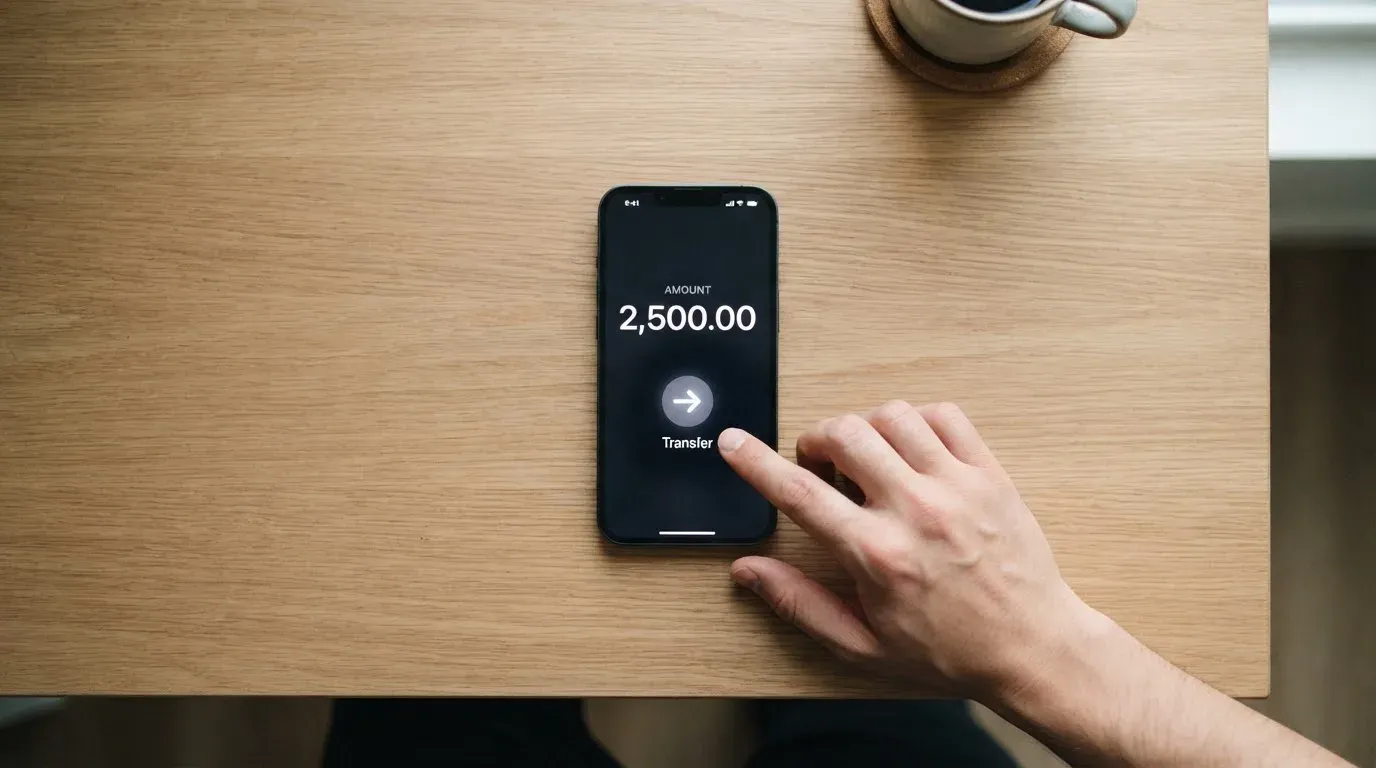
Three things follow from that, and they are worth walking through in order.
First, there is no cash route. No bank transfer in, no debit card load, no voucher, no minimum listed and no top-up fee — but also no fiat option at all. The card’s pages do not state any fiat top-up methods, so if you have no crypto, there is nothing here for you.
Second, the network is not stated. This is the most consequential silence on the page, and it deserves more than a shrug. A USDC balance is not one thing: the same token exists on several blockchains, and a transfer sent on a network the provider does not support, or to an address belonging to another network, can be lost or need manual recovery with no guarantee. The wallet is positioned around Solana, but that is product positioning, not a confirmation on the pages that govern your money. If you are holding USDC on more than one network, work out which one Fuse expects before you send anything — and if you cannot find that stated anywhere, ask support.
Third, the money can come back. You can move USDC from the Card Account back to the Main Account, and there is a five-minute security lock on the way out, which is a sensible guard rather than an obstacle. On the way back, note the closure terms: if the account is closed, the remaining balance returns to the platform provider’s wallet as a stablecoin with no fee — but the bank may refuse to return balances under $1.00, and a closure can be blocked by a pending transaction, an open dispute, an amount owed or a hold.
Paying with it every day
Everyday use is the card’s weakest dimension, and it is weak because of what does not exist rather than what does.
You get a virtual Visa in US dollars, and Apple Pay is supported for in-person payments. Google Pay is not mentioned anywhere. The app is iPhone only, iOS 16.4 and above, listed in the App Store as “Fuse – Solana Smart Wallet”; the listing shows no rating — “not enough ratings”. An unofficial aggregator puts the aggregate around 4.5 to 4.6 from roughly 35 ratings, with no date attached, and that is third-party reporting rather than something the card confirms.
There is no cashback stated. No merchant category blocks are listed — no MCCs are named — though the card cannot be used for illegal transactions or for cash-back requests at a point-of-sale till.
On disputes and errors, the terms are more generous than the feature set might suggest, and they are the part of the agreement most likely to matter to you in a bad week:
- Unauthorised use reported within 2 business days caps your liability at $50; reported later, it can reach up to $500.
- Errors must be reported within 60 days. The bank aims to decide within 10 business days, extendable to 45 days, with credit within 10 business days if it is extended.
- Some error types get longer: up to 90 days for point-of-sale, foreign-currency and new-card errors.
- You are told the outcome within 3 business days of the investigation ending.
- Stop payments are not allowed on card purchases — once a purchase is authorised, you cannot call and cancel it.
- Merchant disputes go to the merchant first, and any refund is credited to the wallet as a stablecoin. There is no provisional credit for goods-and-services disputes.
- Pending amounts become available 24 hours after they clear.
Contact details: email [email protected] and phone 833-237-8104. Hours are not stated, though the agreement refers to business days Monday to Friday excluding holidays — which means an email sent on a Friday evening may sit until Monday, and a query about a frozen balance has no weekend route.
What can go wrong
The structural risk here is not the technology. It is that the people who decide your money are not the people whose name is on the card.
The card is issued by Lead Bank, a Missouri state-chartered bank, under a Visa U.S.A. licence. Bridge Ventures LLC is the Program Manager. Squads Labs Inc. is the Platform Provider and is explicitly not a bank. That three-part structure is normal for this category — the card network routes the messages and sets the rules, the issuer holds the programme, and the crypto brand markets it — and having a real bank in the chain is a genuine mark in the card’s favour. It also means that when something goes wrong, you may be dealing with an institution you never chose, under rules you never read.
The specific things that can go wrong:
Your balance can be stuck. One App Store review reports an account closed with about $600 left and inaccessible. A user on X reports unanswered emails. Both of those come from third-party reporting, with no date shown, so I would not treat them as a pattern — but a single report of exactly your situation is worth planning for. The agreement’s own closure terms explain how it happens: a pending transaction, an open dispute, an amount owed or a hold can all block a closure.
You give up the right to sue. The card agreement contains binding arbitration with a class-action waiver. That is standard in this industry and almost nobody reads it, but it is the single clause here that removes an option you would otherwise have.
Your money is not a bank deposit. Fiat in transit during conversion is not FDIC insured. There is no overdraft. Funds are not FDIC insured, full stop.
Two-factor authentication is not mentioned. What is there: freeze and unfreeze in settings, a PIN you can set and reset, a daily spending limit you can set up to $2,000, and “smart account enforced spending limits”. The bank may block or cancel a card it suspects of fraud — which cuts both ways.
Trustpilot tells you nothing. No Trustpilot page and no Reddit threads were found for Fuse specifically. That silence is mildly reassuring and mildly useless: it usually means a card is too small to have been badly hurt, not that it is sound. There were no dated licence or programme events found either.
One small stability problem with a big downside. A declined authorisation can leave a hold on your funds for several days, typically up to 7. With a $2,000 daily ceiling and no credit line, that is money you cannot spend twice.
What to take instead
The card’s real weakness is not that it is bad; it is that the alternatives are sometimes broader for not much more money. Here is how the three closest comparisons score, and where each one wins.
| Card | Score | Card type | Where it is available | Headline cost | Fees that bite |
|---|---|---|---|---|---|
| Fuse | 6.3 / 10 | Virtual Visa, USDC only | 18 jurisdictions, Americas-focused | $0 issuance, $0.00 monthly | Conversion fee not stated; no ATM |
| MetaMask | 7.1 / 10 | Virtual first, metal optional | 45+ listed countries; US/UK sign-ups temporarily closed | Virtual free; Metal $199/year | “Minimal fee for each transaction”, amount not stated |
| KAST | 6.1 / 10 | Virtual and physical, three tiers | Country list not published; KYC location-gated | Standard $0/year; Premium $1,000; Private $10,000 | Non-USD FX 0.5%–1.75%; declined payment $0.50 |
| TokenPocket | 5.8 / 10 | Virtual Mastercard/Visa | Europe list; Americas planned | NFT fee partly covered | 1% fee on crypto deposits |
MetaMask is the one to look at if breadth is what you are missing. Sign-up is open in 45 listed countries and territories — Andorra, Argentina, Brazil, Canada, Mexico, Germany, France, Spain, Uruguay among the examples — with other regions on a waitlist. Proof of residency is required, and the card spends straight from a connected wallet across Linea, Base, Monad and Solana, holding mUSD, wETH, EURe, GBPe, USDC and USDT. It gives you a virtual card instantly and a metal one you can pre-order, one card per user, issued by Monovate with Crypto Life as card provider. No foreign transaction fee and the Mastercard rate applies. And it pays cashback in mUSD into the Money Account: 1% on the virtual card, 3% headline on metal with a footnote that caps 3% at the first $10,000 spent and drops to 1% after that. Against that: US and UK sign-ups are temporarily closed, and Solana-only wallets cannot withdraw credit.
KAST is the one to look at if you want real cards and tiers. It offers virtual and physical cards — up to 10 per user — across Visa Platinum Standard, Visa Infinite metal Premium and Visa Infinite gold plated Private, plus Pengu, Solana and Bitcoin designs, with the balance in USD and stablecoin deposits converted 1:1 at a 0% spread. Its pricing is the polar opposite of Fuse’s: Standard is free, Premium is $1,000 a year and Private $10,000 a year, billed annually upfront with no monthly option, plus $2 for an extra virtual card, free Standard physical card but $40 delivery, and $1 a month inactivity after 12 months. Fees are explicit where Fuse’s are not: stablecoin top-up 0%, USD spend 0%, transaction fee 0%, Apple and Google Pay 0%, non-USD FX 0.5%–1.75% depending on your residence, your transaction country and the programme, 0.10 USD on non-USD transactions under $25, and 0.50 USD for a declined payment. Cashback is 1.5% on the first $2,000 a month, 2% on the first $10,000, 3% on the first $40,000. What to watch: the country list is not published, and KAST is blunt about it — “if your country isn’t listed, it means KAST is not available there”. An ID from a restricted region can disqualify you even if you live somewhere supported.
TokenPocket is the weakest of the four here, at 5.8. It runs on Arbitrum, issues Visa debit cards for a list of European countries and territories — Germany, France, Spain, Switzerland among them — and Mastercard for Australia, Canada, Hong Kong, Japan, Taiwan, New Zealand, Singapore, South Korea and the UK, with the Americas “planned for Q2 2025”. Balances sit in EUR24 and USD24. The cost is easy: an NFT creation fee partly covered by TokenPocket where the user pays “a small portion”, and then “apart from these, TP Card does not charge any additional fees”. But a 1% fee is charged on depositing cryptocurrency into the card, to be refunded later through rewards or reduced transaction fees — which makes it a deferred charge, not a free one.
Who I would recommend it to
I would recommend the Fuse card to someone who has already decided that a month of ordinary banking is enough and wants a second, free thing for spending — the person who keeps USDC on Solana, lives in Brazil or Mexico or Colombia or Argentina, spends from an iPhone, and wants to tap in a shop or pay a subscription without a fee attached.
I would not recommend it as your only card, and I would not recommend it to anyone who needs cash, Android, a physical card, or more than one currency. Nor would I recommend it to anyone who cannot get an answer about the conversion fee or the network, because those two silences sit on the exact path your money takes.
Here is the checklist I would run before applying. Can you live with virtual only? Can you live with iOS? Is USDC your actual spending asset, not a bridge to one? Is your country on the list, and is your state not New York and not Alaska? Have you found the conversion fee and the network somewhere you trust, or asked support directly? Can you reach support on a weekday? If all six answers are yes, this is a good card for you at a price nothing else in the category matches. If two of them are “no”, one of the alternatives above will serve you better, and KAST’s explicit fee table alone may be worth the switch.
Frequently asked questions
What is the Fuse card?
Fuse is a virtual Visa debit card, issued by Lead Bank, a Missouri state-chartered bank, under a Visa U.S.A. licence. Bridge Ventures LLC runs the programme and Squads Labs Inc. is the platform provider. The card itself has no plastic: it lives in the Fuse app, is denominated in US dollars, and spends USDC held in a linked card account. It costs nothing to issue and nothing to keep.
How does the Fuse card work in practice?
You verify your identity through Bridge in the app, create the virtual card, then move USDC from your Main Account to the Card Account. The funds are available immediately and only USDC in the Card Account can be spent. Each purchase draws down that stored balance — which is why the card cannot overdraw — and pending amounts become available 24 hours after clearing. There is no physical card.
Is Fuse a bank?
No. Fuse is a crypto company and programme manager; the bank is Lead Bank. The card agreement lists Squads Labs Inc. as Platform Provider and states it is not a bank. This structure is normal in the category: the network routes the messages, the licensed issuer holds the programme, and the brand markets it. It also means disputes can end up with an institution you did not choose.
Which countries can get a Fuse card?
Eligibility is based on residence across 18 jurisdictions: the United States (excluding New York and Alaska), Argentina, Bolivia, Brazil, Colombia, Costa Rica, Dominican Republic, Ecuador, El Salvador, Ghana, Guatemala, Honduras, Mexico, Panama, Nigeria, Paraguay, Peru and Uruguay. The citizenship rule is not stated, which matters if your ID is from a different country than where you live. Applicants must be 18 or over.
Does the Fuse card require KYC?
Yes, and it is mandatory for everyone. The check runs through Bridge inside the app and needs your name, address, date of birth and government ID number; additional documents such as a driver’s licence may be requested at any time, not only at the start. There are no tiers or a lighter path. The card does not state how long processing takes or on what grounds an application is refused.
Is the Fuse card free?
Open it and keep it open, yes: issuance $0, monthly fee $0.00, no inactivity fee, no per-purchase fee, and a 0% international transaction fee. The gap is the crypto conversion fee, which the card’s public pages do not state — and that is the one number that could matter most on a card funded with stablecoins. No ATM access either, so cash is simply unavailable.
Can I add the Fuse card to Apple Wallet?
Apple Pay is supported for in-person payments, and the app is iPhone only, requiring iOS 16.4 or above. Google Pay is not mentioned anywhere on the card’s pages, so do not plan around it. Since the card is virtual, adding it to Apple Pay is likely to be the normal way you would use it in shops — there is no other way to hand it over.
Where can I actually use the Fuse card?
Anywhere a merchant accepts a virtual Visa online or in person, plus Apple Pay in person. You cannot use it at an ATM at all — the card states Fuse Cards cannot currently be used at ATMs, and the agreement lists ATM withdrawal and balance inquiry as not applicable. No specific merchant categories are blocked, though the card cannot be used for illegal transactions or cash-back requests at a till.
How do I top up the Fuse card, and can I get the money back?
Top-up means moving USDC from your Main Account to your Card Account inside the app; the funds are ready immediately, with no top-up fee and no minimum listed. Fiat top-up options are not stated, so there is no cash route described. You can move USDC back from the Card Account to your Main Account, with a five-minute security lock on withdrawals. On account closure the remaining balance is returned as a stablecoin with no fee, but the bank may refuse balances under $1.00.
Is the Fuse card safe to use?
Structurally it is on firmer ground than most of the category: a real bank issues it, and you can freeze and unfreeze it, set a PIN, and cap daily spending at $2,000. Against that, two-factor authentication is not mentioned, funds are not FDIC insured and there is no overdraft. Binding arbitration with a class-action waiver sits in the agreement, one user report describes a closed account with about $600 inaccessible, and the binding arbitration clause means small claims courts are not the venue.
Wallet card reviews – cryptocardcheck
Content created by the «cryptocardcheck» team