
A close look at the Gate card for anyone who can't get a normal bank card
 Available in US

I went through the Gate card’s public pages, help center and the user feedback that exists around it to put this review together. My aim is plain: take you through who the card is built for, what it really costs, how you actually load it, and where the rough edges sit, so you can decide whether to spend the time applying. If you are weighing it against another crypto-funded card, the alternatives section near the end should help you line them up.
The conditions described here are current as of October 28, 2026.
Verdict
Gate scores 6.8 out of 10 in my reading. The reason it does not sit higher is not the fees, which on the Standard card are reasonable, but the lack of clarity around who can actually apply, who issues the card, and how the rewards programme really behaves in practice. Where Gate scores well is on the everyday mechanics: a free virtual card on the spot, a free physical card, no monthly or inactivity fees, and crypto conversion at 0.90% on the Standard tier. The card suits you if you are already a Gate exchange user, you hold USDT, BTC, ETH or GT, and you live somewhere the card is actually issued. It suits you less if you want a metal card with published tier perks, if you live in a country the card does not cover, or if you want a programme whose issuer and licence you can read on the public page.
Score breakdown
| Criterion | Mark | Reason in short |
|---|---|---|
| Who can get it | 6 / 10 | The public page names no country list; only “non-restricted countries or regions”. Unofficial directories disagree on coverage. |
| Cost | 8 / 10 | Free virtual and physical issuance, no monthly or inactivity fee on the Standard card; 0.90% crypto conversion, 1.00% non-USD FX, 2% ATM, 25 USD replacement. |
| Top-up options | 7 / 10 | Instant Spend Mode supports USDT, BTC, ETH and GT; a prepaid mode covers a wider token list, but networks are not publicly listed. |
| Reliability and complaints | 5 / 10 | The card’s issuer is not named on its pages; Trustpilot feedback on the wider Gate brand is poor, and card-specific complaints mention cashback pauses and slow replacements. |
| Everyday use | 8 / 10 | Virtual and physical cards are both available, ATM withdrawals are supported, and a help article exists for adding the card to Google Pay and Apple Pay. Unofficial sources say the Classic card supports Google Pay only. |
The audience I would steer towards it is a Gate exchange customer who already holds USDT, BTC, ETH or GT and wants to spend that balance without first cashing out to a bank.
Who will they give you the card
The headline on the card page is short and not very informative: it says the Gate card is “only available to users in non-restricted countries or regions”. That is the whole list. The card does not publish a list of supported or excluded countries, and it does not say whether the rule is based on your citizenship, your residence, or both. If you are trying to work out whether you can apply, the only honest answer from the official side is to start the application and see.
Unofficial coverage, from a third-party directory (CryptoCardHub, 11 August 2026), is more specific. It lists the Classic card as available in 24 European countries: Belgium, Bulgaria, Croatia, Cyprus, Czech Republic, Denmark, Estonia, Finland, Greece, Hungary, Iceland, Ireland, Italy, Latvia, Liechtenstein, Lithuania, Luxembourg, Norway, Poland, Portugal, Romania, Slovakia, Slovenia and Sweden. The same source lists the United States, the United Kingdom, Germany, France and Canada as missing from that set. Another directory includes Austria and Spain but leaves out Italy and Lithuania. Take all of this as unofficial, not confirmed by the card itself, and worth double-checking against your own circumstances before you assume you qualify.
For the rest of this review I have written the rules as the card states them.
How to get it
The application runs inside the Gate app, and it has a few fixed steps. You need a Gate account first, then a verified email and a verified phone number. You must complete Level 2 identity verification and provide the required identification documents; some card types also require a proof of address from the past three months. The card application must use the same identity document as your Gate KYC, so you cannot apply with a different passport or a friend’s documents.
Inside the app, the steps are: enter your ID, complete the facial check, enter your address, then apply for a virtual or a physical card. The standard help article also says you should have your ID and facial information and address to hand, but does not give an age threshold. Prepaid/debit cards are generally available to adults (18+) in this category of product, but the card page itself does not state a minimum age, so check that during the application if it matters to you.
Once you submit, the virtual card is typically reviewed within 3 to 5 minutes. The physical card, where supported, “usually” takes 7 to 45 days depending on your country of residence. The help center also says that if a physical card has not arrived after 45 days you can use the “Resend” option in the app after confirming your address with support. A third-party source gives a narrower 15 to 45 day window for physical delivery, which sits inside the official range.
If your application is rejected, the card page does not say why. The Help Center does not list rejection reasons either, so you would need to ask [email protected] if this happens to you.
What it really costs: Fees
The fee picture is mixed, because the public card page is thin and the Standard card fee page is more detailed. The Standard card fee page serves as the primary source, with the few things the public page does not state flagged accordingly.

On the Standard card, both virtual and physical card issuance are free, the monthly fee is free, and there is no inactivity fee. Crypto conversion is 0.90% on transactions of 2 USD or more, and 0.05 USD on transactions below 2 USD. Foreign exchange on non-USD card currency is 1.00%. ATM withdrawals cost 2%, and a card replacement costs 25 USD. A chargeback costs 30 USD on the Standard fee page, although the help article on disputes mentions a “typically $25 processing fee”; I would plan for 30 USD as the official figure and treat 25 USD as the help article’s older wording. The card currency itself is not stated, and the public card page only says conversion runs “according to the card rules and applicable exchange rates”.
The card page also leaves a number of items unstated: ATM free allowance, top-up fees, minimum top-up, and spending limits. The Standard fee page fills in the spending limits: daily 50,000 USD and monthly 990,000 USD across all tiers T0 to T4, with higher limits on request to [email protected]. ATM limits on the Standard card are 5,000 USD per day across up to 10 withdrawals, 15,000 USD per month across 100, 50,000 USD per year across 1,000, and 5,000 USD per transaction. The issuer may also charge fees, and exchange-rate differences may apply, which is a reminder that the published rates are not the only number you will see.
Costs at a glance
| Fee or limit | Standard card |
|---|---|
| Virtual card issuance | Free |
| Physical card issuance | Free |
| Monthly fee | Free |
| Inactivity fee | Free |
| Crypto conversion | 0.90% (≥ 2 USD), 0.05 USD (< 2 USD) |
| Foreign exchange, non-USD | 1.00% |
| ATM withdrawal | 2% |
| Card replacement | 25 USD |
| Chargeback | 30 USD |
| Daily spending limit | 50,000 USD |
| Monthly spending limit | 990,000 USD |
| Daily ATM limit | 5,000 USD, up to 10 withdrawals |
| Monthly ATM limit | 15,000 USD, 100 withdrawals |
| Card currency | Not stated |
Three everyday payments
A 50 USD coffee in a non-USD country on the Standard card. You pay 0.90% crypto conversion (0.45 USD) and 1.00% non-USD FX (0.50 USD), so about 0.95 USD on top of the price of the coffee. No ATM fee, no monthly fee.
A 1,000 USD laptop bought online, paid in USD. You pay 0.90% crypto conversion (9.00 USD). The non-USD FX fee does not apply if your card settles in USD.
A 200 USD ATM withdrawal, in a non-USD country. You pay the 2% ATM fee (4.00 USD) and 1.00% non-USD FX (2.00 USD), so 6.00 USD on top of the 200 USD you take out, before the ATM operator’s own surcharge.
A 1.50 USD in-app purchase. Because the transaction is below 2 USD, the conversion fee is the flat 0.05 USD, not 0.90% — handy for very small payments.
Unofficial third-party figures (CryptoCardHub, 11 August 2026) also describe a prepaid variant with a 0.9% top-up charge, a 10 USDT first-load minimum, a 2% refund charge, a 1 USD reversal fee, a 35 USD chargeback fee, and a 0.10 USD Apple Pay authorisation charge, plus a 2 USDT virtual-card fee below VIP 5 unless waived. These are not on the public Gate card pages, so treat them as unofficial and not confirmed by the card.
How to top it up: Top up
Gate’s card supports two funding modes. Instant Spend Mode lets you pay directly from USDT, BTC, ETH or GT without a manual top-up step; the conversion happens at the moment of payment. A prepaid mode supports a wider range of tokens, with availability depending on the card, the issuer and your region; the specific networks and the full token list are not stated on the public page.
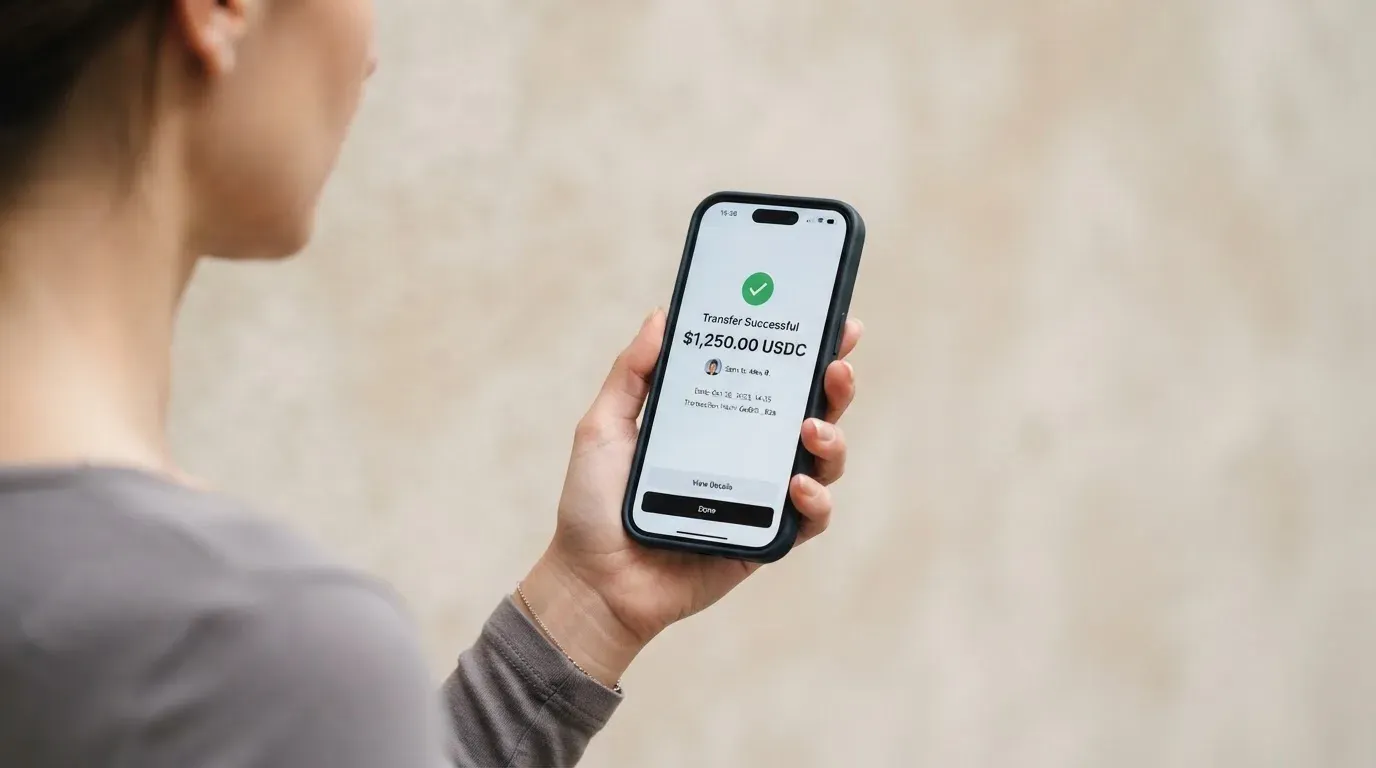
A top-up fee is not listed. In prepaid mode, the top-up converts funds from Gate Pay or Spot into fiat. The Standard card’s 0.90% crypto conversion applies in both modes, on transactions of 2 USD or more, and 0.05 USD on transactions below 2 USD. A minimum top-up is not stated.
The card page also carries a “Card Balance Withdrawal” headline that links to an announcement page, and the card balance is linked to your Gate Pay payment account. Closure of the card or balance is not stated in the help articles I read, so if you want to know how to exit, ask support.
A practical note on networks: stablecoin transfers to a card provider are only safe if you use the network the provider actually supports. The card page does not publish the supported networks, so the safest course is to use the deposit address shown in the Gate app and copy it carefully, because a transfer sent on the wrong network can be lost, and blockchain transfers are irreversible.
Paying with it every day
The Standard card has both a virtual and a physical form. The card is described as primarily supporting the Visa or Mastercard network, so tokenised mobile wallets are an option in principle. The card page itself does not state Apple Pay or Google Pay support, but a help center article titled “Add Your Gate Card to Google Pay & Apple Pay” exists; the body of that article was not read in full. Unofficial sources say the Classic card supports Google Pay only, while Standard and Signature help pages cover both Apple Pay and Google Pay — unofficial, and not confirmed by the card itself.
You can withdraw cash from supported ATMs with the physical card. The fee is the 2% Standard card ATM charge, and the daily ATM limit is 5,000 USD across up to 10 withdrawals. The page does not list blocked merchant categories. The card does not state a metal variant in the materials I read.
Rewards
The card page advertises “up to 8% cashback on eligible purchases” depending on the card tier, and the FAQ says rewards are issued as points that you can redeem for USDT or GT. A separate banner has been seen referring to cashback in BTC, ETH, USDT or USDC, which is inconsistent with the FAQ wording; the safer assumption is the FAQ, since it is the more specific statement. The official page does not list caps, qualifying spend or how tiers work.
Unofficial third-party figures (CryptoCardHub, 11 August 2026) describe a Classic tier ladder that increases with monthly spend: T0 from 0 USDT at 1% with a 5 USDT cap, T1 from 500 USDT at 1% capped at 50, T2 from 3,000 at 2% capped at 100, T3 from 6,000 at 3% capped at 150, T4 from 10,000 at 5% capped at 250, and T5 from 15,000 at 8% capped at 400. The same source says 100 points equal 1 USDT and points do not expire. These are unofficial, not on the public Gate pages, and may not match how the Standard card or the relaunched 2026 tiers actually behave.
The card application and management both run through the Gate app. Unofficial app-store data (CryptoCardHub, 11 August 2026) puts the wider Gate exchange app at 4.3 out of 5 from about 5,200 US App Store ratings; the card does not have its own published rating.
Disputes and chargebacks
The official process is to contact the merchant first, then start a chargeback through Gate with proof that you tried to resolve it with the merchant. The help article says a “typically $25 processing fee” applies regardless of outcome, while the Standard card fee page lists 30 USD. Chargebacks can take up to 3 months. There is no separate refund timeline; pre-authorisation holds are released after the service ends, which is the same rule most card networks use. The fee number is worth confirming with support before you file, since the public fee table and the help article disagree.
What can go wrong
A crypto-funded card carries a different mix of risks from an ordinary bank card, and Gate’s case is unusual because some of the basics are simply not stated.
The card page does not name the issuing institution. The card is described as “a digital assets credit card offered by Gate”, with a reference to “the issuing institution’s review” but no bank or e-money licence. Unofficial sources (CryptoCardHub, 11 August 2026) name Stanhope Financial UAB, a Bank of Lithuania e-money institution with licence number LB002039, as the EEA issuer, and Lead Bank with Bridge as programme manager for the US. Treat those as unofficial, not confirmed by the card’s own page. Gate has joined the Mastercard Crypto Partner Program, which is the only official statement I found about the card network relationship.
Complaints around the wider Gate brand are loud. Trustpilot for the Gate website sits around 3.5 out of 5 from roughly 121 reviews, mostly about non-card services; one card-data complaint was reported as resolved by support. Trustpilot for the Gate exchange sits around 1.5 out of 5 from about 1,000 reviews, with accounts reportedly restricted without explanation and deposits or trading suspended. A third-party count (CryptoCardHub, 11 August 2026) puts Trustpilot at 1.5 out of 5 from about 1,400 reviews for the wider brand, with 77% one-star, covering account access, withdrawal checks, verification and support delays. These are exchange-wide issues, not card-specific.
Card-specific user reports (2024) include a paused cashback programme, a card retained by an ATM with a delayed replacement, card funds being inaccessible for six days, merchant refund delays, and five-to-six week waits for chargeback responses. Cards have also been reported as frozen after small purchases. The samples are small and unverified, but they line up with the “Reliability and complaints” score of 5 out of 10.
The card page does not state a few things that are common on competitor pages: card currency, BIN sponsor, licences, custody arrangements, two-factor authentication, insurance, support hours and supported languages. It also does not list blocked merchant categories or a metal variant. If any of these are deal-breakers for you, this is the gap to be aware of.
Operational risks
A lost or stolen card can be temporarily frozen in the app. Cards are often frozen after several wrong PIN entries, which is normal but worth knowing if you mistype. The PIN can be changed in the Gate Card app. A negative card balance “will risk having your card getting permanently blocked”, so it is worth keeping an eye on top-ups around big spending. Custody, two-factor authentication, and insurance are not stated on the pages I read.
The contact channel is [email protected] and the Help Center. Hours and supported languages are not stated, so you have to write and wait. The card page also links to a “Card Balance Withdrawal” announcement that I did not read in full; if you need to know how to get your balance out, that is the place to look.
The wider category has its own set of risks worth keeping in mind, since they apply to any crypto-funded card. Cryptocurrency transfers are typically irreversible, and a stolen private key has no built-in recovery; the network cannot freeze or return the funds. Custodial platforms have failed before: Mt. Gox (around 350 million USD reported stolen between 2011 and 2014), Coincheck (around 400 million USD, 2018), and the Ronin Network (625 million USD, 2022). Custody of the crypto you load onto a Gate card sits with Gate for the duration of that load, so you are taking counterparty and hack risk for as long as the funds sit there. The card network itself can also withdraw from a programme, as Visa did with FTX in November 2022 and with WaveCrest in Europe in 2018.
What to take instead
The alternatives below are cards I have also reviewed.
Young Card
Young Card scores 5.7 out of 10. The official card pages I could read do not state country eligibility, card form, issuance fees or spending fees. Cashback is paid in YNG tokens and the rate is set by Club tier: Essential 0.1%, Gold 1.8%, Platinum 3.6%. Bronze and Silver rates are not stated. If token-based cashback and a small cashback rate do not put you off, Young Card is one of the lighter options in this category; the public material is thin, however, so the gap between what the card does and what the page says is wider than for Gate.
MSX
MSX scores 6.4 out of 10. The official card page I could read does not state country eligibility, card form, issuance fees, spending fees, top-up options or a reward rate. That makes MSX hard to compare on numbers alone, and the score reflects the lack of public detail rather than a verdict on the product itself. If you are considering MSX, the priority is to read its own current page before applying, because the materials I worked from did not give enough to compare it on cost.
Bybit Card
Bybit Card scores 6.0 out of 10. The official help center lists card regions as Argentina, AIFC (Kazakhstan), Georgia, Kazakhstan, Australia, Mexico, Brazil, Peru and Asia Pacific. If the country you select is not supported, Bybit “will register your interest”. The cards page says “This product is not meant for European Economic Area customers. All European Economic Area customer participation is strictly prohibited”, which is a hard line. Bybit’s fiat-service restricted list (covering deposits, withdrawals and One-Click Buy, but not the card as such) includes Belarus, the Russian Federation, Serbia, China and the United States; it says Russian users can only make RUB transactions in fiat. There is no card-specific statement on Russian or Belarusian citizens and no citizenship-vs-residence rule.
Bybit offers both virtual and physical cards. The virtual card must be obtained first; physical cards are not available in Peru; rollouts happened in phases. Networks and currencies: Argentina Mastercard prepaid in ARS; AIFC, Georgia, Kazakhstan, Australia, Mexico Mastercard credit card; Brazil, Peru Visa prepaid; Asia Pacific Visa credit. Card fiat currency is USD for AIFC, Georgia, Kazakhstan, Australia and Asia Pacific; ARS for Argentina; MXN for Mexico; BRL for Brazil; PEN or USD for Peru. Validity is 3 years in AIFC, Georgia, Kazakhstan, Asia Pacific and Australia, 6 years in Argentina, and 5 years in Brazil, Mexico and Peru.
Issuance: virtual card is free in all regions “until further notice”; no annual or cancellation fee is listed. Physical card issuance and replacement cost 29.99 USD in Australia, 5 USD or USDT in Argentina, 29.99 USDT in Georgia, 29.99 USDT in Kazakhstan (AIFC), 5 USDT in Asia Pacific, and free in Brazil and Mexico. VIPs holding an Australia, Kazakhstan (AIFC), Georgia or Asia Pacific physical card pay no issuance or replacement fee. The cards page says “Auto interest, no annual fees”.
Spending: crypto conversion is 0.9% over the One-Click Sell rate in Australia, Asia Pacific, Georgia, Kazakhstan, Brazil and Mexico, and 0.5% in Argentina; Peru is not supported. FX fee is 2% on top of the network rate in Australia, Asia Pacific, Georgia and Mexico; 2% “International Fee” in Kazakhstan (AIFC) on purchases outside Kazakhstan even in USD; 7% in Argentina; 1.5% in Brazil; 1% in Peru. FX padding is 0% in Australia and Mexico, 5% in Argentina, and 1% in Brazil, with the excess refunded. Argentina adds VAT 21% on foreign digital services, a 30% tax on foreign transactions, and a provincial gross-income tax of 1% to 13.2%.
Funding: the card has no balance of its own; it draws on the Funding Account and the Flexible Easy Earn balance, fiat first. If fiat is insufficient, crypto is sold at the One-Click Sell rate plus the Bybit Card crypto conversion fee. Supported cryptos are BTC, ETH, XRP, USDT, USDC and GRAM, with a default priority of USDT, USDC, GRAM, BTC, ETH, XRP, reorderable in the Card Dashboard. The Funding Account is topped up with Buy Crypto or by depositing crypto from other wallets.
Rewards: from 5 October 2026 at 10:00 UTC, only crypto-funded transactions earn points or cashback; fiat-funded spending does not. The tier ladder, with rate, monthly cashback cap, and monthly spend to unlock for non-VIP, runs Base 2.00% / 5 USD / 0; Beta 2% / 50 USD / 500 USD; Alpha 4% / 150 USD / 3,500 USD; Apex 6% / 250 USD / 9,500 USD; Omega 8% / 400 USD / 12,500 USD; Infinite 10% / 600 USD / 25,000 USD. Points are pending for 4 calendar days; cashback in USDT equals points × 0.002; Auto Cashback must be on. Pay Later instalments add an extra 1%. A welcome offer gives 10% cashback up to 110 USDT in the first 30 days, with 100% cashback on must-have subscriptions for VIPs and Alpha and above, and a 20 USDT / 10 USDT referral.
Quick comparison
| Card | Score | Crypto conversion | FX fee | ATM fee | Notable point |
|---|---|---|---|---|---|
| Gate (Standard) | 6.8 / 10 | 0.90% (≥ 2 USD) | 1.00% non-USD | 2% | Country list not published. |
| Bybit | 6.0 / 10 | 0.9% (0.5% Argentina) | 2% (region-dependent) | Not stated in this read | Hard “no” to EEA customers. |
| MSX | 6.4 / 10 | Not stated | Not stated | Not stated | Public material is thin. |
| Young | 5.7 / 10 | Not stated | Not stated | Not stated | Cashback paid in YNG tokens. |
Who I would recommend it to
If you are already a Gate customer with USDT, BTC, ETH or GT on the exchange and you want to spend that balance without cashing out, the Gate card is a reasonable fit. The Standard card has a free virtual card issued in minutes, a free physical card, no monthly or inactivity fee, and 0.90% crypto conversion. The fee page is unusually detailed for this category, and the limits are wide enough that you do not have to think about them for ordinary spending.
I would steer you away from it if you live in a country where the card is not actually issued, if you need to see the issuer and the licence on the public page, if you want a metal card or a clearly published tier ladder, or if your main reason for using a card is to earn high cashback. The 8% headline figure is only for the top unofficial tier, the reward rules on the public page are inconsistent, and the issuer of the card is not named on the card’s own pages. In that case Bybit is a better-documented option, especially outside the EEA, while Young Card and MSX are worth a look if you are happy to read their current pages yourself before applying.
Frequently asked questions
What is the Gate card?
The Gate card is a payment card, primarily on the Visa or Mastercard network, that draws on a balance you fund from the Gate exchange. It is offered by Gate, with a virtual card and a physical card available. The card converts crypto to the corresponding fiat currency at the moment of payment, and rewards are issued as points redeemable for USDT or GT.
How does the Gate card work?
You complete Level 2 identity verification on Gate, apply for a virtual or physical card in the app, and either let Instant Spend Mode convert USDT, BTC, ETH or GT at the moment of payment, or load a fiat balance from Spot or Gate Pay in prepaid mode. The card then behaves like an ordinary Visa or Mastercard for purchases and ATM withdrawals, with the conversion and FX fees from the Standard card fee page.
Is Gate a bank?
Gate is a crypto exchange, not a bank. The card page describes Gate as offering “a digital assets credit card”, with the issuing institution unnamed on the public page. Unofficial sources name Stanhope Financial UAB as the EEA issuer and Lead Bank with Bridge as programme manager for the US, but those are not confirmed by Gate’s own page.
Who owns Gate?
The public card page does not state ownership. The card is “offered by Gate”, and Gate joined the Mastercard Crypto Partner Program. Ownership of the wider Gate group is not on the pages I read for this review, and is not stated on the card page itself.
Is the Gate card available in my country?
The card page says the Gate card is “only available to users in non-restricted countries or regions”, without listing them. Unofficial coverage from CryptoCardHub (11 August 2026) lists 24 European countries for the Classic card, and names the US, UK, Germany, France and Canada as missing. Treat that list as unofficial, and start the application to confirm your own eligibility.
How do I get the Gate card?
Open a Gate account, verify your email and phone, complete Level 2 identity verification with ID, facial information and address, then apply for a virtual or physical card in the Gate app using the same ID you used for KYC. The virtual card is typically reviewed within 3 to 5 minutes, and the physical card “usually” takes 7 to 45 days depending on your country.
Does the Gate card require KYC?
Yes. The card requires Level 2 identity verification on Gate, with the required identification documents and, for some card types, a proof of address from the past three months. The card application must use the same ID as the Gate KYC, so you cannot apply with a different passport.
How do I top up the Gate card?
You can use Instant Spend Mode to pay directly from USDT, BTC, ETH or GT, or load a fiat balance from Spot or Gate Pay in prepaid mode, which supports a wider range of tokens. A top-up fee and a minimum top-up are not stated on the public page, and the supported networks are not listed. Use the deposit address shown in the Gate app and double-check it before sending.
How do I add the Gate card to Apple Wallet or Google Pay?
The card page does not state Apple Pay or Google Pay support, but a Help Center article titled “Add Your Gate Card to Google Pay & Apple Pay” exists. Unofficial sources say the Classic card supports Google Pay only, while Standard and Signature help pages cover both. Add the card through your phone’s wallet app once the card is issued.
Is the Gate card safe?
Safety is a mix of the card’s own safeguards and the wider risks of a custodial crypto product. The card supports temporary card freeze in the app, PIN change, and freezing after several wrong PIN entries. A negative card balance “will risk having your card getting permanently blocked”. Custody, two-factor authentication, and insurance are not stated on the public pages, and the issuer is not named on the card page, which is a meaningful gap if you want to know who is ultimately responsible for the funds.
Exchange card reviews – cryptocardcheck
Content created by the «cryptocardcheck» team