
HostFi is a virtual Visa or Mastercard you fund from the app, aimed at Nigeria, and its public pages leave the numbers out
 Available in US

If you are searching for an ordinary bank card and running into walls — no fixed address, no local branch, no salary account anyone will open — a virtual card that you fund from a phone sounds like the practical way out. HostFi is one of those: an app, a virtual Visa or Mastercard, a balance you load before you spend. That is the good part, and it is real. The problem is what the company does not tell you. No fee table, no country list, no limits, no named issuer, no licence. On the pages I could read, the answer to “what does this cost?” is silence. I scored it 4.3 out of 10, and the gap between the promise and the paperwork is most of that score.
Here is my verdict table so you can see where the marks come from. Nothing in it is my own arithmetic; these are the criteria as I scored them, with the reasoning written out so you can disagree with me.
| Criterion | Mark | Why |
|---|---|---|
| Who can get it | 4 / 10 | The site says only “Some products are available only in selected countries”; the App Store listing is Nigeria’s and the terms are governed by Nigerian law |
| Cost | 5 / 10 | Issuance fees and transaction fees are not disclosed anywhere on the official pages |
| Top-up options | 4 / 10 | The App Store says cards are funded with fiat or digital assets; no coin or network is named |
| Reliability and complaints | 5 / 10 | HostFi Services Ltd with no licences and no bank issuer named; no complaints found; the Nigerian App Store listing scores 4.3 out of 5 from 89 ratings |
| Everyday use | 3 / 10 | Virtual Visa or Mastercard only; wallets and ATM not disclosed; a rewards block on the site is still marked “Coming soon” |
| Total | 4.3 / 10 |
Who this suits, in my reading: someone in Nigeria, or someone who is comfortable with Naira, who wants a spendable Visa or Mastercard number inside a phone for subscriptions and app payments, and who has read the app’s own screens carefully before depositing anything. Who it does not suit: anyone who needs a printed card in the post, a fixed published fee, a clear answer on which coins work, or a named institution behind the balance.
The conditions described here are current as of October 28, 2026.
Will they give you the card
Let me be blunt about this, because it is the first thing to check and the answer is not a yes or a no. HostFi’s public pages never publish an eligibility list. What the site says is one sentence: “Some products are available only in selected countries”. Which products, and which countries, is not spelled out.
What I can tell you is the shape of the thing. The App Store storefront listing is the Nigerian one, and it refers to Naira virtual cards. The terms are governed by Nigerian law. So the centre of gravity here is Nigeria, and if that is where you are, you are reading the right page. If you are somewhere else, you are reading a page that has not been written for you yet.
That is a real gap, and I want to be careful about how I describe it. I am not saying HostFi refuses non-Nigerians. I am saying the site does not say either way, and a company that will not publish the answer cannot be judged on it. The reliability section below explains why the entity behind it matters just as much as the geography.
One more thing worth knowing before you invest an afternoon in downloading anything: the card is virtual only. There is no physical version mentioned anywhere, and no delivery. If your reason for wanting a card is that a shop wants something you can hand over, this is the wrong product.
How to get it
The path is the ordinary app path. Download the app — it is on iOS and Android — create an account, and from the app you create cards. The App Store description says several cards can be created, and that cards can be funded with fiat or digital assets. You choose your preferred currency at that point; the currency list itself is not published.
So the mechanical steps are short, and almost all of the friction people worry about is not described. Whether the card asks for identity documents, what proof of address looks like, what age it sets, what tier of verification it applies to — none of that is stated on the official pages. I cannot tell you the documents you will need, because HostFi has not said, and I am not going to guess on your behalf and send you into a sign-up form expecting a passport scan that may not exist.
What I would do, knowing what I know: read the app’s own onboarding screens to the end before you enter anything, and note what it asks for and what it promises. If you are in Nigeria, the App Store listing and the help centre are the places to press for detail.
Fees: what it really costs
This is where the review gets uncomfortable, and I would rather say that plainly than dress it up. The costs table below is the honest state of the public pages: for every line, the value HostFi publishes is the same, which is nothing.
| Item | What HostFi publishes |
|---|---|
| Issuance fee | not stated |
| Monthly fee | not stated |
| Crypto-to-fiat conversion fee | not stated |
| Foreign exchange fee | not stated |
| ATM / cash withdrawal | not stated |
| Daily spending limit | not stated |
| Monthly spending limit | not stated |
None of that is a stylistic omission. The site’s fee information is genuinely empty, and there are no tiers either — no free tier, no paid tier, no schedule of what changes as you hold more balance.
So let me take three payments you would actually make and walk you through what you will and will not know at the moment you pay.
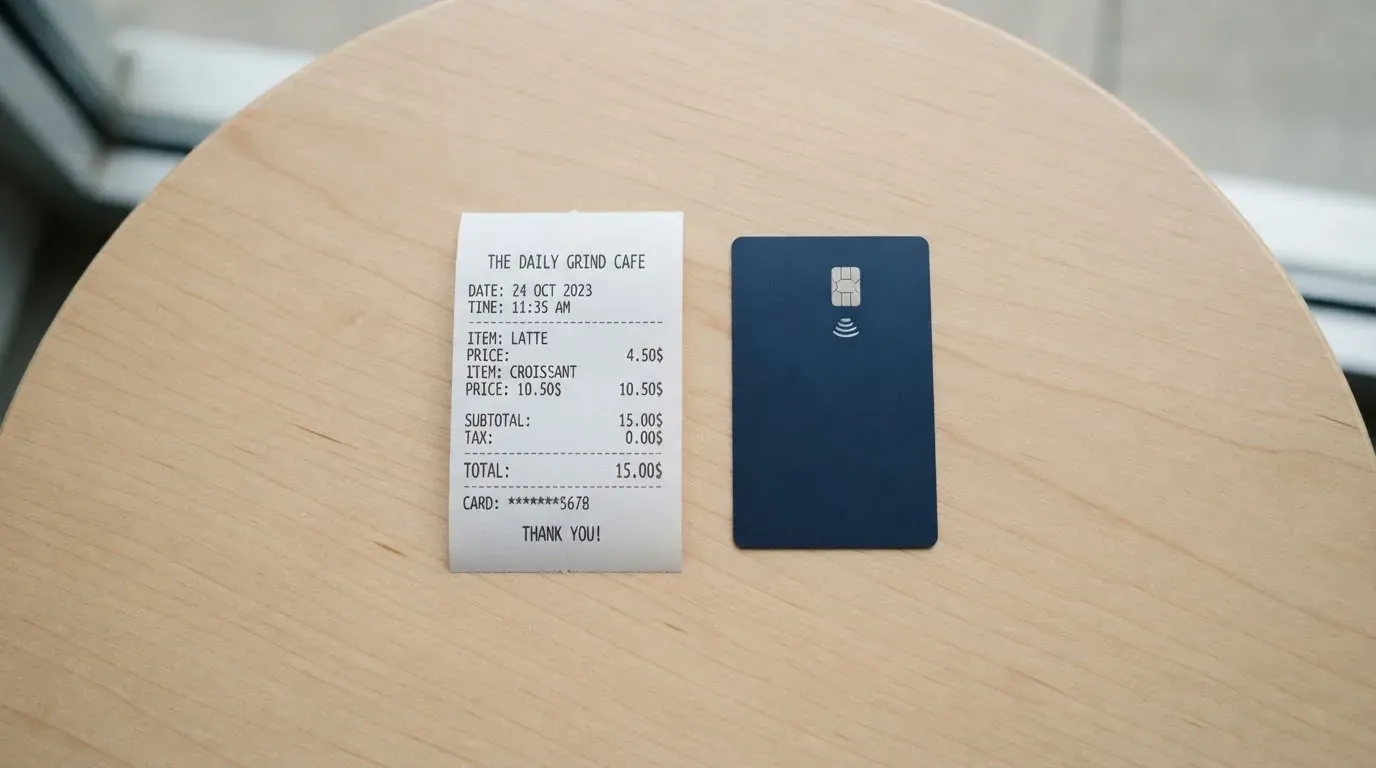
A coffee. You tap in your app, the card converts whatever you hold, and the shop charges you. What you do not know is the conversion margin. The number the shop sees and the number your balance loses are two different numbers, and the gap between them is the conversion fee. HostFi does not publish it. That gap is invisible until you look at a receipt and then it is the only thing on the receipt that matters.
A subscription — a streaming service, say. This is the case where the absence of a published foreign exchange fee hurts most, because that payment is priced in dollars or euros while your balance is in naira or a stablecoin. Anything that crosses a currency line carries a conversion cost twice over, and you cannot forecast either leg from the public pages.
A cash withdrawal. The ATM answer is not stated, so I do not know whether the card works in machines at all, what the machine charges, or what your own bank at the other end would take. For a virtual-only, prepaid-style card, this is often the weakest corner of the product, and it is one of the reasons my everyday-use mark is the lowest of the five.
The comparison you should carry out is not card against card on price, because there is no price to compare. It is card against the discomfort of not knowing. I have given cost 5 out of 10 rather than lower because nothing I found suggests the fees are outrageous — but a fee you cannot see is not a fee you can budget, and if your spending is tight enough that a percentage matters, this is the wrong card for you right now.
Top up: how the money gets in
The App Store puts it in one line: “fund cards with fiat or digital assets”. That is the whole published instruction. Which digital assets, on which networks, from which wallets, at what minimum, with what fee — none of it stated.
That last omission is the one that actually bites, and it is worth understanding why rather than just being annoyed. A stablecoin transfer is not a wire. You choose a network, and only the networks the receiving side supports will arrive. Ethereum’s ERC-20 tokens, for instance, charge their fee in ETH, so a wallet holding USDT but no ETH cannot send at all. Circle stopped supporting USDC on Tron in February 2024, so “USDC over TRC20” is not a native option any more. And blockchain transfers are irreversible: a deposit sent on a network the provider does not support, or to an address belonging to a different network, can simply be lost, or recovered only through a manual support process with no guarantee attached.
So the practical order of operations is this. Before your first transfer, get the supported coin and network from the app itself or from support — not from a guess, not from a forum answer. Send a small test amount first. Only then send the rest. This is not clever; it is the ordinary care the irreversibility of the medium demands.
Fiat funding is mentioned too, and the App Store describes Naira withdrawals to bank accounts. The specifics of how a naira top-up turns into card balance are not stated. What happens to money left on the card when you close the account — whether you can get it back — is also not stated.
Paying with it every day
Everyday use is where this card is thinnest, and it is why I marked it 3 out of 10.
The card is a virtual Visa or Mastercard — you pick which. That is the entire product surface on the app side that the pages describe. Wallets are not addressed: the site does not say whether the card can be added to Apple Pay, and the search question people ask most about that is one I cannot answer from the published material. If you pay for things on your phone, that matters more than the network logo does.
The app itself is the one part with numbers in it. The Nigerian App Store listing shows 4.3 out of 5 across 89 ratings, read on 2026-10-21. That is a real score from real people, and it is not bad. The Google Play rating is not stated, so you only have half the picture.
On rewards, there is a points-based programme and a referral offer — “Invite friends to HostFi and earn rewards”. No cashback is stated. And the rewards block on the website is still labelled “Coming soon” as of 2026-10-21, which means the marketing page describes something the product has not shipped. I would treat any reward you see advertised as something to verify inside the app on the day you sign up.
Two background facts explain why virtual cards sometimes get declined for reasons that have nothing to do with your balance, and both apply here. A card’s first six or eight digits identify the issuing institution and country, and merchants can look them up and apply extra scrutiny when the issuer country differs from your billing address — which is how a Nigerian-issued virtual card can look “foreign” to a European shop. And some merchants decline prepaid or foreign BINs by policy rather than by law. Also worth knowing: a declined authorisation can leave a hold on your funds for several days, typically up to seven.
What can go wrong
Nothing bad has come to my attention, and I want to separate that from “nothing can go wrong”. Here is the company and licence picture, which is the part I would weigh most heavily.
The entity behind the app is HostFi Services Ltd, trading as Host Finance. The site address is “1007 N Orange St. 4th Floor, Wilmington, DE 19801” — a Delaware address, while the terms are governed by Nigerian law and the App Store developer is HostFi Services Limited. Licences are not stated. The issuing bank is not stated. Neither is the custodial model, nor what card controls exist.
On complaints, my search on 2026-10-21 for “HostFi card reviews trustpilot reddit” returned no HostFi results — only an unrelated company. No Trustpilot page for HostFi either. No official incidents found, and no news. That is genuinely reassuring as far as it goes, and it is also the profile of a young product: nobody has complained because there has not been much time to complain. I would read the absence of complaints as an absence of history, not as evidence of quality.
Support is a help centre and a contact email link. Languages and hours are not stated.
For security, the site claims “Cold storage, multi-factor authentication, and advanced encryption” — but it says so about the platform as a whole. Whether your card balance is held custodially, whether the card itself can be frozen instantly, whether there are spending limits you can set: not stated.
This is the part of the category that makes people lose money, so let me say it plainly rather than as a warning label. Whoever holds your private key holds your money, and crypto transfers have no built-in recovery — the network cannot freeze or return funds. Custodial platforms have a documented history of failure: Mt. Gox at around US$350 million reported stolen between 2011 and 2014, Coincheck at about US$400 million in 2018, and Ronin Network at US$625 million in 2022. Nobody is alleging HostFi is any of these things. The point is that your counterparty risk here is unnamed, because the issuer and the licences are unnamed.
And card programmes do close. Visa terminated its global agreements with FTX in November 2022, and the FTX US debit card programme was wound down by its issuer. WaveCrest, a supplier of crypto card brands, was suspended by Visa in Europe in 2018, closing all its Visa programmes. When that happens, the pattern is a notice period, then loading and spending stop, then you are asked to withdraw what is left. Your balance depends on a structure you cannot currently see.
What to take instead
I looked at three alternatives with published material of their own, and I scored all three higher than HostFi. None of them is perfect — none of them publishes everything either — but each is more concrete on at least the points where HostFi is blank.
| Alternative | Score | Card | Funding | Cost position |
|---|---|---|---|---|
| Cardex | 5.6 / 10 | Debit crypto card on VERVE, Visa, Mastercard and UnionPay; virtual and physical | USDT, USDC and BTC wallets, networks not stated | Conversion at the moment of payment, “AI-Powered Conversion Rate”; no fee percentage published |
| CardFlow | 4.9 / 10 | Virtual USD Mastercard, created in about 3 minutes | Bitcoin, USDT, ETH or naira bank transfer | Creating a virtual card is free; monthly and transaction fees not stated |
| HyperCard | 4.7 / 10 | Prepaid, network not stated on the App Store page; balance in USD or EUR | Deposit crypto such as USDT, BTC, ETH, converted on the card | Cost and fees not stated |
| HostFi | 4.3 / 10 | Virtual Visa or Mastercard only | Fiat or digital assets, no coin or network named | Issuance and operation fees not disclosed |
Two distinctions are worth your attention. Cardex has a physical card option and names four networks; HostFi has neither. CardFlow states plainly that card creation is free, which is a number you can actually check a promise against; HostFi states no price at all.
On geography, Cardex says “One crypto card, 200+ countries” with no exclusion list, CardFlow aims at Nigeria and at “Nigerians and global users”, and HyperCard’s App Store page says the card works in “more than 176 countries” — though that is acceptance, not eligibility, and an important difference when you are trying to work out whether you can open one.
All three also leave fees unpublished, so switching does not buy you the thing you most wanted: a fee table. What it buys is a physical card, a named network list, a stated price, or a stated country reach. Those are different questions, and it is worth deciding which one you need.
Who I would recommend it to
I would recommend HostFi to a person in Nigeria who wants a virtual Visa or Mastercard for app payments, has read the app’s fee screens and found them acceptable, and is willing to treat a small test top-up as the price of learning which networks work. For that person, the 4.3 rating on 89 App Store reviews, the two-platform app, and the free-of-bad-news profile make it a reasonable thing to try with an amount you can afford to be wrong about.
I would not recommend it to someone who needs a physical card, who needs a published foreign exchange rate to budget a subscription, who is outside Nigeria and cannot tell from the site whether they are eligible, or who wants to name the institution holding their money and cannot. Nor would I recommend it as the first card for anyone who has never used one — the missing fee table makes it a poor first exposure.
Two final questions I would ask in this order. Is HostFi a bank? No answer is published — the company is described as HostFi Services Ltd with no licence stated, which is not the same as an institution that cannot receive deposits. And is the card worth it? On the evidence, it may be useful inside Nigeria for virtual spending and I cannot tell you what it costs.
Frequently asked questions
What is HostFi card?
HostFi is an app that issues virtual payment cards — a Visa or Mastercard that you choose, created and used inside the app rather than posted to you. The App Store listing describes creating several cards, funding them with fiat or digital assets, and choosing a preferred currency. The site describes itself as a crypto banking app, with Naira cards and Naira withdrawals to bank accounts mentioned in the release notes.
How does the HostFi card work?
It behaves like a prepaid card rather than a bank debit card. You load a balance first, and the card spends only that balance, so it cannot overdraw. At the point of payment the crypto or fiat side is converted and the card number carries the charge, the same way any stored-value card does. The card exists only as a number in the app, since no physical version is mentioned.
Is HostFi a bank, and who owns it?
Not stated. The entity is HostFi Services Ltd, trading as Host Finance, with a Delaware site address, Nigerian governing law, and “HostFi Services Limited” as the App Store developer. Licences are not published, and the issuing bank is not named either. Whether it takes deposits, or operates under a licence, is not something the public pages say.
Can I use the HostFi card in my country?
That depends on where you are, and the site will not tell you. Eligibility is covered only by the sentence “Some products are available only in selected countries” — no country list and no exclusions are published. The App Store storefront is Nigeria’s and the terms are Nigerian, so Nigeria is clearly the centre. Acceptance is a separate question from eligibility.
Does the HostFi card require KYC?
Not stated. The official pages do not describe identity documents, proof of address, an age requirement, or any verification tier, so I cannot tell you what to have ready. The company is subject to anti-money-laundering rules in any jurisdiction where it operates, so some form of verification is likely — but what HostFi actually asks for is something you will only learn from the app’s own onboarding screens.
How do I top up the HostFi card?
The App Store says you can fund cards with fiat or digital assets, but the coin and network are not named, and the exact top-up flow is not described. Because transfers on the wrong network can be permanently lost, get the supported asset and network from the app or support first, then send a small test amount before sending anything larger.
Is the HostFi card free?
Nobody knows, including the company. Issuance fees, monthly fees, conversion fees and foreign exchange fees are all not stated on the official pages, and there is no tier structure published either. That is not the same as saying it is expensive — it means you cannot budget it from the outside, which for anyone on a tight margin is the decisive point.
Is the HostFi card safe?
I found nothing bad. No complaints, no Trustpilot page, no official incidents and no news as of 2026-10-21, and the Nigerian App Store listing shows 4.3 out of 5 from 89 ratings. But the site does not name the issuing bank, any licence, or whether balances are held custodially, and crypto transfers cannot be reversed. Judge it on that, not on the empty complaints file.
Can I add the HostFi card to Apple Wallet?
Not stated, and this is one of the most common questions about the card. The site says nothing about mobile wallets, tokenised numbers or whether the virtual card can be provisioned to a device. If phone-based payments are how you spend, this is worth asking support directly before you rely on the card — it may be the difference between the product working for you and not.
Is the HostFi card worth it?
Inside Nigeria, for virtual spending on apps and subscriptions, it may well be — a usable Visa or Mastercard number without a branch visit has real value. Outside that case the case weakens quickly, because no physical card, no published fees, no named network and no stated eligibility leave you carrying most of the uncertainty yourself.
Virtual card reviews – cryptocardcheck
Content created by the «cryptocardcheck» team