
A Telegram-only payment card built for Hong Kong residents, sold everywhere else on trust
 Available in US
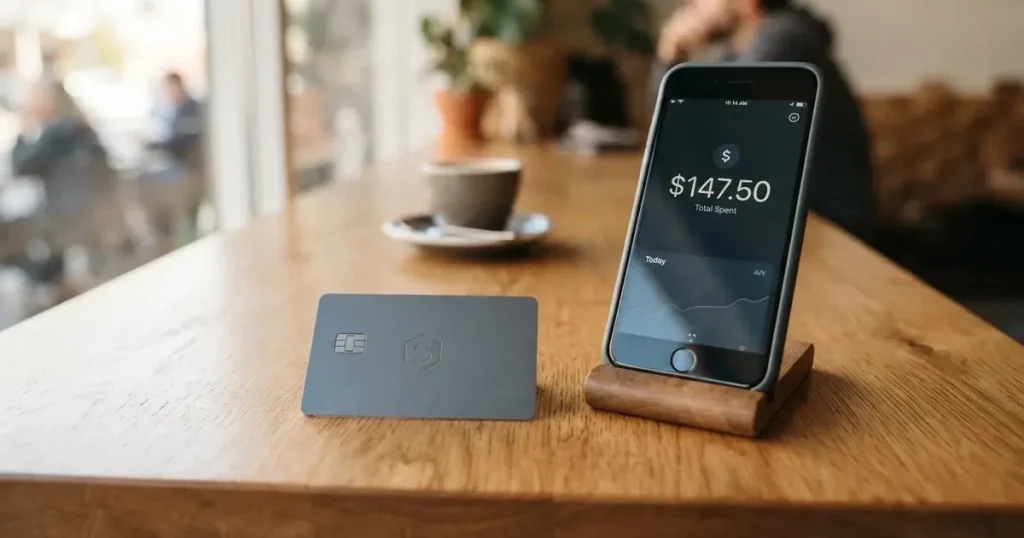
AnyXPay is a payment card that lives inside Telegram. You load crypto into it, and the balance turns into ordinary card payments at shops and online. On paper it sounds like the answer to a problem a lot of people have: you want a card that spends like a normal card, you hold your money in crypto, and your own bank’s app refuses you or your country’s payment rails don’t reach you. On paper it works. The problem is what sits underneath, and how much of it you only find out afterwards.
I gave it 3.5 out of 10. That is not a verdict thrown in for style. It comes out of six separate things I could and could not confirm, and I will show you all six before I finish. Two of them — how you top the card up, and how much choice of card you get — are the best parts. One of them — who actually gets the card — is the wall.
Conditions are current as of October 28, 2026.
The score, and who this card is for
Let me start with the number, because you should see it before any of my reasoning and decide for yourself whether my reasoning deserves it.
| Criterion | Mark | Why |
|---|---|---|
| Who can get it | 2 / 10 | Services are for Hong Kong residents only; refusal in sanctioned jurisdictions is possible; the card page lists no countries |
| Cost | 1 / 10 | 50 USDT per card, 4% top-up fee, fees may change without notice, an acquirer markup may apply outside Hong Kong |
| Top-up options | 9 / 10 | USDT, USDC, USDR, USDQ, EURQ, XAUT, EurR, aUSDT on TRC-20, ERC-20 and BEP-20, plus bank-card top-up and P2P purchase |
| Reliability and complaints | 3 / 10 | Developer “CSB”, Hong Kong law, issuer and licences not named; terms allow freezing or closing the account at any time without compensation; no independent reviews found |
| Everyday use | 5 / 10 | MasterCard Basic, MasterCard Pro, Visa e-commerce, Visa Premium, Apple Pay and Google Pay; virtual or physical and ATM not disclosed |
| Total | 3.5 / 10 |
The single highest mark is for the least glamorous thing on the page. AnyXPay takes an unusually wide list of stablecoins across three networks, plus two cash routes. Whatever else is wrong with this card, getting money into it is easy and flexible, and I want to be honest about that rather than bury it.
The lowest mark is cost, and that surprises people who see “free” in a Telegram bot. Fifty USDT per card is not a small number when you are trying to buy a sandwich. And the 4% top-up fee lands on every single top-up, not once.
Who it suits, honestly: a resident of Hong Kong who already holds stablecoins, lives inside that payment system, and wants a card that behaves like a prepaid account without opening a bank relationship. For that person this is a plausible tool. Who it does not suit: anyone outside Hong Kong reading a page that does not say “Hong Kong only” until the terms. Also not for anyone who needs to move real amounts at low cost, anyone who wants a card they can dispute a charge on, and anyone who needs to know which institution is responsible for their money.
The audience this card is built for, plainly, is Hong Kong residents paying from a Telegram mini-app. Everything about the product — the bot, the eight stablecoins, the Hong Kong law in the terms — points that way.
Will they give you the card
They will give it to Hong Kong residents. That is stated: the terms say “Services are intended only for Hong Kong residents” — services are intended only for Hong Kong residents. Not “mainly”. Only.
There is a second line about sanctioned jurisdictions. The service may be refused there, and the list names Belarus and Russia, alongside Cuba, the DPRK, Iran, Syria, Venezuela and others, closed with “etc.” That “etc.” is doing real work in that sentence. Nobody publishes the full list, so you cannot check in advance whether your country is on it.
And here is the part I would want you to sit with: the card page itself lists no countries at all. Early descriptions said something like “200+ countries”, but that is not confirmed anywhere on the site. So the public marketing material you might have stumbled across implies broad availability, and the terms say one country. When those two disagree, the terms are the part that is enforceable.
One more thing worth understanding about how this kind of check works, because it is not always about where you live. Nationality gets screened separately from residence, and sanctions screening and issuer risk policy are usually applied to citizenship and country of birth as well as country of address. So a Hong Kong resident with a passport from a listed country may not get the same answer as a Hong Kong resident with a Canadian one. The card says nothing about this, so it is context rather than a claim about AnyXPay.
How to get it
Level 1 needs an email address and a phone number. That is the entire stated requirement for most of the product. Only Visa Premium is marked as requiring KYC.
The terms then add a second layer that sits awkwardly beside the first: they require identification data and source-of-funds documents on request. The procedure for that is not described anywhere. How they ask, how long they take, what happens if you cannot produce the documents — all of that is unstated. Proof of address and age requirements are also not stated.
The card choices themselves are the best part of the product design. Four of them:
- MasterCard Basic
- MasterCard Pro
- Visa e-commerce
- Visa Premium
The activation text also names “Mastercard Infinity”, which does not appear in the card list anywhere else. Whether that is a fifth product, a fifth tier, or a leftover from an older version of the page is not something the site resolves. That is a small detail, and I would not read much into it on its own, but it is a sample of how the public documentation is maintained.
What is not stated about the card itself: whether you get a virtual card, a physical one, or a choice. The delivery terms are not stated either, and given the delivery note on the page, this looks like a virtual product by default. The card currency is not stated.
On verification: the terms say you can be asked to re-verify if your data goes out of date, and that access may be refused if you supplied false data. They do not state processing times. They do not state the reasons for rejection. So if you are refused, you may not be told why, and you certainly will not be told how long to wait.
What you do get is a KYC level system, which tells you at least that the product has one. Level 1 is email and phone. Visa Premium requires full KYC. That is the whole ladder as described.
Fees: what it really costs
This is where the card is weakest, and the weak mark of 1 out of 10 is not an exaggeration. Here is every figure and limit the card publishes.
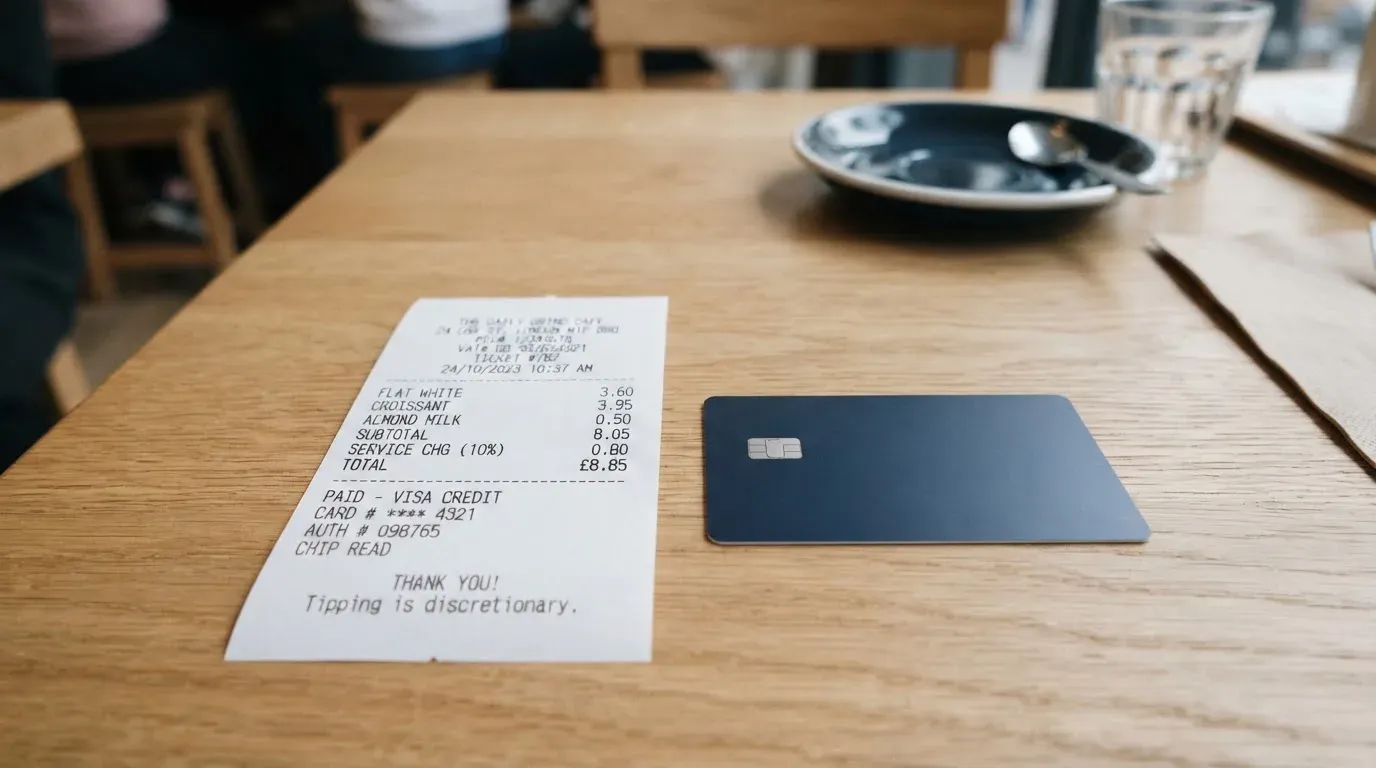
| Item | What it says |
|---|---|
| Card issuance | 50 USDT for each card |
| Monthly or annual fee | Not stated |
| Top-up fee | 4% |
| Conversion | Not stated as a separate line |
| Payments outside Hong Kong | Acquirer conversion markup may apply, paid by you, no figure given |
| ATM | Not stated |
| Limits | Per transaction, daily and monthly, by card — see below |
| Card currency | Not stated |
| Fee changes | Fees can change without notice |
The limits, per card:
| Card | Per transaction | Daily | Monthly |
|---|---|---|---|
| MasterCard Basic | $20,000 | $250,000 | $1,000,000 |
| MasterCard Pro | $50,000 | $250,000 | $1,000,000 |
| Visa e-commerce | $20,000 | Unlimited | Unlimited |
| Visa Premium | $200,000 | $200,000 | $6,000,000 |
Now let me put three ordinary days in front of you, because abstract fee tables hide the thing that matters, which is how often a fee touches you.
A coffee in Hong Kong. You tap the card. There is no top-up happening, so the 4% does not apply to this purchase. What applies is whatever the network and the merchant do, and the card does not publish a conversion line at all. If your balance is held in a stablecoin and settled in another currency, the spread sits somewhere in this transaction — the card does not tell you where or how much. This is the everyday purchase where the card is vaguest.
The same coffee in a shop outside Hong Kong. Same purchase, plus the item the card warns about: card payments outside Hong Kong may carry an acquirer conversion markup, paid by you, with no figure given. So you pay an unknown amount on top of an unpublished conversion, and the only warning you get is a sentence in the fees section.
A month of topping up. Four top-ups of 1,000 USDT each is 4,000 in, and 4% of that is 160 USDT. On top of that sit the blockchain network fees, which the blockchain charges and which you pay separately. On top of that, the 50 USDT for the card the first time. That is the real arithmetic of this card: it is cheap to hold, expensive to fill, and unclear to spend. The limits table looks generous, and it is — but a 6,000,000 monthly ceiling is not much use to someone paying 4% to reach it.
One more thing: all four card products cost the same 50 USDT and carry the same 4% top-up. You are paying for limits you may never approach.
Top up: where the card actually shines
This is the 9 out of 10, and it deserves the description.
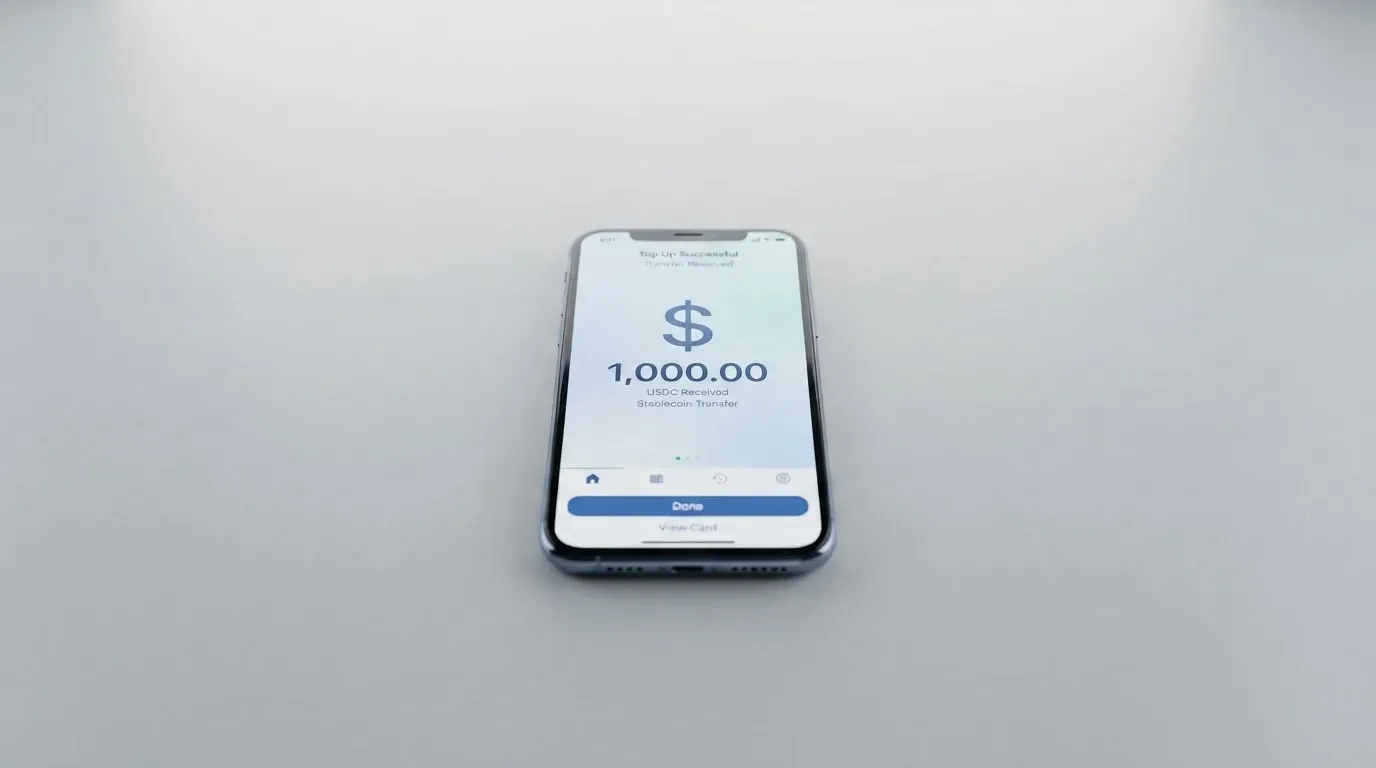
Direct top-up accepts USDT, USDC, USDR, USDQ, EURQ, XAUT, EurR and aUSDT, over the TRC-20, ERC-20 and BEP-20 networks. That is eight assets across three chains. For context on why that is unusual: USDT and USDC are the two tokens the BIS in July 2025 put at about 90% of stablecoin market capitalisation, and the rest are dollar or euro-referenced tokens built on other networks. Most cards in this category take one or two coins on one network.
You can also top up with a bank card, and you can buy through P2P. Those two routes are the reason someone without a crypto balance of their own could still use this card.
The fees are where the shine dulls. The 4% applies to top-ups. Blockchain network fees are separate and paid by you. Fees for the fiat routes — bank card and P2P — are not stated. No minimum top-up is stated.
Blockchain transfers are irreversible. Sending on a network the provider does not support, or to an address belonging to a different network, can lose the funds or require manual support recovery with no guarantee. That is not an AnyXPay rule; it is how transfers work. But it is why the list of accepted assets and networks above matters so much — it is the difference between a deposit that lands and one that vanishes.
Getting money back out is asymmetric, and this is worth reading twice. You can withdraw from the Wallet, minus the network fee. You cannot withdraw from the Card account. Paid fees are not refunded. So the balance you loaded for spending is spending money. It is not a savings account and it does not behave like one.
Paying with it every day
Cards can be added to Apple Pay and Google Pay. Whether any merchant categories are blocked is not stated, which matters more than it sounds — the merchant category code system is how card programmes decide to refuse whole types of business, and the blocked list varies by issuer, so silence here is not reassurance.
The interface is a Telegram mini-app at @anyxpay_bot plus a web app at app.anyxpay.com. No App Store or Google Play listing was found. That means the product has no visible native app, and its security posture is largely inherited from Telegram: secure your Telegram account, secure the devices you trust, because whoever controls those controls the entry point to your money.
There is a referral programme, with a page for it on the site. No cashback is stated.
If a payment goes wrong, the terms give you a sequence rather than a remedy. Try negotiation first, then mediation, then arbitration through HKIAC in English. Two warnings ride along with that. Claims on transactions must be filed within the deadline set by the rules, or you lose the right — and the rules do not tell you the deadline where a reader would look. And the chargeback process is not described at all. If you are used to the chargeback rights that come with ordinary debit and credit cards, do not assume they transfer here. Prepaid-card coverage varies by jurisdiction and should not be assumed either.
One practical note that is not the card’s fault: a declined authorisation can leave a hold on your funds that stays for several days. That is standard card behaviour, but it interacts badly with a card you paid 4% to fill.
What can go wrong
Let me separate this into what I found, what the terms say, and what I simply could not determine.
On the company. The developer is named as “CSB”, operating through the Telegram mini-app, under Hong Kong law. The registered address is not stated. The issuing bank is not stated. Licences are not stated. That last one is the gap that matters most for your money, and I want to explain why.
When you hold a prepaid card balance, you are usually holding e-money, and in most regulated jurisdictions the institution issuing it must safeguard customer funds — segregating them in dedicated accounts or insuring them. A card network like Visa or Mastercard does not issue crypto cards to consumers itself; it licenses issuers and can suspend a programme. So the question “who is actually responsible for this balance” is answered by the issuer’s licence, and the issuer’s licence is not named. It is not stated that the funds are safeguarded, and it is not stated that they are not.
On access. The terms allow the account to be frozen or closed at any time, without notice and without compensation. Read that twice. It is a broad power, stated in the document you are asked to accept, and it is wider than what most regulated e-money terms give. And there is a category problem underneath it: the site calls itself an open-source non-custodial Telegram wallet, while the terms describe the wallet as custodial and “not a banking service”. Those are two different promises about who holds your keys, and they are in tension on the same product. You are responsible for your Telegram account and for trusted devices, and high-risk assets may be frozen. Whether there is 2FA or a card freeze control is not stated.
On track record. I found no official incidents — no regulator action, no licence news, no fines. The terms were last updated 7 July 2026, and the blog posts I could see were dated 5 May 2026 and 9 October 2025, the latter two being card guides. But I also found no independent user reviews at all. No Trustpilot page exists for AnyXPay. The only reviews are five self-published ones on the site’s own pages, from August to September 2025, unverified. Absence of complaints from a service nobody writes about is not a clean record; it is an empty one.
On disputes. Already covered, but it belongs here too: negotiation, then mediation, then English-language HKIAC arbitration, with a filing deadline you must find yourself, and no described chargeback process.
On support. There is a Support button inside the app, also available in a Hub tab. Hours are not stated. Support is not explicitly offered.
What to take instead
I looked at three cards in the same category so you can see where AnyXPay stands rather than just hear me say it does not.
| AnyXPay | Azul Card | Telecard | OnCards | |
|---|---|---|---|---|
| My score | 3.5 / 10 | 5.3 / 10 | 6.1 / 10 | 4.6 / 10 |
| Who | Hong Kong residents only | Worldwide except Russia, Belarus, North Korea, Iran, Syria, Cuba, Sudan, Venezuela, Ukraine and the Crimea, Donetsk, Luhansk, Zaporizhzhia and Kherson regions | Over 150 countries where Mastercard is accepted | Not stated |
| Card | Four products; virtual or physical not stated | Virtual only, no physical card available | Virtual Mastercard, instant; no physical or metal | Virtual only, network not fixed |
| Card cost | 50 USDT each | $20 one-time, refunded after $2,000 in spending | Standard $5 one-time; VIP $49 setup then $19/month; $99 minimum deposit to activate, stated as not a fee | Not stated |
| Top-up fee | 4% | 4% plus $0.25 per transaction | Deposit fee advertised as 0% | Not stated |
| Other fees | Acquirer markup possible outside Hong Kong; fees can change without notice | FX fee not stated | 1.5% currency conversion on non-USD payments; 0.5 USDT gas per successful transaction; FX and cross-border fees up to 3% each | Not stated |
| Funding | 8 tokens on 3 networks, bank card, P2P | Crypto sent to the card in Telegram; coins and networks not named | USDT on TRC-20 or ERC-20; USDC on ERC-20; Polygon not supported; bank transfers coming soon | USDT BEP20 only; no bank transfers |
| Rewards | Referral programme, no cashback stated | Referral pays up to 40% of fees from referral transactions | Referral in Fiorini plus cashback; rate not specified | Not stated |
Azul Card is the interesting comparison, because it is the closest thing to AnyXPay on design and it is more transparent about money. Its country exclusions are published as a list, and — this is the detail worth having — the restrictions apply regardless of the user’s nationality, so the card simply cannot be used in those places by anyone. AnyXPay’s list exists but ends in “etc.”. Azul publishes its creation fee ($20, refunded after $2,000 in spending), its $5 monthly maintenance, its 4% crypto top-up and its $0.25 per transaction. Its FX fee is not stated, which is a real gap. It has no physical card, may come later, and its balance is in USD. Its first top-up takes up to ten minutes, later ones one to five. Its referral programme pays up to 40% of fees from your referrals’ transactions.
Telecard scores highest of the three alternatives, at 6.1. It is usable in over 150 countries wherever Mastercard is accepted, with identity check “available in most major regions” and no list of supported or excluded countries — its terms only bar users blocked or sanctioned by the US Government, including OFAC. That vagueness cuts both ways. It is virtual only, USD, with a conversion fee on non-USD payments. The structure is two tiers: a standard plan at $5 one-time, and VIP at $49 setup then $19 per month, with VIP reissuance at $15. It needs $99 minimum deposit to activate, which it is careful to say is “NOT a fee” because it stays in your wallet — that is a deposit, and you should treat it as money you cannot withdraw until you spend it. Fees are the most transparent of the three: 1.5% currency conversion on non-USD payments, 0.5 USDT gas per successful card transaction, and FX and cross-border fees of up to 3% each. Funding is USDT on Tron or Ethereum, USDC on Ethereum, no Polygon. Bank transfers are “coming soon”, which is worth remembering if that is your fallback. Rewards come in Fiorini per activated friend plus cashback, at an unspecified rate.
OnCards is the thinnest of the three. Virtual only, “a virtual Mastercard / Visa card directly in your Telegram” with the network not fixed, funded with USDT on BEP20 only, no bank transfers. Fees are described as “Simple and clear fees — no hidden charges” with no amounts given, and no country list exists. It is also the one card here that does not mention restricted countries at all, which is either simplicity or an omission.
Where that leaves the comparison. On top-up flexibility AnyXPay beats both alternatives outright — no one else takes eight tokens across three chains plus two cash routes. On cost, Telecard’s standard plan is cheaper in every way except the FX line; its VIP plan costs more per year than AnyXPay’s entire card. On transparency, Telecard publishes more numbers and Azul publishes a real country list; AnyXPay publishes fewer numbers and one restrictive sentence. If the Hong Kong residency requirement does not rule you out, and you are already deep in stablecoins, AnyXPay’s funding options are the argument for it. If neither of those is true, Telecard is the one I would read first.
Who I would recommend it to
Three groups, plainly.
A Hong Kong resident who already holds stablecoins and wants a spending tool inside Telegram. The top-up options are genuinely better than anything else I looked at, the limits are not the constraint, and being inside the payment system the product was built for means the residency line is not a wall for you. Just know what the 4% costs you on the way in, and that you cannot take money back out of the card account.
Nobody else, at least not as a primary card. If you live outside Hong Kong, you are relying on the terms’ silence on the card page rather than on a promise. If you need to dispute a charge, there is no described chargeback process and a filing deadline buried in the rules. If you need to know which licensed institution holds your balance, that name is not published. If the cost of funding matters to you at all, 4% on every top-up with an acquirer markup potentially on top is a lot to pay for the privilege of convenience.
And a specific warning for anyone reading this because they cannot get a normal card. That is exactly the person this product is likely to reach, and exactly the person the gaps above hurt most. When your alternative is a bank that will not open an account for you, your negotiating position is not “I will take my money elsewhere” — it is thin. A card that can freeze your account without notice and without compensation, issued by an institution it does not name, is a worse position than it appears. Read the terms, keep your balance small, treat the card balance as spending money rather than savings, and secure your Telegram account as if it were a bank login, because in this product it functionally is one.
Frequently asked questions
What is AnyXPay card?
AnyXPay is a prepaid payment card operated through a Telegram mini-app. You load crypto — stablecoins such as USDT, USDC, USDR, USDQ, EURQ, XAUT, EurR and aUSDT — into the card balance, and the card spends that balance like an ordinary card, in shops and online. Four products exist: MasterCard Basic, MasterCard Pro, Visa e-commerce and Visa Premium, and cards can be added to Apple Pay and Google Pay. The developer is named as “CSB”, under Hong Kong law.
How does AnyXPay card work?
The card behaves like a prepaid account rather than a debit card tied to a bank. You top up, and only what you have loaded can be spent, so it cannot overdraw. Purchases go through the Visa or Mastercard network, and the terms warn that payments outside Hong Kong may carry an acquirer conversion markup that you pay, with no figure published. The card page does not say whether the card is virtual or physical, and the card currency is not stated.
Is AnyXPay a bank?
No — and the terms say so themselves, describing the wallet as custodial and “not a banking service”. That is a meaningful admission rather than a technicality: it means customer funds are not bank deposits, so a deposit guarantee scheme does not sit behind your balance. The registered address, the issuing bank and the licences are not stated, so the institution actually responsible for your money is not named on the public pages.
Is AnyXPay card available in my country?
The terms say services are intended only for Hong Kong residents. The service may also be refused in sanctioned jurisdictions, where the list names Belarus and Russia alongside Cuba, the DPRK, Iran, Syria, Venezuela and others, closed with “etc.” The card page itself lists no countries at all. Early material describing broad availability is not confirmed anywhere on the site, so treat the Hong Kong residency line as the real position.
Does AnyXPay card require KYC?
Level 1 needs only an email address and phone number. Visa Premium is the one product marked as requiring KYC. The terms go further, requiring identification data and source-of-funds documents on request, but the procedure is not described, and proof of address and age requirements are not stated. Re-verification is expected if your data goes out of date, and access can be refused if you supplied false information.
How much does an AnyXPay card cost?
Fifty USDT for each card, with no monthly or annual fee stated. Top-ups cost 4%, and blockchain network fees are paid separately by you. Fees can change without notice. Payments made outside Hong Kong may add an acquirer conversion markup, and no figure is published for it. ATM fees, the card currency and a separate conversion charge are not stated. My cost score is 1 out of 10.
How do I top up the AnyXPay card?
Eight assets — USDT, USDC, USDR, USDQ, EURQ, XAUT, EurR and aUSDT — are accepted directly over the TRC-20, ERC-20 and BEP-20 networks, and you can also top up with a bank card or buy through P2P. Top-ups carry the 4% fee, blockchain fees are separate, and fees and minimums for the fiat routes are not stated. Transfers are irreversible, so sending on the wrong network can lose the money.
Can I withdraw money from AnyXPay?
Only partly. Withdrawal from the Wallet is possible, minus the network fee. Withdrawal from the Card account is not possible at all, so what you load is spending money, not withdrawable money. Paid fees are not refunded either. That asymmetry is the single most important operational fact about the card, and it is easy to miss.
Is AnyXPay card safe?
That depends on what you mean by safe. There is no route to a bank deposit guarantee, and the developer, registered address, issuing bank and licences are not all named. The terms allow your account to be frozen or closed at any time without notice or compensation. The site calls the wallet non-custodial while the terms call it custodial, which is an unresolved contradiction. No independent user reviews exist, and the only reviews on the site are five self-published ones. Take the “open-source non-custodial” line seriously or not at all — the terms are the enforceable document.
Where can I use the AnyXPay card?
Anywhere a Visa or Mastercard is accepted, subject to the merchant’s own policies. The card page lists no country restrictions, though the terms restrict services to Hong Kong residents and allow refusal in sanctioned jurisdictions. Some merchants decline prepaid or foreign-issued cards because the issuer country shows up in a lookup, and whether AnyXPay blocks any merchant categories is not stated. Apple Pay and Google Pay are supported.
Virtual card reviews – cryptocardcheck
Content created by the «cryptocardcheck» team