
Jam Card: Honest Review for Crypto Card Users
 Available in US

The Jam card promises a simple thing: a card that spends straight from a self-custody crypto wallet, with no bank in the middle. That is genuinely appealing if you already hold stablecoins and want to pay for things without first converting through an exchange. But when I went through Jam’s own pages and terms closely, the card’s public material leaves more blanks than it fills. No country list, no fee table, no named issuer, no licence numbers — just a promise and a Telegram group. That combination makes the card hard to trust, not because anything bad is proven, but because almost nothing can be verified. My score: 4.4 out of 10. It suits people who already keep crypto in a self-custody wallet and want a spending card inside a non-custodial app; it does not suit anyone who needs predictable fees, clear eligibility, or physical plastic in their hand. Below is what I found, what I could not find, and where you might do better.
The conditions described are current as of October 28, 2026.
Verdict: 4.4 out of 10 — promising tool, uncertain footing
The headline idea is sound: a card that draws on your own wallet, inside an app that never takes custody of your keys. But the card’s public presence is thin on exactly the details you need to commit money. There is no fee page, no list of eligible countries, no named issuing institution, and no licence number. One card type at launch, with 20 more promised for later. For a card marketed to people who already handle crypto, that thinness matters — you are being asked to trust a system whose economics are not published.
| Criterion | Score | Reason |
|---|---|---|
| Who can get it | 5 / 10 | Country list not published; terms close Russia, Belarus, Iran, North Korea, Syria, Cuba, Ukraine and US persons; the on/off ramp works in 200+ countries |
| Cost | 3 / 10 | Fees are not disclosed anywhere; unofficial figures suggest stablecoin top-up around 4.2% plus gas, Apple Pay 0.2% |
| Top-up options | 4 / 10 | USDT stated, “No TRX required”; unofficial reports say USDT and BSC-USD only |
| Reliability and complaints | 6 / 10 | Non-custodial, JAM Platform LLC (Delaware); issuer and licences unnamed; Trustpilot 4.1/5, one complaint about costs and withdrawal |
| Everyday use | 4 / 10 | Card type and network not named; unofficial: no physical card yet; Apple Pay and Google Pay present; ATM details withheld |
| Total | 4.4 / 10 | A working idea with more unknowns than most cards in its class |
Who should look at this card, and who should not:
- Consider Jam if you already hold stablecoins in a self-custody wallet, understand network fees, and want to spend directly from that wallet in a non-custodial app.
- Skip Jam if you need published fees, a clear list of countries you can use it from, a physical card in the post, or a named and licensed issuer you can hold accountable.
The rest of this page goes through each of those points in turn, then looks at three alternatives that publish more of what you’d want to see.
Will they give you the card?
Eligibility is where Jam’s silence is most noticeable. The site publishes no country list at all — the only geographic claim anywhere is “Ramp functionality over 200 countries,” and that refers to the buy/sell ramp inside the app, not to whether you can be issued the card. Those are two very different things: a service being available in 200 countries does not mean the card is issued in 200 countries.
What the terms do tell you is who is excluded. The card and financial services are “categorically forbidden in specific jurisdictions,” naming Russia and Belarus explicitly, and also Iran, North Korea, Syria, Cuba, and Ukraine. Sanctioned persons are barred outright. The terms add that the service is “strictly not intended for use by United States Persons,” and that US IP access is prohibited. The terms also reserve the right for Jamcard to restrict access by IP or jurisdiction, so even a country not on the list could be turned off at a moment’s notice.
One question the public pages do not answer: does the restriction follow your citizenship or where you live? It is not stated. That distinction matters if you hold a passport from one of the named countries but live and bank elsewhere. You would have to ask Jam directly, and the honest advice is to ask before you fund anything.
Here is the pattern to keep in mind generally. Rules that restrict *citizenship* and *country of birth* are common in crypto because sanctions screening is applied to those fields separately from your address. A card that says it will not serve “United States Persons” is following that pattern, and it is a legal position rather than a technical one. I am not going to tell you how to get around any of this — the point is only to know where the lines are drawn before you load money.
How to get it
The signup story is short, which is part of the appeal. The site says you sign up with email and phone, and it advertises “30-second onboarding.” There is no minimum age stated on the pages I read, and no requirement for proof of address is mentioned. Knowledge checks are handled by independent third-party compliance partners, though the partners themselves are not named.
This is where the KYC picture gets murky. Unofficial reports — one Trustpilot reviewer in May 2026 described Jam as a “No KYC” first card — sit in tension with the terms’ own statement that verification runs through compliance partners. Whether you are asked for documents, and how much, is not stated. Neither is any tiered verification system, so the “30 seconds” may apply to some applicants and not others.
The card itself, at launch, is one card type. The site’s line is telling: “We start only with one, but will add 20+ card types in the future.” The card type, the network it runs on, and its currency are all not stated. Data starts by converting to a USD balance. Delivery is not stated either — the only signal is a reviewer noting “no physical card yet,” which suggests whatever exists today is virtual.
If your question is “how do I apply,” the answer is the app: sign up, verify whatever the app asks for, and see what you are offered. Just do it before moving funds, not after.
Fees: what it really costs
This is the weakest part of the card, and it is not close. Jam publishes no fees page and links none. Issuance fee, monthly fee, conversion fee, foreign-exchange fee, ATM fee — none of these are stated anywhere on the public site. There is no fee tier structure either; “JAM VIP Club” turns out to be a private Telegram community with perks and a personal manager, not a pricing plan. The one number that is public is a referral reward: $5 for each friend who joins.
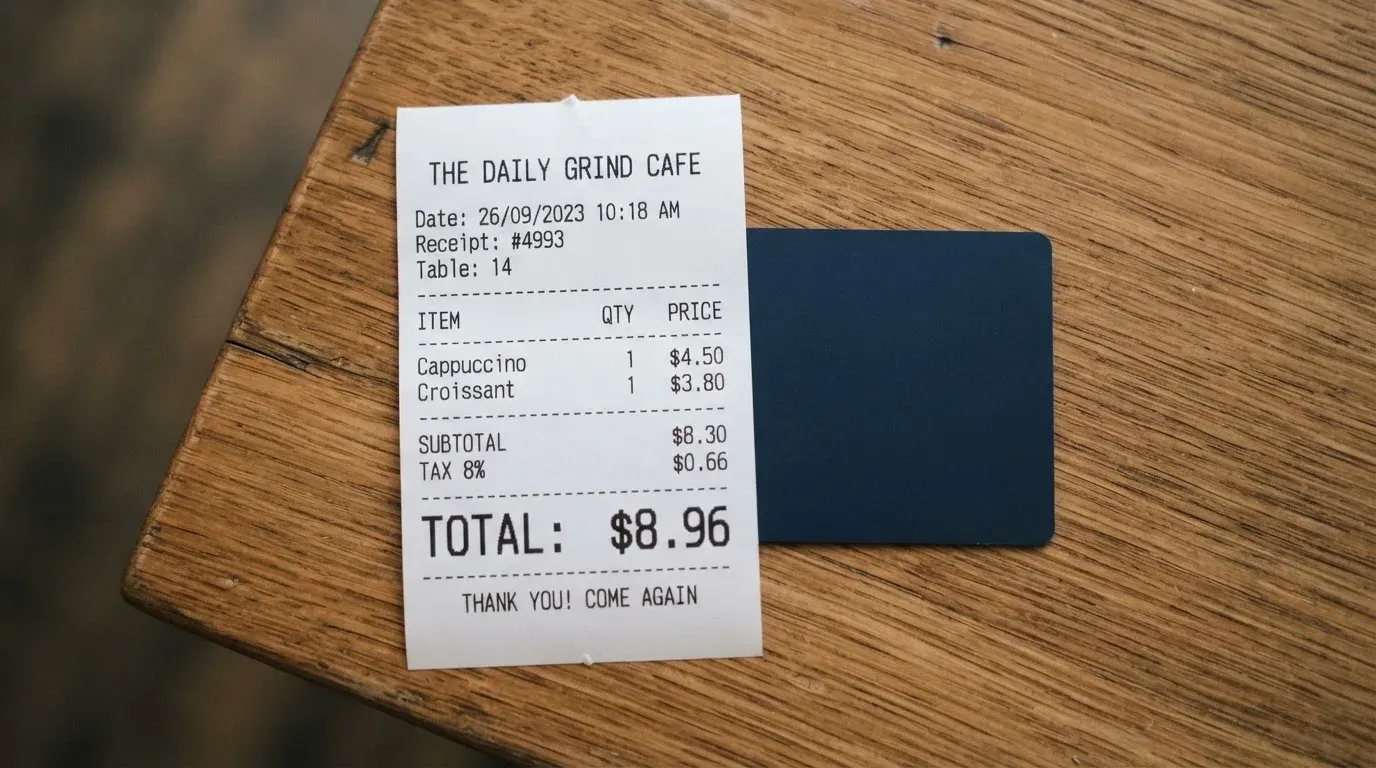
So what does a payment actually cost you? Almost nothing is nailed down, and the only figures I can find come from a single Trustpilot reviewer in May 2026, which means they are unofficial and not confirmed by Jam:
- Stablecoin top-ups cost roughly 4.2% plus network gas.
- Apple Pay carries a 0.2% fee.
Treat those as a warning, not a price list. On top of that, as with any card, the underlying network itself charges gas for your deposit — that fee comes from the blockchain, not from the card provider, and no card can shield you from it.
Limits are the one cost-adjacent thing that is public, and it is generous-sounding: the page is titled “Spend Up to $250,000 Daily Worldwide.” No per-tier limits are given. A high headline number with no detail behind it is not the same as a high everyday limit.
Here is what the cost section looks like with the blanks left honest:
| Fee or limit | What Jam publishes |
|---|---|
| Issuance fee | not stated |
| Monthly fee | not stated |
| Conversion fee | not stated (unofficial: top-up around 4.2% plus gas) |
| Foreign-exchange fee | not stated |
| ATM fee | not stated (ATM availability not disclosed) |
| Daily limit | “Up to $250,000 Daily Worldwide”; no per-level detail |
| Monthly limit | not stated |
| Apple Pay fee | not stated (unofficial: 0.2%) |
Let me walk three everyday payments through what a published card would tell you, so you can feel the gaps:
- A $30 grocery shop. On a normal card this is a $30 authorisation. On Jam, the same purchase depends on whether it draws directly on a stablecoin balance, on a USD balance after conversion, and which conversion fee applies — none of which is published. The per-transaction 3-D Secure check and any decline fee are also unstated.
- A €40 purchase while your balance is in dollars. This is a foreign-exchange transaction. Whether a spread or FX fee applies, and at what rate, is not stated anywhere. This is often where hidden costs live.
- A cash withdrawal at an ATM. Whether Jam supports ATM withdrawals at all, and what it charges, is not stated. A card that hides this is not a card you can plan around.
None of these three scenarios is unusual, and all three hit exactly the details Jam does not publish. That is the finding: not that the fees are high, but that you cannot know them in advance.
How to Top up the card
The stated top-up route is USDT stablecoins, and the site says “No TRX required.” That phrase comes from the GasFree mechanism, which removes the need to hold TRX to pay gas on TRC20 top-ups — a real convenience if you have ever been stuck with a USDT balance you could not move because the chain token was missing. It is the most concrete operational detail the card publishes.
What is not published: the full list of coins and networks. A reviewer in May 2026 reported that only USDT and BSC-USD are supported, but that is unofficial and not confirmed by Jam. The top-up mechanics themselves, and withdrawal from the balance, are not stated.
One general point belongs here because it decides whether your money arrives at all. Blockchain transfers are irreversible. If you send a deposit on a network Jam does not support, or to an address belonging to a different network, the funds can be lost, or need manual support recovery with no guarantee. Check the supported network list inside the app against the network your exchange or wallet will send from — and remember that Circle stopped supporting USDC on Tron in February 2024, so “USDC over TRC20” is not the native route people assume it is.
Paying with it every day
For daily spending, the card’s public picture is: Apple Pay and Google Pay are both supported (“Pay instantly with Apple Pay or Google Pay”), and that is the core of the offer. Blocked merchant categories are not stated — no information on gambling, adult, or other restricted categories.
Apps: on iOS it is listed as “Crypto Wallet & Web3 Jam App”, requires iOS 17.6 or later, and showed no rating (not enough ratings) when I checked on 2026-10-21. The Android app is io.jamcard.app, with no rating retrievable. The app supports Russian among its listed help-centre languages.
Rewards are thin. Cashback is not mentioned; the only benefit with a number attached is the $5-per-friend referral. In a category where cashback is common, this is another place Jam offers nothing concrete.
Disputes are the quiet risk in daily use. The topic is not addressed on the card’s pages, and the terms point you elsewhere: blockchain transactions cannot be reversed, and disputes with third-party providers fall under those providers’ terms rather than the card’s. If a purchase goes wrong, you are pointed away from the card issuer and toward whoever else is in the chain — and the issuer is not even named. There is also no answer on the site about chargeback handling, which is the mechanism that normally protects a cardholder from a merchant who takes the money and does not deliver.
What can go wrong
Company first. Jam is JAM Platform LLC, registered in Delaware, USA (8 The Green, Suite A, Dover, DE 19901). Card issuance is handled by unnamed third-party providers whose names surface only inside the app interface, and no licences are named for Jam or its partners. Unofficial reports say GetApp lists the operator as UAB Jam, registered in Lithuania — treat that as unofficial and not confirmed by the card. The Delaware entity and a Lithuanian operator are not contradictory — one can be the group’s US face, the other its regulated front — but you are not told which entity holds your money and which just markets the app, and that is the question to press them on.
On the security side, the fundamentals are the card’s strongest point. The terms say the services are “strictly non-custodial” and that Jamcard never holds funds, keys, or seed phrases. The app store listing includes a live AML address check. So the counterparty risk of handing over your keys — the kind of risk that has emptied exchanges in past failures — is genuinely reduced here.
But non-custody moves the risk, it does not remove it. With your own wallet, you carry sole responsibility for key loss, phishing, and clipboard-hijacking malware that swaps a copied address. Crypto transfers have no built-in recovery: the network cannot freeze or return a stolen or misdirected payment. That is a real trade-off, not a free win.
Support is broad but thin. The help centre is help.jamcard.io, in Arabic, English, Portuguese, Russian, Spanish, Turkish, and Ukrainian; there is a Telegram channel at t.me/jamcards and presence on Instagram, X, TikTok, and LinkedIn. Hours are not stated, and app release notes in the “What’s New in the Jam” help section were not available to me to read.
Complaints so far are few and mild. No official incidents found. On Trustpilot the card sits at 4.1 out of 5, read 2026-10-21, with all five-star reviews except one critical remark from May 2026 touching costs, limits, and no physical card; a web search turned up no Reddit threads. That is a short history, not a clean bill of health — a new card with few users will always look quiet. The pattern to watch is the one that ends quiet: when a programme winds down, loading and spending stop, and you are asked to withdraw what remains. One 2026 closure reported by a secondary source ended new loads on 8 July 2026 and spending on 8 August 2026, though that is a single unconfirmed source and not about Jam.
What to take instead
If Jam’s idea appeals to you, the same idea is available from three cards that publish more of what matters. I am not endorsing any of them — I am showing you what disclosed looks like.
TokenPocket (score 5.8 / 10). A Visa debit for a list of European countries and territories (Germany, France, Spain, Switzerland among them), and Mastercard debit for Australia, Canada, Hong Kong, Japan, Taiwan, New Zealand, Singapore, South Korea, the UK and others; the Americas were planned for Q2 2025. It runs on Arbitrum, and the cards are virtual with balances in EUR24 and USD24. On cost: an NFT creation fee partly covered by TokenPocket, the user pays a small unstated portion, and apart from that “TP Card does not charge any additional fees” — but a 1% fee applies when depositing cryptocurrency, to be refunded later via rewards, and extra fees can come from inter-institution settlement. No cashback is stated.
MetaMask (score 7.1 / 10). The most transparent of the three on both cost and eligibility, though the strictest on who can join. Sign-up is open in 45 listed countries and territories (Andorra, Argentina, Brazil, Canada, Mexico, Germany, France, Spain, Uruguay among them); other regions join a waitlist, and US and UK sign-ups are temporarily closed per the FAQ. Proof of residency is required, and ineligible regions limit sign-ups, not spending. The card is Mastercard, virtual first, instant, with a metal version pre-orderable after approval, one per user, issued by Monovate with Crypto Life as card provider. Virtual is free with no annual or maintenance fee; metal is $199/year. Fees are “minimal” per transaction with no extra MetaMask fees and no foreign transaction fee — the Mastercard rate applies. Rewards are the best here: cashback in mUSD, 1% on virtual, and on metal a headline 3% that the footnote limits to the first $10,000 spent before it drops to 1%, plus a $FLY bonus via Blackbird.
KAST (score 6.1 / 10). Broadest on paper and most complex on price. Virtual and physical, up to 10 cards per user, across Visa Platinum Standard, Visa Infinite metal Premium, and Visa Infinite gold plated Private, with other designs in Pengu, Solana, and Bitcoin; balance in USD, with stablecoin deposits converted 1:1 at 0% spread. Membership is the catch: Standard 0 USD, Premium 1,000 USD/year, Private 10,000 USD/year, billed annually upfront. The Standard physical card has a 0 USD card fee plus 40 USD delivery; there is a 1 USD/month inactivity fee after 12 months, and renewal and reactivation fees exist though amounts are not stated. Transaction fees are encouragingly low — stablecoin top-up 0%, USD spend 0%, Apple/Google Pay 0% — but the FX fee on non-USD transactions runs 0.5%–1.75% depending on your country, the transaction country, and the card programme; there is a 0.10 USD fee on non-USD transactions under 25 USD and 0.50 USD for a declined transaction. Cashback is USD: 1.5% on the first 2,000 USD/month (Standard), 2% on the first 10,000 (Premium), 3% on the first 40,000 (Private). On eligibility, KAST shows a residence-based list at KYC but does not publish the country list; citizenship and ID matter too, and a VPN does not bypass it.
If your complaint about Jam is the missing fee table, KAST and TokenPocket publish more. If your complaint is who can sign up, MetaMask at least tells you where. None of the three tells you everything Jam does not — but each tells you more.
Who I would recommend it to
I would recommend the Jam card to exactly one kind of reader: someone who already holds stablecoins in a self-custody wallet, who is comfortable choosing a network and paying its gas, and who wants a spending card inside a non-custodial app more than they want published fees and a named issuer. For that reader, the no-custody design is the right instinct, and the “No TRX required” top-up is a nice touch.
To everyone else, I would say: not yet. The gap is not one missing detail. It is that eligibility, cost, issuer, and licences — the four things you need before committing money — are all unpublished at once. A card can be new and still publish these; three of the alternatives do. Until Jam publishes a fee table, a country list, and the issuing entity, you are not choosing a payment product so much as betting on one.
Before you decide anything, check three things in this order: what the app actually shows you about supported networks at the moment you open it, what its own fee disclosure says once you are inside the account, and who the issuing provider shown in the interface actually is. Those answers cost you nothing and settle most of what this page could not.
Frequently asked questions
What is the Jam card?
Jam is a crypto payment card that spends from a self-custody wallet inside a non-custodial app. It is run by JAM Platform LLC, registered in Delaware, USA. The card converts into a USD balance to start, supports Apple Pay and Google Pay, and at launch runs as a single card type with more promised. The card’s issuer is a third party whose name appears only inside the app, and no licences are named publicly.
Is Jam a bank?
No — and the distinction matters for your protection. A card payment involves the card network, a licensed issuer that holds the card programme, and often a crypto brand that is only the front end. Visa and Mastercard do not issue crypto cards to consumers themselves; they license issuers. Jam is closer to the front-end role, so your contract in practice is with an unnamed issuing provider, not with a bank you can name.
How does the Jam card work?
You hold crypto in your own wallet, the app converts or draws from it, and the card spends a fiat balance. Because it behaves like a prepaid card rather than a debit card linked to a bank account, it cannot overdraw. The card is non-custodial — Jam never holds your keys or seed phrase — but blockchain transfers are irreversible, so a wrong network or address is on you.
Who owns Jam?
The named company is JAM Platform LLC, registered in Delaware (8 The Green, Suite A, Dover, DE 19901). Unofficial listings, such as GetApp, describe the operator as UAB Jam, registered in Lithuania — not confirmed by the card. Card issuance sits with third-party providers shown in the interface, and no licences are named for anyone in the chain.
Which countries can use the Jam card?
Jam publishes no country list. The only geographic claim is that the in-app on/off ramp works in over 200 countries, which is about the ramp, not the card. Terms forbid the card in Russia, Belarus, Iran, North Korea, Syria, Cuba, and Ukraine, bar sanctioned persons, prohibit US persons and US IP access, and reserve the right to restrict by IP or jurisdiction. Whether the rule follows citizenship or residence is not stated.
How much does the Jam card cost?
Jam does not publish a fees page, so issuance, monthly, conversion, foreign-exchange, and ATM fees are all not stated. Unofficial figures from one May 2026 Trustpilot reviewer put stablecoin top-ups at about 4.2% plus gas, and Apple Pay at 0.2%. The only public number is a $5 referral reward per friend. Plan for network gas on top of anything the card charges.
How do I top up the Jam card?
The stated route is USDT stablecoins, with “No TRX required” for TRC20 top-ups through GasFree. The full list of supported coins and networks is not stated on the site; a reviewer reported USDT and BSC-USD only, unconfirmed. Make sure the network you send from matches the one the app shows you, because blockchain transfers cannot be reversed and a wrong-network deposit can be lost.
Is the Jam card safe to use?
The strong point is non-custody: Jam never holds your funds, keys, or seed phrases, which removes the exchange-hack risk that has hit custodial platforms. The trade-off is that key loss, phishing, and clipboard malware become your problem, with no recovery on the blockchain. With no named issuer, no licences, and no published dispute process, I would treat it as untested rather than safe.
Can I use the Jam card in Apple Pay or Google Pay?
Yes, both are supported — the site says “Pay instantly with Apple Pay or Google Pay.” One unofficial figure attaches a 0.2% Apple Pay fee, which Jam does not confirm. Adding the card to a phone wallet is generally safer than handling plastic, since the device stores a tokenised number rather than your card number.
Is the Jam card worth it?
Worth it if you already keep stablecoins in self-custody and want to spend from that wallet in a non-custodial app. Not worth it if you need published fees, a clear list of eligible countries, or a physical card. As of now there is no physical card according to a reviewer, so treat Jam as a virtual, early-stage product and check the app for what it actually supports today.
Wallet card reviews – cryptocardcheck
Content created by the «cryptocardcheck» team