
A crypto-funded Visa or Mastercard for users in 180+ countries, weighed against its real costs
 Available in US

Kardpay is a prepaid-style payment card whose balance is fed by stablecoins rather than by a bank account. The company behind it is registered in the United Arab Emirates, the cards are issued under a Visa or Mastercard licence, and the service is open to residents of more than 180 countries. That wide reach is its main selling point, and it is also the reason a closer look is worth your time: the reach is paired with subscription fees, top-up fees and a few important details the public pages do not spell out.
I went through Kardpay’s site, terms and pricing, and what users have said about it (very little, as it happens), and I have set the pros and cons next to each other in the sections below. I am not a customer, I have not signed up, and this is not a tutorial. The aim is to give you a clear, sober picture so you can decide whether Kardpay fits your situation, or whether one of the alternatives at the end of the page is a better match.
The conditions described here are current as of October 28, 2026.
Verdict
I would score the Kardpay card 6.8 out of 10. That is a fair middle-ground mark, and the breakdown below shows where the points are earned and where they are lost.

| Criterion | Mark | Why it lands there |
|---|---|---|
| Who can get it | 9 / 10 | Open to residents of 180+ countries, with the usual sanctions exclusions. Few crypto cards cover that many jurisdictions. |
| Cost | 3 / 10 | Monthly subscriptions, top-up fees on every load, a virtual card issuance fee, and an FX/conversion policy that the public pages do not explain. |
| Top-up options | 8 / 10 | USDT and USDC on Tron (TRC-20) and Ethereum (ERC-20), credited in under ten minutes. The catch is that those are the only two coins supported. |
| Reliability and complaints | 6 / 10 | The operating company is a UAE free-zone LLC with no public registration number, the card issuer is only described as a “network-licensed issuer,” and there is no Trustpilot presence. |
| Everyday use | 9 / 10 | Virtual card is instant, a physical card is available, and Apple Pay and Google Pay work on every plan. |
| Total | 6.8 / 10 | A genuinely wide reach softened by a fee structure that adds up quickly, and by gaps in the public disclosure. |
Kardpay suits you if you fund a card with USDT or USDC on Tron, you live in a country where ordinary bank cards are hard to get, and you do not pay often enough for the top-up percentage to sting. It does not suit you if you want a clear, single-fee structure, if you want to fund with anything other than those two stablecoins, or if you need a card issuer whose name and licence you can read on the public website.
Who Kardpay will give the card to
Kardpay says the card is available in 180+ countries. That is a wide net. The company’s public pages do not publish a list of supported countries, and they do not spell out which territories are excluded, but the fine print points to the usual carve-outs: places under sanctions or embargo that are recognised in the Dubai International Financial Centre, where Kardpay’s governing law sits. In practice, the big exclusions are the standard ones you see on any card programme tied to a UAE or EU compliance team, including North Korea, Iran, Syria, Cuba and the Crimea, Donetsk and Luhansk regions, plus any country or person on the OFAC, EU or UK sanctions lists.
The site does not say which documents you will be asked for. The terms refer to “standard cardholder verification” and to AML records being kept for five years, but the page you actually sign up through does not walk you through the steps. There is no public KYC flow, no document checklist and no indication of how long verification takes.
The age rule is not stated on the public pages. For prepaid and debit cards in most jurisdictions that means 18+, but Kardpay does not make that explicit.
A few things matter here:
- Residency, not citizenship, is the usual gate. Card programmes typically screen the country you live in, the country of your ID document, and your nationality. A resident of a country where the card is available can run into a different result from a resident of a country under sanctions, even on the same site.
- The 180+ figure is unusually broad. Few non-bank crypto cards openly accept this many countries. Most either limit themselves to the EU/EEA, the UK and a handful of friendly jurisdictions, or they restrict themselves to one or two regions. If you are somewhere that other cards reject, Kardpay is at least worth trying.
- “Available” is not the same as “works everywhere.” Even if your country is on the list, the card can still be declined at a foreign merchant, because the card is issued under a UAE programme and the merchant’s bank may flag the BIN.
How to get it
Kardpay’s sign-up flow has three things in its favour, and one important gap.
What is good:
- A virtual card is instant. As soon as the system accepts you, you have a card number you can use online or in a mobile wallet. There is no waiting for a plastic card to test the service.
- Four plans, mapped to four card styles. Core is a green card, Pro is a white card, Elite is a black card, and Physical Elite is a physical black Mastercard. Core, Pro and Elite exist in both virtual and physical versions; Physical Elite is the premium physical card.
- Apple Pay and Google Pay on every plan. You do not need to be on the most expensive tier to use the card in a mobile wallet.
What is not stated:
- The KYC process. There is no published list of documents, no indication of what “standard cardholder verification” means in practice, and no SLA on how long it takes.
- Delivery times for the physical card.
- KYC tiers and the limits they unlock. The terms mention tiered limits that depend on staking $KDY, but the public pages do not spell out what each KYC level does to your daily or monthly caps.
- The card’s base currency. The site does not state whether the card is denominated in USD, EUR or something else, and that matters once you start spending abroad.
The terms say virtual cards are valid for 1 year, while one of the features sections says the physical card lasts 5 years. The two are not necessarily contradictory (a virtual card is a software object, a physical card is a piece of plastic), but it is the kind of detail the public pages do not reconcile.
What the Kardpay card really costs
This is the section where the 6.8 score loses most of its points. The headline reach of “180+ countries” is real, but the cost structure underneath it adds up faster than the marketing pages suggest.
| Fee or limit | Amount | Where it comes from |
|---|---|---|
| Core monthly subscription | $2.42 / month (billed annually) | Pricing page |
| Pro monthly subscription | $8.25 / month (billed annually) | Pricing page |
| Elite monthly subscription | $16.58 / month (billed annually) | Pricing page |
| Physical Elite monthly subscription | $24.92 / month (billed annually) | Pricing page |
| Virtual card issuance | 28 (currency not stated) | Terms, “one-time fee” |
| Top-up fee (Core) | 5% | Pricing page |
| Top-up fee (Pro) | 4% | Pricing page |
| Top-up fee (Elite) | 3% | Pricing page |
| Top-up fee (Physical Elite) | 4% | Pricing page (terms list 5% / 4% / 3%; Appendix 1 says 4%) |
| Authorization attempt | USD 0.50 (Art. 8) vs USD 0.25 (Appendix 1) | Terms |
| ATM withdrawal (Physical Elite) | Up to $1,500 / day | Features section (fee not stated) |
| Spending limit (Core) | $10,000 / year | Features section |
| Spending limit (Pro) | $50,000 / year | Features section |
| Spending limit (Elite) | $500,000 / month | Features section |
| Spending limit (Physical Elite) | $150,000 / month | Features section (one line says physical “up to $1M / month”) |
| Chargeback fee | USD 30, flat | Terms |
| Liability cap | 3 months’ fees | Terms |
Three everyday situations, worked through:
- A $50 grocery shop, paid by tapping Apple Pay. The card is already loaded with stablecoin balance, so there is no top-up fee on this transaction. The pricing pages do not state a separate conversion or FX fee, but the terms reserve a per-authorisation charge of $0.25 to $0.50, so the visible cost is essentially nothing on this single purchase. Where you do pay is on the way in: if you had to load $50, a Core top-up would have taken $2.50 off the top before the rest reached the card.
- A €40 dinner in a country that does not use dollars. The pricing page does not publish an FX or conversion percentage, so I cannot quote a number for you. What the public pages do say is that there is some form of conversion cost; they do not say what it is. This is the single most opaque line item on the card.
- A $200 ATM withdrawal on the Physical Elite plan. Daily ATM cap is $1,500, so the amount is well inside the limit. The ATM fee itself is not stated in the public pages. On top of that, the same 4% top-up fee that applies to Physical Elite was paid when those funds were loaded. So a $200 cash withdrawal can quietly cost you $8 in top-up fees on the way in, plus whatever the ATM operator charges, plus an unknown ATM fee from Kardpay.
Two cross-checks worth knowing about:
- The terms list the top-up fee as “5%, 4% or 3%” and Appendix 1 of the same document says “4%”. The pricing page gives per-tier numbers that match neither exactly. Treat the per-tier numbers on the pricing page as the live ones, and know that the supporting document is internally inconsistent.
- The same kind of mismatch appears on authorisations: the main terms say $0.50, the appendix says $0.25. It is a small number, but small numbers repeated are how card programmes make money.
The stake-tier table is the one sweetener. By locking $KDY for 180 days you can climb through three tiers that raise per-transaction and monthly limits and reduce the cost of the physical card:
- Tier 1 — 1% cashback on a $3,000 stake.
- Tier 2 — 1.5% cashback on a $6,000 stake.
- Tier 3 — 2% cashback on an $18,000 stake.
The per-transaction caps at those tiers are $5,000 / $50,000 (Tier 1), $10,000 / $100,000 (Tier 2) and $50,000 / $1,000,000 (Tier 3), and the physical card moves from “50% off” at the lower tiers to “free” at the top.
If you do stake enough to be in Tier 2 or Tier 3, the 1.5% to 2% cashback does start to claw back the top-up fee. The break-even is roughly: a top-up fee of 3% to 4% on the way in, minus a 1.5% to 2% cashback on the way out, leaves a net cost on the funded amount. Still not free, but not ruinous either, and that is before you count the monthly subscription.
Top up
Kardpay keeps the funding model narrow, and the narrowness cuts both ways.
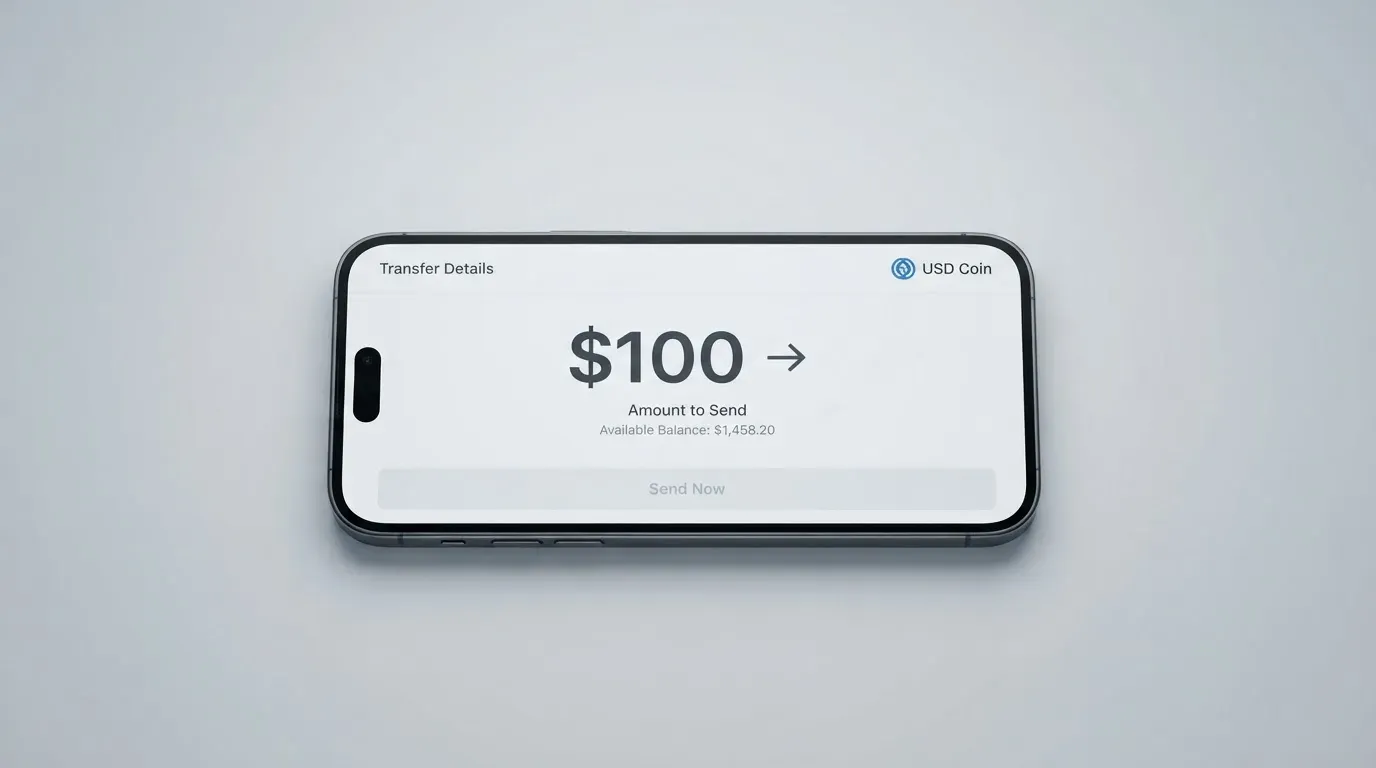
What you can send in:
- USDT and USDC only. No BTC, no ETH, no other stablecoins. If your working currency is Dai, FRAX, PYUSD or anything else, you have to swap to USDT or USDC first, and that swap is a separate transaction with its own fees and tax event.
- Two networks: TRC-20 (Tron) and ERC-20 (Ethereum). Tron transfers are typically the cheaper of the two; ERC-20 transfers cost more in gas but settle on the deepest liquidity chain. Kardpay credits the card in under 10 minutes once the transfer is confirmed.
What you should check before your first top-up:
- Send on the right network. A stablecoin transfer is irreversible. If you send USDC on a network Kardpay does not list, or to an address that is on the wrong chain, the funds can be lost or, at best, recovered through a manual support process with no guarantee. This is the single most common way users lose money on any crypto card.
- Mind the ERC-20 gas rule. ERC-20 is an Ethereum token standard, and gas on Ethereum is paid only in ETH. If your wallet has USDT and no ETH, you cannot move the USDT. Keep a small ETH balance for gas.
- TRC-20 is not free either. Tron’s network uses bandwidth and energy as its internal resource, and fees are usually paid by burning TRX. The same rule applies: keep a small TRX balance to send USDT.
- USDC on Tron is not a native option. Circle stopped supporting USDC on Tron in February 2024, so “USDC over TRC-20” is not something the issuer can offer. Treat any “USDC TRC-20” deposit address as suspicious.
- Minimum top-up, network-fee payer and who pays the gas are not stated. The pricing page does not say.
How the top-up fee works in practice. The top-up fee is taken on the way in, on top of the on-chain network fee. On the cheapest plan (Core, 5%) a $1,000 top-up leaves $950 on the card before you have bought anything. On Elite (3%) the same top-up leaves $970. That is a real, visible, per-load cost, and the only ways to soften it are to climb the stake tiers, to load larger amounts less often, or to move to a plan with a lower percentage.
What happens at the end. The terms do not describe a withdrawal procedure. They do describe what happens at closure: the net balance may be deferred until checks are complete, fees are deducted first, and no interest is paid on the balance while it sits there.
Paying with the card every day
The day-to-day picture is the strongest part of the Kardpay package.
Mobile wallets work on every plan. Apple Pay and Google Pay are both supported, on Core, Pro, Elite and Physical Elite. Tokenisation replaces the card number with a device-specific account number held in the Secure Element of your phone, and each payment uses a one-time dynamic code, which is the standard contactless security model.
Virtual cards are instant. As soon as you are approved, you can use the card number in a mobile wallet or for an online purchase. That is the right shape for a card that bills itself as a backup or a remittance tool.
ATM access exists, but is narrow. The physical card’s daily ATM cap is $1,500. The terms do not publish the ATM fee, and they do not say whether the operator’s surcharge is passed through, so a real cash withdrawal is one of the harder costs to estimate in advance.
Blocked categories are not stated. Many crypto cards block gambling (MCC 7995), adult content, certain crypto purchases, and a few other merchant categories by policy rather than by law. Kardpay’s public pages do not publish a list. If a category matters to you, the only way to find out is to ask support or to test with a small amount.
Disputes and chargebacks. The terms set a tight window: claims are barred unless brought within one month of the initial complaint. The chargeback fee is a flat USD 30, fees are non-refundable, and the company’s liability is capped at 3 months’ fees. Compared with bank-issued cards, that dispute window is short, the fee is high, and the liability cap is unusual. Hold on to your receipts.
The app is web-only. Kardpay runs as a web app at app.kardpay.app. There is no App Store or Google Play listing on the company’s own site, so you should treat any app-store listing as unverified unless you reach it from a Kardpay-controlled page. A web app means you are entering your credentials in a browser; make sure you are on the real domain, with two-factor authentication turned on.
Cashback exists, but only at the staking tiers. The 1%, 1.5% and 2% cashback rates from §costs above are the only published reward mechanism, and they require a 180-day $KDY lock-up.
What can go wrong
A crypto card combines three failure surfaces: the company behind it, the issuer of the card, and the blockchain you fund it from. Kardpay has real exposure on all three.
The operating company. Kardpay is run by KRDPAY FZE LLC, a free-zone limited-liability company in Ajman, UAE (Amber Gem Tower). The public materials do not include a registration number. That is unusual for a financial-services company, and it makes it harder to verify the entity through the Ajman Free Zones Authority or any equivalent register. The card issuer is described only as a “network-licensed issuer” — that is, the company that actually holds the Visa or Mastercard programme licence. The name of that issuer is not on Kardpay’s public pages.
Governing law and forum. The terms put the relationship under DIFC law and DIFC Courts (the Dubai International Financial Centre). For a customer in, say, Brazil or the Philippines, that is a real practical issue: a dispute would be heard in Dubai, in English, under a legal system you may not be familiar with, and the cost of bringing a claim may be larger than the amount in dispute.
Security. The card contract mentions that funds can be frozen. Custody of the underlying crypto is not described on the public pages, so it is not clear whether your stablecoins are held in a pooled custodial wallet, a segregated one, or in a self-custody arrangement. The smart contract has been audited by CTDSEC, which is a positive sign, but a smart-contract audit is not the same as a financial audit of the company.
Support. Kardpay claims “24/7 support” and lists channels: a Telegram group at t.me/appkardpay, plus X, Instagram and LinkedIn. The languages supported are not stated. There is no published phone number, no help-desk email and no SLA on response time. The fact that Telegram is the primary channel is a flag worth weighing: it is fast, but it is not a formal complaints route.
Complaints and incidents. As of the date of writing, I could not find a Trustpilot page for Kardpay, and I could not find any user reports of a serious incident. That can mean two things, and both are worth taking seriously. It can mean the card has not been around long enough, or has not been used widely enough, to attract complaints. It can also mean that users who did have problems went straight to the company’s support rather than to a public forum. The absence of evidence is not the evidence of absence.
Stablecoin and network risk. USDT and USDC are the two largest stablecoins, but they have both lost their peg in the past (USDC in March 2023, during the US banking crisis). Both issuers can freeze funds tied to sanctioned addresses. The Tron and Ethereum networks themselves have not had a major chain failure in years, but a smart-contract bug or a bridge exploit can still lock funds.
Programme risk. The single biggest tail risk for any card programme is the issuer losing its network licence. Visa wound down its FTX programme in November 2022 and shut down WaveCrest’s European Visa programmes in 2018; in both cases, customers had a notice period to spend down their balances and then the cards stopped working. Kardpay’s issuer is anonymous, so there is no public signal to read here.
The dispute window is short. Claims are time-barred at one month. If you do not log a problem quickly, you lose the right to dispute it.
What to take instead
Kardpay is one of the wider-reaching crypto cards, but it is not the only one, and the alternatives below sit in roughly the same niche with different trade-offs. I have included the ones I could verify against their own public pages, with the caveat that third-party sites are unofficial and I have not confirmed them with the card issuers.
Cardex (5.6 / 10, unofficial)
- Reach: “One crypto card, 200+ countries,” according to the company. No country list or exclusions published. The App Store listing is positioned around Nigeria, which is a hint about the primary market, not a hard limit.
- Networks: Debit card on VERVE, VISA, Mastercard and UnionPay, in both virtual and physical form. The App Store listing pegs the card currency as the Nigerian Naira.
- Funding: USDT, USDC and BTC wallets. Networks are not stated.
- Conversion: “Real-time crypto-to-fiat conversion at the moment of payment,” with what the company calls an “AI-Powered Conversion Rate” that scans global exchanges and picks the best rate when you spend. The fee percentage itself is not stated.
- Who it suits: Users in Nigeria and West Africa who want a card denominated in Naira and a network choice that includes VERVE and UnionPay, both of which are common in the region.
CardFlow (4.9 / 10, unofficial)
- Reach: Aimed at Nigeria (“Nigeria’s smartest fintech card platform”) and at “Nigerians and global users.” No country list or exclusions stated.
- Networks: A virtual USD Mastercard that the company says is created quickly.
- Funding: Bitcoin, USDT, ETH, or a Naira bank transfer. Networks are not stated.
- Cost: “Creating a virtual card is completely free,” per the site FAQ. The monthly fee is not stated. The conversion or FX fee is not stated.
- Who it suits: Users who want a quick virtual USD Mastercard and can fund it in BTC, USDT or ETH, with a Naira on-ramp for local users.
HyperCard (4.7 / 10, unofficial)
- Reach: The official pages do not publish a country list. The App Store says the card is accepted in “more than 176 countries,” which is about acceptance, not eligibility.
- Networks: A prepaid “HyperCard” with the network not stated on the App Store page. The card balance is held in USD or EUR.
- Funding: Deposit USDT, BTC or ETH in the app. The funds are converted to USD or EUR on the card. Networks are not stated.
- Cost: Not stated. The App Store page lists no fees.
- Who it suits: Users who want a balance in USD or EUR rather than a Naira-denominated card, and who do not need a physical card.
The honest reading is that the alternatives above are smaller, less documented and have similar gaps in their public disclosures. If you are choosing between Kardpay and one of them, the deciding question is usually one of geography (which country you are in), of funding currency (USDT/USDC on Tron vs BTC/ETH on an unspecified network) and of how much you trust the team behind the card.
Who I would recommend the Kardpay card to
I would recommend Kardpay in a narrow set of situations. The first is the most important: you are in a country where ordinary bank cards are difficult to get, and you already hold USDT or USDC on Tron or Ethereum. In that case, the 180+ country reach is genuinely useful, the top-up is fast, and the lack of a bank account is not a blocker.
The second is that you do not load the card often. The top-up percentage is the largest single cost on this card, and the more often you top up, the more it eats into your balance. If you load in larger chunks and spend them down, the percentage is more tolerable. If you reload $100 a week, it adds up to several hundred dollars a year on its own.
The third is that you are comfortable with the mobile-wallet model. Apple Pay and Google Pay work on every tier, the virtual card is instant, and the physical card is a Mastercard or Visa, so the card works wherever those networks are accepted. If your day-to-day is contactless, the lack of clarity on blocked categories is less of a problem.
I would not recommend Kardpay if:
- You want a single, transparent fee schedule. The conversion fee, the FX fee and the ATM fee are not published.
- You fund with anything other than USDT or USDC on Tron or Ethereum. BTC, ETH-as-funding, and other stablecoins are not supported.
- You need a clearly named, publicly licensed issuer. The issuer is only described as a “network-licensed issuer.”
- You expect a long dispute window. One month from initial complaint is short.
- You live in the EU and want a card that is clearly under MiCA. Kardpay is a UAE free-zone company under DIFC law; it is not the same as a card issued by an EU electronic money institution.
If those last points matter to you, an EU-licensed card from a MiCA-registered crypto-asset service provider is a more comfortable fit, even if the country list is shorter.
Frequently asked questions
What is the Kardpay card?
Kardpay is a prepaid-style Visa or Mastercard whose balance is funded by USDT or USDC stablecoins on the Tron (TRC-20) or Ethereum (ERC-20) networks. The company behind it, KRDPAY FZE LLC, is based in Ajman, UAE, and the card is available in 180+ countries.
How does the Kardpay card work?
You create an account, complete the cardholder verification, get a virtual card instantly, and load it by sending USDT or USDC to a deposit address on Tron or Ethereum. The funds appear on the card in under ten minutes, and you spend that balance through Apple Pay, Google Pay, an online checkout or a physical card, depending on the plan.
Is Kardpay a bank?
No. Kardpay is a UAE free-zone company that runs a card programme under a Visa or Mastercard licence. The actual issuer of the card is described on Kardpay’s pages only as a “network-licensed issuer,” and the name of that issuer is not stated on the public site.
Who owns Kardpay?
Kardpay is operated by KRDPAY FZE LLC, registered in the Ajman Free Zone in the United Arab Emirates. The company’s public materials do not include a UAE free-zone registration number, and the ownership structure behind the LLC is not stated.
Is the Kardpay card available in my country?
Kardpay says the card is available in 180+ countries, with the usual exclusions for territories under sanctions or embargo that are recognised in the DIFC. The public site does not publish a country list or a document checklist, so the only way to know for sure is to start the sign-up and see what your address and ID document are accepted with.
How do I apply for a Kardpay card?
You create an account on the Kardpay site, complete the cardholder verification step (the documents and the timeline are not described publicly), and you receive a virtual card. Physical cards are issued on the Core, Pro and Elite plans, with a separate Physical Elite plan for the premium black Mastercard.
Does the Kardpay card require KYC?
Yes. The terms refer to “standard cardholder verification” and to AML records being kept for five years, but the public pages do not describe which documents are required, how long verification takes, or whether there are different KYC tiers with different limits. Treat the KYC step as standard identity and address verification unless Kardpay tells you otherwise.
How do I top up the Kardpay card?
You send USDT or USDC to a deposit address on the Tron (TRC-20) or Ethereum (ERC-20) network from a wallet you control. The card is credited in under ten minutes after the transfer confirms. The top-up fee is 5% on Core, 4% on Pro, 3% on Elite and 4% on Physical Elite.
How do I add the Kardpay card to Apple Wallet or Google Pay?
Once your virtual or physical card is active, you open Apple Wallet or Google Pay on your phone, choose to add a card, and either type in the card details or scan the card image. Apple Pay and Google Pay are supported on every Kardpay plan.
Is the Kardpay card safe?
The smart contract has been audited by CTDSEC, and Apple Pay and Google Pay use standard tokenisation. The trade-offs are the usual ones for a crypto card: the operating company is a UAE free-zone LLC with no public registration number, the card issuer is not named on the public site, the card contract allows the company to freeze funds, and the dispute window is one month from the initial complaint. Whether that is acceptable depends on your own appetite for those risks.
Virtual card reviews – cryptocardcheck
Content created by the «cryptocardcheck» team