
No monthly fee, real gaps in the small print
 Available in US
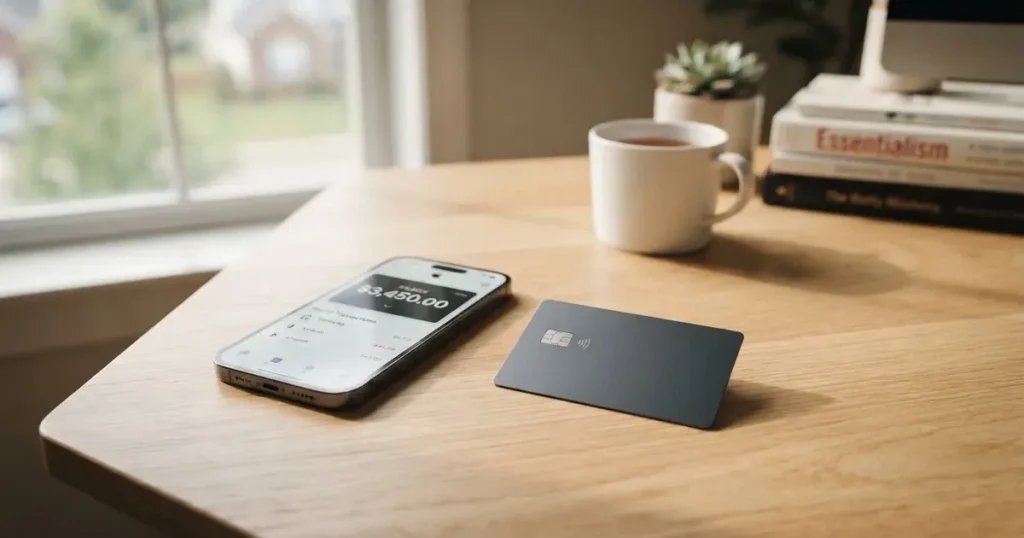
If you have looked at Kem because an ordinary bank card is not something you can easily get, or because you hold USDT and want to spend it without going through an exchange every time, the pitch sounds right on paper. There is no fee for the card, no monthly fee, no annual fee, and the card itself says it charges no foreign exchange fees. You deposit Tether into the app and spend from the balance. That is a genuinely simple product shape.
The problem is what you cannot check. The card’s public pages state very little about the numbers that decide whether a card is usable: no daily limit, no monthly limit, no ATM terms, no conversion percentage on the page, no list of supported blockchain networks, no named card issuer, no named licences. Where those gaps exist, third-party listings fill them with favourable figures — free ATM, unlimited spending, no fees at all — and none of that is confirmed by Kem itself. On top of that, Trustpilot shows 2.5 out of 5 across five reviews, all of them one-star, and user reports across stores and review aggregators describe withdrawals that fail, money that gets stuck, and support that does not answer.
My score for Kem is 5.8 out of 10. That is not a “stay away” and it is not an endorsement. It is a card with a clean cost structure and a weak evidential base, which is a bad combination precisely because the cost structure is the thing that makes it look attractive.
Conditions described here are current as of October 28, 2026.
Score card
| Criterion | Mark | Why |
|---|---|---|
| Who can get it | 6 / 10 | Visa accepted in 150+ countries, marketed to residents of Kuwait, Bahrain, UAE, Qatar; a restricted-country list of 13 entries comes from the starting data, not the blog page |
| Cost | 8 / 10 | No issuance fee, no monthly or annual fee, “No FX fees”; a 1% conversion figure appears in the starting data but is not confirmed on the page; unofficial listings say ATM and top-up are free |
| Top-up options | 4 / 10 | Deposit USDT from any wallet or exchange, swap gold or crypto to USDT in-app; no networks named |
| Reliability and complaints | 3 / 10 | Operator is KEM TECHNOLOGIES HOLDING (ADGM), issuer and licences not named; Trustpilot 2.5 of 5; reports of failed withdrawals, silent support, KYC taking up to 4 weeks |
| Everyday use | 7 / 10 | Virtual card immediately, physical on request, tap-to-pay; unofficial listings say Apple Pay works and Google Pay is not supported |
Total: 5.8 / 10
Who this suits: someone in a Gulf country who already holds USDT and wants to spend it without an exchange sitting in the middle, and who can afford to treat any balance left on the card as money that might be delayed. Who it does not suit: anyone who needs a card they can rely on for salary, rent, or a subscription that must not lapse; anyone in a country not on the marketed list who would be applying and hoping; and anyone who cannot hold a disputed transaction for weeks without anxiety.
The audience Kem is built for, plainly, is residents of Gulf countries spending USDT by card. That is a real gap in the market, and Kem is one of very few products aimed squarely at it. I want to be fair about that before I go through the details.
Will they give you the card?
Short answer: probably, if you are in a Gulf country and pass identity checks — and probably not, if you are somewhere else.
What the card states is that the card is usable wherever Visa is accepted, which it puts as “150+ countries”, and that it is marketed to residents of Kuwait, Bahrain, the UAE and Qatar. That is the positive side of the file: Visa acceptance is broad, so the spending reach is genuinely wide.
The negative side is the country list. A restricted-country list covering Belarus, China, Cuba, India, Iran, Iraq, Israel, Russia, Syria, Turkey, Ukraine, Venezuela and Vietnam exists in the starting data for this card, but the blog page itself does not state it. So I can tell you the list, and I have to tell you that the card’s own public page does not print it. That is a meaningful difference when you are deciding whether to spend an afternoon on an application. If your country is on that list, you have no confirmation from Kem that you can be accepted; you have third-party data saying you probably cannot.
Note also what kind of rule this is likely to be. Cards of this type usually apply country restrictions by residence or registration rather than by citizenship, and Kem’s marketing is explicitly to residents of four countries. If you are a citizen of one of those four countries living elsewhere, that does not obviously make you eligible. If you live in one of them, that does not obviously make your citizenship relevant. The card does not say which test it applies, so if neither your passport nor your address is a clean answer to “resident of Kuwait, Bahrain, UAE or Qatar”, the honest thing to do is ask the support page before you start, not after.
How to get it
The stated route is the app: sign up, then provide your identity documents for KYC verification. That is the whole official description. A virtual card is available immediately; a physical card is “available upon request”, with tap-to-pay on both.
What is not stated anywhere official is almost everything you would want to know at this step:
- Which documents are accepted, and in which versions or issue dates
- Whether proof of address is required, and in what form
- The minimum age
- The KYC tiers, if there is more than one level
- Where the physical card is delivered, how long it takes, what it costs, or how a lost or damaged card is replaced
Third-party listings fill some of that in: they say email, phone, ID, proof of address and a selfie are required, that setup takes under three minutes, and — in the same breath — that reviewers report delays of up to four weeks. I would not rely on the three minutes. Verification taking weeks is not unusual for a card that must check documents against records, and the person telling you the opposite is not the card.
The one practical thing worth doing: start the application early relative to when you need the card, and keep your documents in a single clean set so you can resend them quickly if the review bounces back. That is not advice about circumventing anything; it is just how to reduce the pain of a slow review.
Fees and what a payment really costs
The headline is good. Kem states “No issuance fees” and “no monthly or annual fees”, and the blog intro says “No FX fees”. A third-party listing goes further and lists monthly, issuance, ATM, FX, top-up and decline fees all as free, and says ATM withdrawals are unlimited with daily spend, monthly spend and ATM all unlimited. None of that is confirmed by the card, and Kem’s own pages note that public fee information is limited. Here is the honest table:
| Fee or limit | What is stated |
|---|---|
| Issuance | No issuance fee |
| Monthly fee | No monthly fee |
| Annual fee | No annual fee |
| Conversion | 1% on purchases in the starting data; not confirmed on the page |
| FX | “No FX fees” in the blog intro |
| ATM | Not stated; third-party listings say free |
| Decline fee | Not stated; third-party listings say free |
| Top-up fee | Not stated; third-party listings say free |
| Daily spend limit | Not stated; third-party listings say unlimited |
| Monthly spend limit | Not stated; third-party listings say unlimited |
| ATM limit | Not stated; third-party listings say unlimited |
That table is the whole problem in twelve rows. Four rows are solid because Kem says so. Seven rows are third-party guesses. If the free-everything version turns out to be true, this is the cheapest card in the category. If it is not, the row that hurts most is the conversion one, because it applies to every single purchase rather than once a month.
Three everyday payments, and what applies to each:
A coffee abroad for 12 KWD. This is the case the “No FX fees” line is about. If it is accurate, the whole amount comes out of your balance with no conversion spread added. The network itself may still see a foreign issuer country, which is a different problem — some shops apply extra scrutiny or decline prepaid and foreign-issued cards, and address verification services often do not work on cards issued outside the US, Canada and the UK.
A standard online purchase. Same fee logic, larger exposure, and now online authorisation rules apply. A failed authorisation can leave a hold on your funds for several days, typically up to seven. If a 1% conversion fee does exist, this is the payment where you would notice it.
Withdrawing cash from an ATM. Here the card says nothing at all. Third-party listings say the fee is free and withdrawals unlimited. You should assume neither until the card tells you, and until then treat ATM as the least predictable thing the card does.
On tiers: there is one card, named “Kem Infinity Card”. No tier structure is stated, so there is nothing to compare and no upgrade path described. On currency: the official page does not state the card currency, though the App Store lists swaps between crypto and gold, KWD, SAR and AED, and third-party listings say KWD, SAR and AED are supported.
Top up options
The stated method is narrow and simple: deposit Tether from any wallet or exchange into your Kem balance, and optionally swap gold or crypto into USDT inside the app before spending. The App Store listing describes swaps between crypto and gold, and between crypto and the local currencies above.
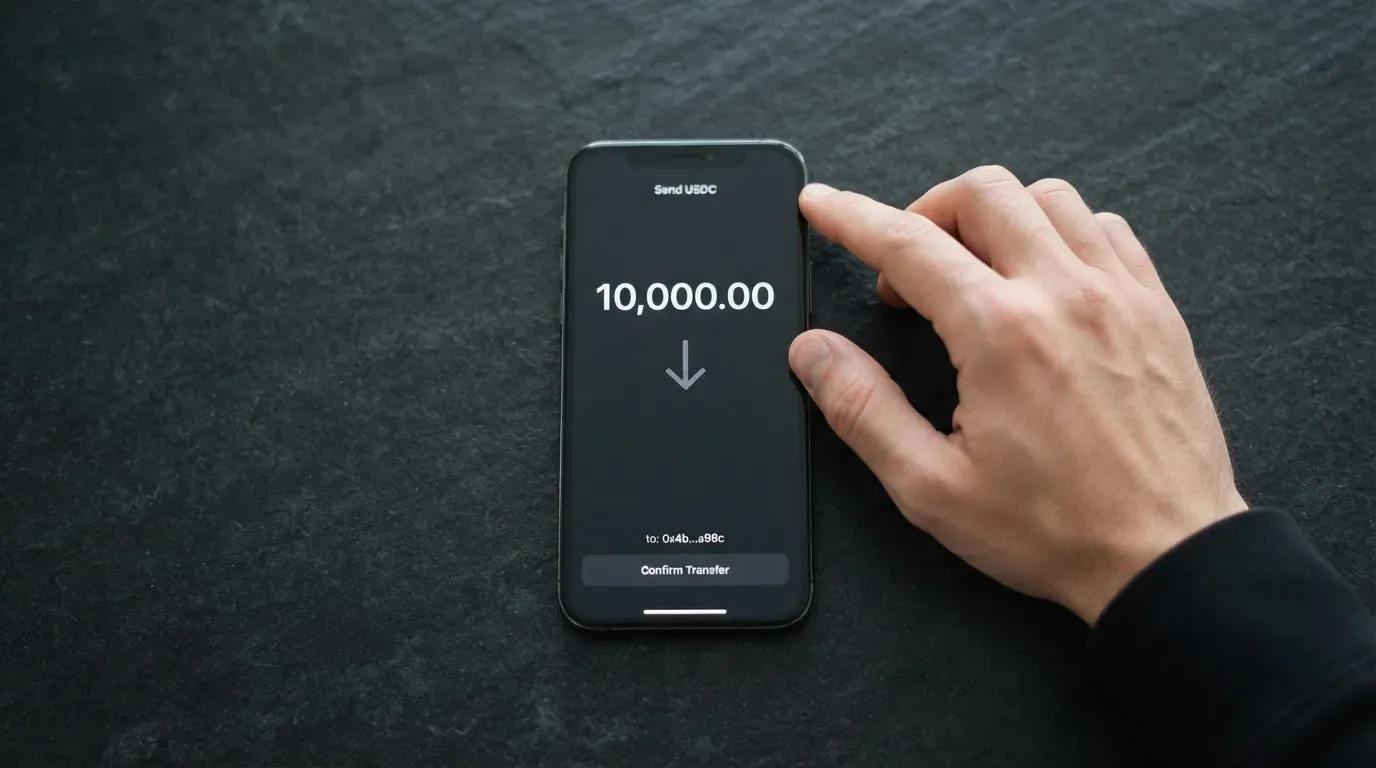
What is missing is the part that costs people money in this category: the networks. Kem does not say which blockchains are accepted for the USDT deposit. It does not say who pays the network fee. It does not state a minimum deposit or a top-up fee. A third-party FAQ quote mentions variable network and administrative fees for external withdrawals.
Why this matters more than it sounds: a stablecoin transfer is irreversible. If you send USDT on a network the provider does not support, or to an address belonging to a different network, the funds can be lost or need manual support recovery with no guarantee. On Ethereum, a wallet holding USDT but no ETH cannot send at all, because fees are paid only in ETH. On Tron, fees are paid through bandwidth and energy and often burn TRX. The App Store itself warns that transfers and withdrawals “may be subject to review or network delays”.
So the practical sequence is: find out the supported network before your first transfer, test with a small amount, and keep some of the network’s own token in the sending wallet. Not because anything is being worked around — because an irreversible transfer to the wrong rail has no customer service department that can undo it.
Paying with it every day
For everyday use this is a competent card. Visa acceptance, tap-to-pay, an instant virtual card and a physical one on request covers most of what you actually do at a shop or online.
The wallet story is thinner. Kem’s blog page says nothing about Apple Pay or Google Pay. A third-party listing says Apple Pay is supported and Google Pay is marked unsupported, with one user saying Google Wallet works for them. Treat mobile wallets as unconfirmed. Blocked merchant categories are also not stated, and that omission is worth dwelling on: in this category, gambling codes are commonly blocked on specific cards by the issuer’s own policy rather than by law, and the list varies from issuer to issuer. Nobody can tell you from the public pages which categories Kem declines.
Rewards are not stated by the official page. Third-party listings say no cashback and no welcome or referral bonus, and mention staking at 5.5% APR. I would not plan spending around any of that, and I would not count a headline APR as a reason to hold funds on the platform.
The app is on iOS and Android. The App Store listing showed 4.2 out of 5 from 31 ratings when I read it on 2026-10-21. That is a thin number of ratings, and a rating from a small sample tells you very little. The Google Play listing I did not read.
Dispute handling is not stated anywhere I could find. If a charge goes wrong, you have no published process to rely on — which is a real gap when you are spending from a balance that came from a volatile asset.
What can go wrong
The official record shows no named incidents. The unofficial record is not quiet.
Trustpilot showed 2.5 out of 5 across five reviews, all of them one-star, when I read it on 2026-10-21. Reports from Google Play and review aggregators in 2026 cover failed withdrawals and stuck funds, deductions on failed transactions, no support replies, KYC waits of up to four weeks, and cards still pending after verification. More specific user detail includes failed withdrawals in October to November 2025, unanswered support in the same window, scam allegations from October 2025 through April 2026, and a slow card application in December 2025.
Five reviews is not a statistically meaningful sample, and I do not want to pretend it is. But the pattern matters more than the count: the complaints are not about fees being higher than advertised, they are about money not arriving and nobody responding. That is the failure mode of a custodial balance held at a small provider.
The company structure deserves reading carefully. The operator is KEM TECHNOLOGIES HOLDING Ltd, Abu Dhabi Global Market, company number 000008598. The App Store seller is KEM Company for Electronic Payment and Settlement Services, and the developer is KEM LLC. Kem states plainly that “Kem is a crypto financial platform, not a bank”. The card issuer and its licences are not stated. A Czech entity, Kemfinity s.r.o., appears in the starting data and third-party sources only, not on Kem’s own pages.
There is a PCI DSS compliance badge assessed by ControlCase, which is a real point in the card’s favour and worth crediting. What is not stated: whether 2FA is available, whether the card can be frozen instantly, and how customer funds are safeguarded. Because the balance is custodial — the app holds it — those unanswered questions are the risk.
Support has a contact page on the Kem website. Languages and hours are not stated.
On the positive side, the blog says Tether has invested directly in Kem. That is a relationship worth knowing about. It does not name a dated event, and an investment by the issuer of your balance asset is a fact about alignment, not a guarantee.
One more structural point, because it is the background risk nobody prices in. The card network does not issue these cards; it licenses issuers and can suspend a programme. Visa terminated its global agreements with FTX on 13 November 2022 and the FTX US debit card was wound down. WaveCrest, a Visa issuer that supplied crypto card brands, was suspended by Visa in Europe in 2018, closing all WaveCrest-issued Visa programmes. Closures typically mean a notice period, then spending and loading stop, then you are asked to withdraw. So even a card you like is a programme you are trusting to stay listed.
What to take instead
If the reason you are reading this is that you cannot get an ordinary bank card, you are not choosing between crypto cards alone — you are choosing between them and the rest of your real options. Here are three alternatives, compared honestly.
| Kem | International Visa Card | UNi Card | Whop Cards | |
|---|---|---|---|---|
| Score | 5.8 / 10 | 6.7 / 10 | 6.1 / 10 | 5.2 / 10 |
| Network | Visa | Visa, US-issued Platinum | Mastercard | Visa |
| Card form | Virtual immediate, physical on request | Virtual; physical “coming soon” | Not stated | Not stated |
| Fee headline | No issuance, monthly, annual or FX fees | $5 issuance, no maintenance; plans Classic free, Pro $9.00/month, Max $19.00/month | No annual fee or foreign transaction fee | “No extra fees” |
| Conversion | 1% per starting data, unconfirmed | Visa exchange rate plus 2% FX fee on foreign currency | Live OTC rates, no hidden exchange fees | Not stated |
| Funding | USDT deposit | USDC or USDT at 1:1, plus USD, EUR, SEPA, SWIFT, FedNow | Not stated | Whop balance, stablecoin-collateral backed per starting data |
| Rewards | Not stated officially | No cashback stated | Spend-to-Earn up to 3% | 5% cashback at select merchants, currently Uber |
Three honest observations from that table.
The International Visa Card scores highest, and the reason is not hype: its currency handling is stated, its deposits are stated, and its country rules are published in detail — including that the account is not available to residents or legal registrants of Belarus, mainland China, North Korea, Cuba, India, Iraq, Iran, Israel, Myanmar, Nepal, Nicaragua, Russia, Syria, Turkey, Ukraine, Venezuela and Vietnam, with FATF grey-list countries reviewed case by case. Notice how much more Kem does not publish. That publication gap is the difference between 6.7 and 5.8. Its 2% FX fee is real, though, and for high foreign-currency spend that alone can exceed what Kem might charge.
UNi is the cleanest on fees in that comparison — no annual fee, no foreign transaction fee, live OTC rates, no hidden exchange fees — but it tells you the least about who can use it and how you fund it, which is the same problem Kem has in reverse.
Whop Cards is the most geographically limited of the four for individuals: 31 US states for consumers, 41 for businesses, with its own unsupported-country list. It is worth knowing only if you are in one of those states.
The real alternative, though, is not on this table. Before accepting any custodial crypto balance, check whether a regulated e-money provider available in your country will let you hold and spend the same currency directly — and, if you are in the EU, whether the provider appears on ESMA’s interim register of authorised crypto-asset service providers. Under MiCA, the stablecoin rules applied from 30 June 2024 and the rest, including the crypto-asset service provider rules, from 30 December 2024, with transitional arrangements running only until 1 July 2026 or until an authorisation is granted or refused. An authorised provider gives you the same practical convenience with published complaint procedures and, usually, deposit safeguarding. Kem does not name its issuer or licences on its public pages, which is the gap that makes the comparison hard.
Who I would recommend it to
I would recommend Kem, cautiously, to one specific person: someone resident in Kuwait, Bahrain, the UAE or Qatar who already holds USDT, wants to spend it by card without converting through an exchange, and can treat the balance as money that might be delayed rather than money that is certain. If that is you, the absence of issuance, monthly and annual fees makes this cheap to hold, and the immediate virtual card means you can start before a physical card arrives.
I would not recommend it if any of these are true:
- Your income, rent or an essential subscription runs through this card
- You need a published limit, dispute process or support hours
- You are outside the four marketed countries and are relying on an unstated restricted-country list
- You intend to keep a large idle balance on the platform
- You cannot tolerate a failed authorisation hold lasting days, or a withdrawal that takes a month
And on the card’s own safety question: I would not tell anyone it is safe, because Kem does not publish the safeguards — 2FA, freeze, safeguarding — that would let me say so, and the complaint record points at exactly the gaps I would want filled. The card is not obviously unsafe; it is unverified. For money you can afford to have a bad week, that is a manageable risk. For money you cannot, unverified is disqualifying.
Frequently asked questions
What is Kem card?
Kem is a crypto payment card on Visa that spends from a balance you fund with USDT rather than from a bank account. The operator is KEM TECHNOLOGIES HOLDING Ltd of Abu Dhabi Global Market. Kem states it is a crypto financial platform, not a bank. It does not name its card issuer or licences on its public pages.
Is Kem a bank?
No, and it says so itself — the card describes Kem as a crypto financial platform, not a bank. That distinction matters practically: your balance is a custodial balance held by a payments company, not a bank deposit, so deposit-guarantee schemes do not apply to it.
How does the Kem card work?
You deposit USDT from a wallet or exchange into your Kem balance, optionally swapping gold or crypto into USDT in-app, then spend that balance with Visa anywhere cards are taken. The balance is custodial, meaning the provider holds it. A virtual card is issued immediately and a physical one on request.
What does the Kem card cost?
Kem states no issuance fee, no monthly fee, no annual fee, and “No FX fees”. A 1% conversion fee appears in the starting data but is not confirmed on the card’s own page. Third-party listings add that ATM, top-up and decline fees are free — unconfirmed by Kem, whose pages note limited public fee information.
Does Kem card require KYC?
Yes. The card says you sign up in the app and provide identity documents for KYC verification. Which documents are accepted, whether proof of address is required, and the age requirement are not stated officially. Third-party listings add a selfie, and reviewers report checks taking up to four weeks.
Can I use the Kem card in my country?
Kem says the card works wherever Visa is accepted, in 150+ countries, and markets it to residents of Kuwait, Bahrain, the UAE and Qatar. A list of 13 restricted countries exists in the starting data but is not printed on the card’s blog page. If you are elsewhere, ask support before applying rather than assuming.
How do I top up the Kem card?
You deposit USDT from any wallet or exchange to your Kem balance, and you can swap gold or crypto into USDT in the app first. Kem does not state which blockchain networks are supported, who pays the network fee, or any minimum. Test with a small amount first, because transfers are irreversible.
Is the Kem card safe?
Nobody can tell you definitively from the public pages, which is the honest answer. Kem shows a PCI DSS compliance badge assessed by ControlCase and holds ADGM registration, but does not state whether 2FA, instant freeze or fund safeguarding exist. Trustpilot showed 2.5 of 5 across five one-star reviews, with reports of failed withdrawals.
Is there a way to use Kem with Apple Pay or Google Pay?
Unclear. Kem’s own blog page says nothing about either. Third-party listings say Apple Pay is supported and Google Pay is marked unsupported, with one user reporting Google Wallet works. Before relying on a phone wallet, check inside the app yourself.
Is a Kem card worth it?
For a Gulf resident spending USDT, the fee structure is attractive — nothing to pay for holding it, and no FX fee claimed. It is worth it only if you can absorb a delayed withdrawal or a stuck balance without consequence. My score is 5.8 out of 10, driven down by unverifiable terms and unresolved complaints rather than by cost.
App and neobank card reviews – cryptocardcheck
Content created by the «cryptocardcheck» team